


Summary
Many of our cities’ biggest challenges right now are playing out inside public libraries. Willingly or not, library staff come face-to-face daily with issues relating to homelessness, substance use, mental and physical health, and, of course, education. As they continue to adapt to society’s needs and provide more services, their funding isn’t growing.
Two library CEOs from opposite ends of the country join Mary to talk about the reality of running a library in 2025 and what the future looks like.
Åsa Kachan is the CEO and chief librarian for Halifax Public Libraries. Pilar Martinez is the CEO of Edmonton Public Libraries.
You can read more on this topic in CUI’s report, Overdue: The Case for Canada’s Public Libraries.
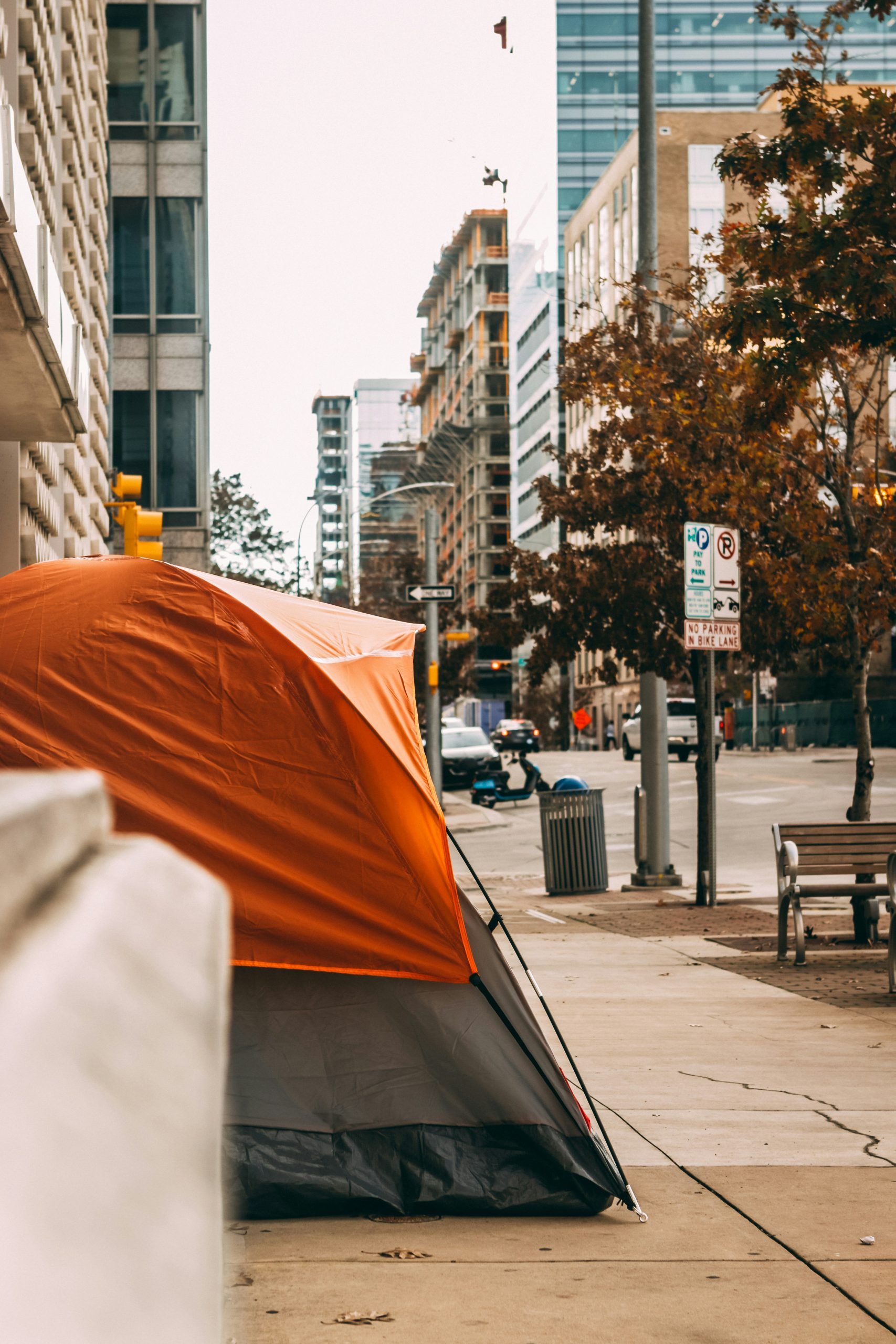
Photo by Solomon Asare on Unsplash



Full Podcast
Transcript
Note to readers: This video session was transcribed using auto-transcribing software. Questions or concerns with the transcription can be directed to communications@canurb.org with “transcription” in the subject line.
Pilar Martinez: [00:00:00] The most beautiful thing about public libraries that were open and accessible to all, and the most challenging thing of a public library is that we’re open and accessable to all. [00:00:08][8.8]
Mary Rowe: [00:00:09] When you think of libraries, you probably think of the place you go to take out books. But that’s a big part of their role, of course, but they do much, much more than that. We always say, you know, it’s not your grandmother’s library, but it is your grandmother library, but it’s also everybody else’s library. They play all kinds of roles in the community. They’re deliverers of all sorts of services, and they drive local culture. They offer classes and talks. They help people build skills and find jobs and much, more. Then there’s also a whole other aspect to what they do. And that’s what we’re gonna talk about today. As our cities face a mental health and toxic drug crisis, librarians increasingly need to have the skills of social workers, responding to at risk individuals and using naloxone on people having overdoses and a whole range of support services. They’re continuing to adapt as they have in some cases for centuries. Not that these gals are that old, but their predecessors adapt to the changing needs of communities all while city budgets are stretched. The funding for libraries has stayed flat. Or in fact is really falling in real dollars. So I’m really pleased to have two of our great city librarians on the call for us today with City Talk. Osa Cushing is the CEO and Chief Librarian for the Halifax Public Library System. And Pilar Martinez is the CEO of the Edmonton Public Library system. They’re here joining me today to talk about the role of the library in 2025. Let’s talk about 2026, 2027 and what the future looks like. What is the role of the library now in Halifax? [00:01:39][90.0]
Åsa Kachan: [00:01:40] Well, Mary, you started talking about that, you know, it’s not your grandmother’s library. And then you corrected yourself. So I think at everyday life, at any of our branches, and most often, you know, the thousands of people who use our central library every day, you get a really interesting cross-section of the community. So it is many, many seniors. They talk to me and say, you know what, this library allows me to have a rich life on a fixed income. It’s also the place where little two-year-olds take their run to grab things and attend story time. So it’s the 92-year old, it’s a two- year old, and then it’s everyone in between. And I will say, Mary, and I think Pilar would jump in to agree, our public libraries, everything that’s happening in our community, we see that immediately in the public library. So the change in demographics in our committee, it is often the soft place to land for newcomers. So very diverse communities come to our public library. It is one of those places where people can bump up against people whose life experiences are very different than their own, and I could talk to you for a whole hour about why that’s important to democracy. It’s also the place where the individuals in our community who are most at risk, who are feeling most vulnerable for a wide range of reasons, find a soft place to land. And as libraries, we have shifted our energy, you know. More often than not, food is fine. So we want people to stay longer. We want them to bring the cup of coffee to connect better. But for some people in our community, it is the place where they land after a night sleeping rough, facing some of the most difficult life circumstances they are facing in their lives, things beyond what any of the three of us may ever personally experience. So we see. A lot of sorrow, a lot of suffering in our public libraries. And we lean into the care of people at risk. But we often are struggling to find places to direct them. We’re amazing information professionals. We have our finger on the pulse of our communities, but it’s the handoffs to mental health services. It’s the housing support. It’s many of the things people need the most. I think what weighs on us is that we struggle to help them find those solutions. And it’s not for lack of trying. So it’s heavy. The days can be heavy. [00:04:13][152.9]
Mary Rowe: [00:04:14] Pilar, talk to us about Edmonton, the reality in Edmontone. What does the library feel like right now for you? I was just there. It’s a beautiful building. I love it. Love all the spaces. Love that little theater that I was speaking at, beautiful. But talk to about the reality for you in Edmonton. [00:04:28][14.2]
PIlar Martinez: [00:04:29] Yeah, I mean, I appreciate what you said. I think blowing up the stereotype that folks often have of how they use the library when they were a youth or in university and I echo what Åsa said that we really are very much a community hub and I think the most beautiful thing about public libraries that were open and accessible to all and the most challenging thing of a public library is that we’re open and accessable to all. And there are just, there’s a lack of spaces. I think the library is one of the few, if not the only space left that doesn’t require you to buy something or you know you can go and feel welcome if you want to read a newspaper or just sit and reflect or attend a program or use a computer. The digital divide is still very much a thing. I think those of us who have access don’t always think of the lack of wi-fi or technology that’s available and folks still really need that, along with books. They also need a space where they can just be. And I think we’ve heard from folks who come to the library, they don’t necessarily interact with anybody, but they feel not alone. They feel less lonely because they’re with, they’re part of a community. There is space that’s welcoming. We do a program called Sing, Sign, Laugh, and Learn and I think that’s where libraries make the biggest difference is that early literacy. So we prevent… help folks be successful later in life with building those early literacy skills. And we do this program with Alberta Health Services, and it’s the kids use signing, so they’re little babies, they can’t talk yet, but they learn to sign. And it’s a way to help them relieve some of that frustration they experience without having, without the ability to speak, so they learn how to love words, music. We do another program with seniors called Together We Grow and it’s with in memory care institutions and watching folks with dementia or Alzheimer’s really come to life by seeing little babies and singing those nursery rhyme songs and we do a lot with maker space things so people can print something on a 3D printer like a knob for their dryer or a door stopper. For newcomers, as Åsa said, In Alberta, we’re experiencing huge growth and people come here for English language learning classes to get to know the different services that are available through our settlement practitioners that we collaborate with other agencies. We have some social workers who work out of our Milner branch and they are a central library and they connect people with ID, housing support, addictions support. ID. Yes, identification. So that is such a critical thing for, again, we take this for granted, but if you don’t have identification, you can’t do a lot of things. So, and I think OSA is right. We end up, I think public libraries have unfairly carried a burden, and perhaps we haven’t been as vocal about this burden as we may have had the potential to. And I think there is opportunity here for government organizations to really help. Solve some of these wicked social problems and the libraries there as a partner and I think we we think we’re best though at providing library services. [00:07:51][202.3]
Mary Rowe: [00:07:54] The thing is that like yeah, the dilemma is that the definition of library services is getting bigger and bigger and I’m also interested This idea that the library is the place that you can go where you don’t have to spend money. We don’t that many spaces left like that. [00:08:10][15.8]
PIlar Martinez: [00:08:11] No, and without, I mean, we use a phrase, unconditional positive regard. So I think that’s the other thing. Staff who work in libraries, they care about people. They care about making a difference. They care service. And I think it doesn’t matter what your background, where you came from, where you slept last night, or whatever. I mean I think there’s a real commitment to making everybody feel welcome. And I that is a unique, I think feature of our, or an attribute of our staff, an asset. That we bring to community that is, I think it’s pretty unique. [00:08:45][33.7]
Åsa Kachan: [00:08:47] I would agree with you, Pilar. I see every day the effort my staff make to know somebody’s name, and it’s quite intentional because, you know, any one of us will be on our best behavior if somebody knows who we are. So, you, know, if we have the coffee on, if we greet someone by name, regardless of how many barriers they may have to settling in and doing well in the company of others, we know they will try their hardest. Because they are seen as human, they are respected on arrival. So, and I know Pilar’s library does the same and our colleagues across the country. When we think about how libraries will respond to community, we really do want people to come. We know that the evidence is there that the more time people spend at their public library, the better their life outcomes. They will have higher literacy, they will be more employable. You know, if we want to really extrapolate, you know, the GDP of the country will be better. [00:09:46][59.1]
PIlar Martinez: [00:09:46] Yes. [00:09:46][0.0]
Åsa Kachan: [00:09:47] We will have better health outcomes. And we will have a more connected society where people see each other as human and connect beyond the isolation that is occurring. You know everybody builds their communities and if you don’t look beyond that, we’re in trouble as a society. So all of those wonderful things are there. So when people come to the library, we don’t talk about, you know, you hear some people say, oh, well, people were loitering here or there. We call it lingering in our library. People are welcome to linger. [00:10:18][31.3]
Mary Rowe: [00:10:20] Lingering is good. [00:10:20][0.6]
Åsa Kachan: [00:10:21] Lingering is good because if somebody lingers, they may participate in a program or access a service or discover something they didn’t know or meet someone they didn t know. So those are all the positives. And I will say, you know, for all the challenges our staff face every day, they work so hard to see the humanity in everyone. And That does not mean that it always goes well. And there are times when, you know, when somebody’s behavior reaches the point where it’s really now impeding the ability of others to enjoy the library. And in those instances, we do have to ask people to leave. And, you now, often it might just be for the rest of the day, occasionally. It might need to be for a little bit longer based on behavior. But, you we really start from the place that our objective is. For people to belong, for our neighborhoods to thrive, and for individuals in society to have a good outcome. [00:11:15][54.5]
PIlar Martinez: [00:11:16] I agree, Åsa. I did a job shadow a couple weeks ago at a small community branch in the northern northeastern part of Edmonton. Mary, it was just so fulfilling. There was a gentleman who was completing some credit application form and having trouble uploading documents, so the staff helped him with that. There is another gentleman who had some, he was a new Canadian and needed some forms filled out, so he needed to scan them, so the There was a, some youth there who were trying to print some things and print something, a vinyl cutting for their binder. It was just, it was so vibrant and the age-drained and the diversity was, it was, just like, it, was just this buzz of activity and people were really, really getting what they needed. And it was, I thought, wow, we are making a big difference in this community. [00:12:05][49.1]
Mary Rowe: [00:12:06] Isn’t that great? Interesting, a bit of a trope, but I want you guys to counter it for me. We see it periodically. Someone will utter that we don’t really need libraries, that people can buy books now, or they can download them on their device. So you’ve just made a big pitch, both of you, for all the social reasons that libraries continue to live on. You know, they’re a bit like Mark Twain, rumors of their. Death is highly whatever that phrase was uh they’ve lived on despite it but what do you say to the naysayer who says ah no no no i’m gonna buy my books at amazon [00:12:43][36.9]
PIlar Martinez: [00:12:43] Well, come on down to the library. I mean, there’s an organization in Canada called BookNet, and they do research all the time about people, the purchases of books, and then the use in libraries. And people who buy books are more likely to be library users. So it’s not yes or no, it’s both. So yes, it is. And I think it’s an ecosystem that folks can download books through the library, through our various apps that we have. But I think, yeah, we’ve been hearing about the demise of the library since probably the decades– [00:13:20][36.3]
Åsa Kachan: [00:13:22] Centuries ago. Yes. So when I became a librarian. Really? Somebody said. I’m a librarian. [00:13:25][3.6]
Mary Rowe: [00:13:27] Somebody said, Åsa, somebody said that when you graduate, oh, your job is gonna, you’re gonna go out of business? [00:13:31][3.8]
Åsa Kachan: [00:13:31] Absolutely. They said there’s this thing called the internet coming up and we’re not going to need libraries. So Mary, here’s my counterpoint to the trope. Because I think that part of me says you know what I actually I love writers, so if you want to buy that book go ahead donate it to your local library when you’re done and when we’d love to circulate it more broadly. So I think to me there it isn’t an either or and what’s fascinating to me is those of us who have many devices, who have internet at home, end up somehow assuming that that’s everybody’s life. What I can tell you is Halifax is a city of 500,000 people and we have 4.5 million sign-ons to our Wi-Fi at the public library. Those are people who might have a phone but don’t have a digital plan or might not have a phone, rely on borrowing a Chromebook from us to apply for the job. You know, we have services that we provide to everyone that really serve everyone. So if we think about all the things that society has put into the digital realm, so the person buying the book on Amazon is in the digital room. You know nowadays it’s booking a doctor’s appointment. [00:14:49][77.2]
Mary Rowe: [00:14:49] Yeah. [00:14:49][0.0]
Åsa Kachan: [00:14:50] You know we have a number of many tens of thousands of people in Nova Scotia who don’t have a family doctor but may have access to an online health service when they need it. One of the things we do at the public library now is folks will come to us and say, okay, so I think I can use the service for a virtual doctor’s appointment, but I don’t have a computer at home. Or I have an iPad, but I really don’t know how to do this. So they arrive at the Public Library for essentially primary healthcare service. We help them book the appointment, they come back, we help them log on, we’ll give them really nice quiet little meeting room. Set them up for their doctor’s appointment and then we walk out and close the door and they’re they are receiving health services from the library or immunization clinics or other things. So our expanding role is still in the information delivery that it always was but it’s using different resources to solve different problems and I think that is an exciting thing. You never in the old days when I was young you never went to the public library for your doctor’s appointment, but you might today. [00:15:54][64.7]
Mary Rowe: [00:15:55] You might today. Can we talk for a minute about the sort of elephant in the room? Which is, tell the listening audience how libraries are funded. I don’t know if people realize this. Your source of funding comes from where? Pilar, you first. Who pays for the Edmonton library system? [00:16:16][21.4]
PIlar Martinez: [00:16:17] We get almost 90% of our funding from the municipal tax base. So city council, and then property taxes, and then we get about almost 8% from a per capita grant from the province that is based on 2019 population figures. So a little out of date. [00:16:38][20.5]
Mary Rowe: [00:16:39] Åsa, how is the Halifax system funded? [00:16:40][1.0]
Åsa Kachan: [00:16:41] Yeah, so similar to Pilar, a little bit of a different ratio. So we are about 80% from the municipality, from Halifax Regional Municipality. And we get around 15% to 18% from from the province. But again, our provincial funding, we’re in the process of negotiating with the province, that amount, the core funding has remained flat for the last. Five years. So anybody who’s been paying attention to inflation knows that the buying power for those dollars, whether it’s books going up 8% a year, IT costs, janitorial costs, all of the things that are required to operate a library, that really represents a decline. And in defense of the team at the province that we work directly with, they have provided some one-time bridge funding. But it does speak to, you know, I think of public libraries as actually leaning in to a massive municipal mandate, but also really big provincial and federal mandates. So when I listen to the issues concerning our province, you know, they relate to health care. We want good health care, we want newcomers to settle well. We are concerned about school readiness of children and early literacy. We’re concerned about mental health and loneliness and poor connection. And we really want our seniors to age well in place. And those are all things that happen in the course of, you know, every five minutes at the public library. So to me, what’s interesting is we have, our funding has historically, for urban public libraries, been primarily municipal and primarily tied to property taxes. You know, we should be well-funded by the municipality. We build thriving neighborhoods. You know, Mary, you and I have talked about, you know we’re that anchor tenant that makes a neighborhood come and, and you know be healthy, and our downtowns healthy. So we have a really important role to play municipally, but I would say that if you read the mandate letters for provincial ministers and federal ministers, we’re all over that. In all the ways we work. [00:18:59][137.3]
PIlar Martinez: [00:19:00] I think great cities have great libraries and public libraries. I think Åsa is right. We do get a bit of funding from, you know, printing and then of course some fundraising. I would have to say we’ve been really fortunate with our council support over the last many years. Where we’re going to have more difficulty I think is in the capital. So building, building branches, yep, in the growing neighborhoods that have nothing, have no other services. So we’ve got little storefronts in those communities that are just used phenomenally. But there’s a drought of capital funding. And I do think the municipality’s hands are tied with being tied to the property tax. I’d love to see some innovation in terms of how else municipalities can get some revenue. But it’s tricky. [00:19:53][53.5]
Mary Rowe: [00:19:55] Yeah, I mean, this is a theme of the CityTalk discussions more broadly, is that the government closest to the people, the one that we depend on for most of our services, most people have no idea who funds a library, right? They have no ideas. [00:20:08][13.1]
PIlar Martinez: [00:20:08] They often think we’re a city department too, I think, sometimes. [00:20:11][2.4]
Mary Rowe: [00:20:11] They might. But I don’t know whether people recognize that the property tax is an ancient, outdated form of funding for any kind of municipal service. It doesn’t grow with the economy. If Taylor Swift runs into town and has a huge event, none of that dollar amount accrues to the municipal government. It’s not a boon for the municipality. They don’t see a dime of it. So not nothing against Taylor, but or or Lenny Kravitz, for that matter. Oh, so who you just saw at the Citadel. Bit. I want to ask you a specific question about the topic of the jour, housing. What do you see is the potential to take existing library sites, particularly branch sites, and redevelop them with housing attached? Pilar first, then Åsa, what do you think? [00:20:56][45.1]
PIlar Martinez: [00:20:56] Absoultely. We’re having discussions with the city right now in two neighborhoods that the library would go on the main floor and housing above. So yes, we’re open to, we have a number of facilities that are co-located with rec centers and multicultural centers, and then high schools. So I think there’s so many different opportunities, including housing to really think about how we can co-lock it with other organizations. [00:21:20][23.4]
Mary Rowe: [00:21:21] And different kinds of, you know, we just we just released a report last week is fashion not not dissimilar to your report that we did with you called overdue this one called Sacred Spaces, Civic Assets about churches. Again, these kinds of meeting spaces that have had some kind of secular have all sorts of secular value as well as religious. Åsa what about you for housing? What’s the view in HRM? [00:21:42][20.9]
Åsa Kachan: [00:21:43] Oh, I think we are open to all kinds of co-locations. You know, Vancouver has a lovely example of a branch library that has housing for women and children, low-income housing for woman and children above it. Lots of really interesting ways to do it. You know we talk about, we talk a lot about affordability and to me, you know, libraries are deeply embedded in creating affordability. So if there is low-income housing nearby, and the Wi-Fi from the library just helps to make sure that there’s no digital divide for those families. That’s an additional gift from us 24 hours a day. So I do think, you know, I do we are a natural partner in many of these things. We are a naturally place for kids to come after school, to participate in programs that can sort of ease burdens on families that maybe can’t afford necessarily an after school, paid after school program. So, I love that idea of either adjacent or, you know, it can be complicated to build on the same footprint. You know, if we have a neighborhood library, for example, our beautiful Halifax North Memorial Library that is about to be renovated, it’s built on a 60-year-old structure. So, it’s not, even though that neighborhood could use some additional housing, it’s suitable for that renovation, but certainly with new builds, it’s an interesting opportunity to explore. So I think we need to speak more about that when we think about what are the elements of an affordable thriving life in an urban context. You know, I always say great transit, walkability, services within reach and a public library. Yeah, yeah, yeah and good public space. We have a rich life on a fixed income, right? [00:23:36][112.9]
Mary Rowe: [00:23:36] Yeah, yeah. Go ahead, Pilar. [00:23:37][1.0]
PIlar Martinez: [00:23:36] I do think the days of stand-alone libraries are gone. I think that it is really about community hubs and co-location. And even with developers, we’ve got this little storefront way in the south of Edmonton that is just the use. There’s nothing else there. There’s a desert of any community facility. So the library is the spot. And we’ve gotten funding to expand that to a 9,000 square foot. Space, but the developer and the leaseholder, the landlord, is so pleased with us because we are the hub. We’re bringing people to that area. So I do think we need to keep being innovative in terms of where we put our libraries. And I think there’s many opportunities to think creatively here, to meet other communities, not just library needs. [00:24:25][48.8]
Mary Rowe: [00:24:27] You know, when you think of the life of a librarian, and maybe think of your predecessors, and then your progeny, who’s next ahead. You know you’ve seen a whole bunch of transitions, your predecesors saw a whole of bunch of transition. You’ve gone from one set of services to a much broader array of services. Looking forward. What do you think, if you were counseling somebody who’s 17 or 18 and saying, hmm, wondering about whether I want to get an MLS, what do you the big challenges are going to be going forward for librarians? Åsa, then Pilar. [00:25:07][40.4]
Åsa Kachan: [00:25:08] Well, I don’t know that, I think the challenges will be to remain relevant, so I think that has been the challenge and should continue to be the challenge. [00:25:17][8.2]
Mary Rowe: [00:25:18] But you’ve met that one pretty well. [00:25:19][1.5]
Åsa Kachan: [00:25:20] Yes, but the world is going to continue to change. So I really believe, you know, with AI and disinformation and a variety of things on the horizon that our communities are going to need us more, not less. [00:25:32][12.3]
Mary Rowe: [00:25:33] That’s interesting. So talk to me about that. Because I think the distrust, I was having this conversation with somebody this very morning about AI, I feel like I see images now and I don’t trust if they are real. So can the library be our arbiter of trusted information? What do you think? [00:25:52][18.9]
Åsa Kachan: [00:25:52] Well, I think we can help people be discerning consumers. So information literacy is a really, has always been a big part of what we do. So, you know, was the story in MAD Magazine the correct version or was it, you know, the Encyclopedia Britannica? So. You’re dating yourself. I know both of those publications. I knew you wouldn’t, Mary. Somebody’s out there Googling what was MAD magazine. But anyway, my point is we’ve always sat in that space. So we’ve always helped people. People come to us with questions and wondering about things and we’ve helped them find their path through that. So I think that need is even greater. I think there’s a plethora of information but helping people to sift and sort through it it requires some professional support. So that will remain our role. I also foresee that we will likely never lose a community role. So COVID made us highly individualistic in the sense that we. Closed our bubbles to the 10 closest to us. We did all these things that separated us from one another. And when I think about Canada’s democracy and I think how we become a thriving and respectful society, you know, I’ll quote, you know I’ll refer back to Jan Gel, you know, the well-known Danish urbanist. He said, we need accidental collisions. We need places where we bump into people whose lives are different than our own. And so I think the role of the library, we will shift and adjust to new technologies and we will adjust to changes in the community, but we will forever be that vital foundation of a democratic, cohesive society. And without places where we connect across the things that divide us, without looking each other in the eye. And without seeking to understand and without curiosity, we’re in big trouble. So the role of libraries will forever be to make those things happen. [00:27:53][120.9]
PIlar Martinez: [00:27:54] I agree. I think the future of public libraries is dynamic and exciting, and I think there’s so many things we can build on our traditional strengths. We’ve always embraced innovation. I think libraries have been very creative and innovative, and often the first to try new technology and provide that technology to our customers. [00:28:16][22.0]
Mary Rowe: [00:28:16] Why is that? I mean, is it because the librarian is trained to be curious? [00:28:20][3.4]
PIlar Martinez: [00:28:20] Yeah, probably. I think we love to I think most of us love to learn and are curious Mary I think you nailed it. [00:28:26][5.3]
Mary Rowe: [00:28:26] Just built right into you. [00:28:27][0.5]
PIlar Martinez: [00:28:27] Yeah. Built in the DNA of our of of us. I think that community hub is still that third place as we talked about. There’s a there’s uh drought of of spaces where people can gather and I think there’s opportunity for that intergenerational engagement like we do with our program to bring people together who have different ideas and think differently and god knows we need spaces to have some civil conversations, instead of being positional and divided. I think AI is also mentioned enhancing the understanding of digital literacy for everybody including AI. And I think probably a really strong focus on advocacy and how do we tell that story about what the public library is about so we can kind of smash some of those stereotypes that people hang on to, so I think the future is bright. Challenging, but bright. [00:29:20][53.2]
Mary Rowe: [00:29:21] Challenging but bright. Yeah, you know, I appreciate that the social challenges that existed in our cities long before, and not just in our communities of all sizes, but now have just sort of taken root in communities and have found a home in libraries. And that the challenge that’s put through your has put to your staff. But what I’m hearing from you is that there’s a kind of I mean, we started the broadcast with you saying, you know, we’re information providers and we want to be a referral agent. But what happens when there’s no one to refer someone to? And I think this has been the burden you guys have had to carry. [00:30:06][45.1]
Åsa Kachan: [00:30:08] And Mary, our staff and I think say this is very universal. We, you talked about our curiosity, I would say the second attribute, we’re very hard forward. So we really work to see the humanity in everybody. And that is a heavy load to carry. It is, it’s cause not every, we can’t solve every problem. And so then it is about trying to provide. Sometimes it’s comfort, sometimes it’s a cup of coffee, sometimes it is a couple of good ideas and come back tomorrow and we’ll see what we can do and I’m going to make a call and it’s knowing somebody’s name and giving them a place to feel at home in the community where they maybe don’t feel particularly at home at the moment due to lots of circumstances. [00:30:54][45.6]
PIlar Martinez: [00:30:55] I think it’s also about advocating though, for others who are better equipped to take on some of these things that we’ve have landed on our laps. And I do think that there is a need here that we need to make folks aware of that what libraries aren’t equipped to manage some of things that are landing in our spaces and nor should we be. So I think, it’s okay to say that this is not, we’re not in the best position to take on this role, so. [00:31:22][27.7]
Mary Rowe: [00:31:23] But you are, but you are in the best position to be able to identify resources and point people to them. [00:31:29][5.9]
PIlar Martinez: [00:31:29] Absolutely. Referalls, navigating. For sure. [00:31:31][1.8]
Mary Rowe: [00:31:31] Yeah, yeah. And I feel like that’s part of what’s happening here. It’s like when people want to complain about construction. I don’t know if you get this, but every city I seem to go to, people are complaining about construction, it’s too chaotic. And my response always is, look, we had to shelve a whole bunch of things. There were years where nothing happened. So suddenly everything is happening. And I feel the same is happening on our streets, that we have all sorts of systems that just got pushed to the brink. And it’s taking them time to recover, recover, so we’ve kind of had to improvise as we go through this period of time, and what we hope is that the broader system will course correct and get the resources, because it’s not just you guys that are desperate for resources. [00:32:14][42.7]
PIlar Martinez: [00:32:16] Oh no, it’s many organizations and businesses. And I agree, Mary. And it’s not that we’re not at the table. I think that we absolutely have a role to play. And I think there’s an opportunity here to make a difference in collaboration with governments and other agencies. [00:32:32][15.9]
Mary Rowe: [00:32:33] One thing that I’m really concerned about, and I hope that we can win the day on this, is that the one order of government that neither of you mentioned, that one, I think also you were implying this, the one that benefits the most significantly from the investment that libraries provide is the federal government that’s really responsible for citizenship and attachment and the future of the country. And they are not present in libraries particularly, except to the transfer payments, I suppose, that they provide to the provinces and the municipal governments, but… [00:33:03][30.8]
Åsa Kachan: [00:33:04] Some capital. [00:33:04][0.3]
Mary Rowe: [00:33:06] Some captital. But as we know, this government is pursuing a “build, baby, build” kind of mantra around infrastructure and around housing. And so I think part of the challenge for us who are advocates for this ground up place based quality of life that underpins all aspects of society is that we persuade folks that these are investments in infrastructure. These are investments and capacity. These are investments that are crucial. To the future of the economy of Canada and to the social evolution and functioning of Canada. So I wanna thank you for joining us. I’m always so struck by how important your vocations are to connecting people and place. You are both that, you are the places, but you are also the people that are inhabiting and embodying the spirit of these places called libraries. And it’s not lost on me that most of you are women. [00:34:02][56.4]
PIlar Martinez: [00:34:04] Yeah, It’s a very feminized profession. Yes. [00:34:07][2.4]
Mary Rowe: [00:34:07] Hard to not see that. And of course, I recall that Canada’s beloved, we adopted her and she adopted us, urbanist, was a woman too. And, you know, Jane Jacobs saw the city and saw the fabric of the city in a way that, that I think is common to a certain gendered view of the city. And so it’s hard to not see that when I’m listening to both of you. [00:34:30][22.7]
Åsa Kachan: [00:34:31] Well, we often talk about wrapping our arms around our community through the public library. [00:34:34][3.6]
PIlar Martinez: [00:34:36] Yeah, and we have , we have heart, we care. [00:34:40][4.0]
Mary Rowe: [00:34:41] Well, thank you. [00:34:41][0.4]
PIlar Martinez: [00:34:42] Thank you, Mary. Thank you. Nice to see you, Åsa. [00:34:44][2.0]
Åsa Kachan: [00:34:44] Nice to see you. This was fun. [00:34:44][0.0]
[2029.7]
5 Key
Takeaways
1. Libraries Are Open, Inclusive Community Hubs
Both Åsa Kachan and Pilar Martinez emphasized that the most beautiful—and challenging—part of public libraries is their open-door policy, making them accessible to all regardless of background or circumstance. Libraries are now among the last shared spaces where anyone can walk in without expectation to purchase or participate, offering a socially inclusive environment for seniors, children, newcomers, and vulnerable community members. This openness brings both vibrancy and challenges, as library staff encounter a wide spectrum of needs, including mental health support, homelessness, and access to services, in their daily work.
2. The Role of Libraries Has Expanded Far Beyond Books
Public libraries in 2025 offer much more than book lending—they are now vital service hubs delivering early literacy programs, digital skills workshops, community-building activities, and essential referrals to social services. For example, Edmonton’s “Sing, Sign, Laugh, and Learn” supports early literacy, while staff across both systems help newcomers, facilitate senior engagement, bridge the digital divide, and even connect patrons with primary healthcare or virtual appointments. Staff are increasingly called on to act as social workers, advocates, and connectors within their communities.
3. Libraries Carry Heavy Social Burdens Without Commensurate Resources
While public libraries are adapting to meet community needs, this has often meant taking on social issues—such as substance use, mental health crises, and homelessness—that libraries are neither fully equipped nor funded to resolve. Both CEOs spoke to the emotional weight borne by library staff, who strive to provide comfort and connect people with limited resources. Funding has not grown in real terms and is often outdated or flat, primarily tied to municipal property taxes, leaving libraries to stretch their mandates without corresponding infrastructure or program support from other government levels.
4. Co-location and Partnership Are Key to Libraries’ Future
To remain relevant and efficient, libraries are increasingly embracing co-location and partnerships. Both Halifax and Edmonton are exploring integrating library branches with affordable housing, recreation centers, and other community assets. These strategies maximize impact and create community hubs in underserved areas, addressing both space shortages and broader social needs. The era of the stand-alone library is shifting toward collaborative, multifunctional public spaces supporting diverse populations.
5. Libraries Are Essential Defenders of Democracy and Trusted Information
Looking ahead, both Kachan and Martinez expect libraries to play a crucial role in ensuring information literacy, combating misinformation (including challenges from AI and digital disinformation), and nurturing the social ties fundamental to democracy. Libraries help communities “collide” across differences, fostering curiosity, respect, and shared understanding. The leaders agreed that libraries are vital for a cohesive, informed society and must advocate strongly for sustainable investment to thrive in this expanded, essential role.