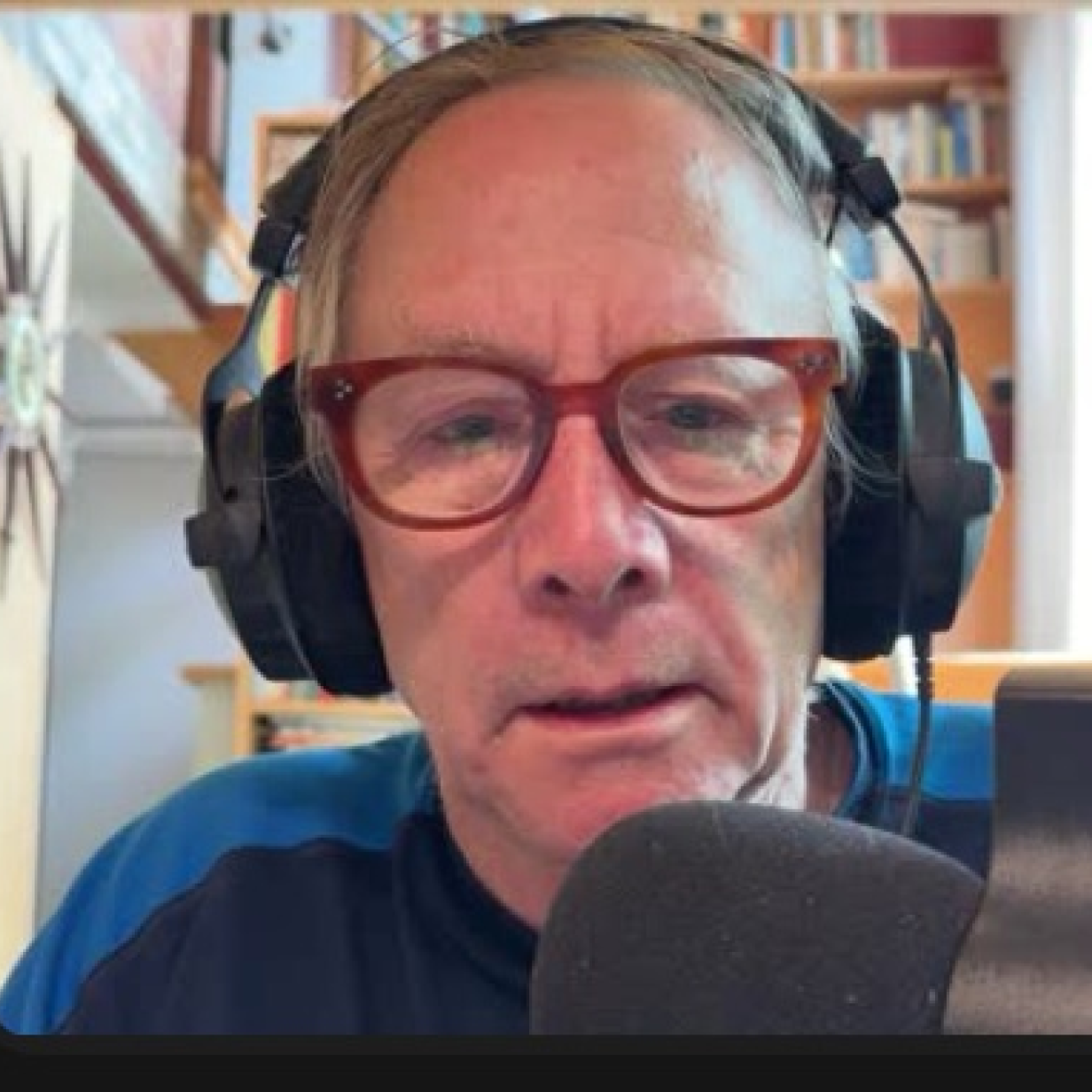


Contemporary urbanists continue to find inspiration in the ideas crafted, tested and authored by American-Canadian activist Jane Jacobs more than fifty years ago.
Mary Rowe revisits some of Jane’s visionary work with two fellow devotees – Toronto environmental writer Lloyd Alter and former Toronto mayor John Sewell – and how it’s as timely as ever to Canada’s rapidly-shifting economy.
Carbon Upfront – Lloyd Alter on Substack
The Story of Upfront Carbon – book by Lloyd Alter
Books by John Sewell
Solved – book by David Miller
Books by Jane Jacobs
Full Podcast
Transcript
Note to readers: This video session was transcribed using auto-transcribing software. Questions or concerns with the transcription can be directed to [email protected] with “transcription” in the subject line.
Mary Rowe:
This is the City Talk Podcast brought to you by the Canadian Urban Institute or CUI. I’m Mary Rowe, CEO of CUI, and an urbanist. If you’ve taken urban studies at university, as I did, one of the standard, perhaps the standard reference texts is Jane Jacobs’ The Death and Life of Great American Cities, published in 1961, which catalyzed a critique of the urban planning practices of the time and laid out a series of principles that would inform her community-led battles to stop urban renewal projects in New York City and eventually here in Toronto. She and the many others who would eventually follow her were concerned that those practices over decades had begun to destroy the essential fabric of urban living. After her move to Canada in the late 60s, she continued to write books to document the importance of place-based community-driven urban development, which has continued to inspire generations of urbanists, including me, and the two guests you’re about to hear on this episode. These days, Toronto resident Lloyd Alter publishes a regular column on Substack titled Carbon Upfront. (check it out) which continues his work collected in a 2024 book, The Story of Upfront Carbon. But he’s accomplished much more than that, which you’re going to hear. Lloyd, welcome to City Talk and give us your oral CV, if you would.
Lloyd Alter:
Okay, I am originally an architect. I was trained as an architect, and then I became a real estate developer in Toronto and didn’t like that very much. And so I got into prefabricated housing and started writing about it and found that I was a better writer than I was sort of a prefab builder and ended up writing for a major American website called treehugger.com and got introduced to teaching at Toronto Metropolitan University. So I morphed from being an architect and developer to being a writer and a teacher, which I was considerably better at.
Mary Rowe:
You’re like a you’re like an architect in exile or an architect in recovery or something.
Lloyd Alter:
Recovery is the appropriate word.
Mary Rowe:
I mean, what’s interesting about it though is I’ve had more struggles, I think, finding a way to engage the architectural community in Canada in conversations about their communities. Is that just me? Maybe it’s they don’t like me, you know?
Lloyd Alter:
No, no, it’s part of the heritage of the way architects are regulated here. For years you weren’t even allowed to criticize the work of another architect, or you could get hauled up in front of the complaints committee and things. And they’re very architects were always very, very touchy about these things. You know.
Mary Rowe:
And also, I would say, I think only one municipality in Canada, I wonder if you know this, only one municipality in Canada has a city architect. Do you know that? And do you know do you know where they are?
Lloyd Alter:
Well, it’s not Toronto anymore. It used to, it had one forever.
Mary Rowe:
Yeah. But I don’t know. Is it Guelph? Let me guess. Edmonton. Edmonton. Edmonton. Carol Belanger is the city architect in Edmonton. And you can see the impact of that when you’re in Edmonton and you look at all the public art, and a number of Toronto architects have done the work, but it’s uh, you know, you look at the caliber of the work and the priority that’s been put on design in public infrastructure in Edmonton. Uh, I want all the architects that listen to City Talk, and I’m sure they’re legion, that we want them to know that we believe in uh the power of design and the importance of folks that have skills and training and understand context. And I guess that’s partly the thing that I appreciate about architects is that they see how things fit together. And I think that’s maybe where I see your skill set. You were trained as an architect, then you went into uh what’s now called modern methods of construction. Uh you went into prefab and now and then but but you also have this very wide uh analytical capacity. You’re well read and you think about things.
Lloyd Alter:
So one of the reasons all over the map, it’s true.
Mary Rowe:
But I think it means that you know, one of the other things that I appreciate about architects, again, part of my exposure in the US, is they’re terrific problem solvers. Like that’s what they’re trained to do. They are trained to find ways to make things happen. And I, at least to a layperson, that’s how it feels. So I want to just call your attention to a few things and then let’s just see where we go. CUI is focused on local. We’re focused on how do you incubate and try things locally, how do you then scale those up. Uh, and scaling doesn’t mean replicating or duplicating, it just means how do you learn something that might be working in one community, could be an inspiration or have a few clues that would inform another community, that kind of thing. So CUI is kind of in the connected tissue business. But the other thing that we’re interested in is when there’s so much uh attention being put to and paid to global international uh concerns and things that over which most people have virtually no control, we just sort of read about it or hear about it. What why does the local matter? And you wrote a couple of uh weeks ago in your Substack, you wrote about Jane, Jacobs, and you talked about import replacement. And I’m wondering if you can just run people through that because uh, you know, I always tease Americans that they think that Jane stopped writing when she left there and they think Death and Life was her only book. But Canadians know that she continued to write and continued to publish books uh and and honed in more and more in terms of what she observed worked in the economy. And she observed a lot about local economies and import replacement. So just lay out for us what it was that made you write that piece a couple of weeks ago.
Lloyd Alter:
Well, um, as you say, a lot of people’s understanding of Jane Jacobs ends with the death and life of American cities, but she went on and was quite particularly strong about theories about economics, that she really believed that cities were the economic engines of countries. Yeah. And that what mattered was what they generated within the city. So uh if all the money’s flowing out into other places, then you can’t actually use the money from things within the city that you’re in. You’re not employing enough people. And by the city, she’s not just meaning the geographic, you know, city of Toronto. No, no, no. She’s meaning the sort of zone around where the factories are and where the agriculture is. And I first really learned about this from a former mayor of Toronto, John Sewell, who was very, very big in his time, as he knew Jane quite well, and he would go on lecture tours talking about import replacement, and you know, everybody thought he was nuts. Yeah. Uh he was also doing it very weirdly with overhead projectors and transparent slides in a stage when we were already using newer technology, and it just seemed like he’s from another era. But I went back after um reading. You can see the bookshelves. You can see bookshelves behind me there. There are bookshelves behind the Lloyd Alter, just saying, recording. Yes. And I happen to have the economy of cities there, and I took it down to read again to see if it’s still made sense in this era. And in fact, it makes more sense than ever because the global economy we’ve got right now is hitting a big crunch with diesel fuel being unaffordable, that everything that we’re importing is going to be sketchier and harder to get and more expensive and less dependable. And then you’ve got a certain president south of the border who’s putting in all of these tariffs that are making all of these things more expensive. And one of the big answers to dealing with these international problems is to go back and think like John A. McDonald and Jane Jacobs, both of which you said And John Sewell. Three J’s. John, Jane, and John. Yes, all saying we should be promoting local businesses, we should be promoting local everything, and that this is the key to having a vibrant economy. And Jane takes it much further because she believes that this is what’s driving every economy everywhere now. We just don’t realize it. That New York City is generating the economic value of the states, and Toronto is generating the economic value. That’s where the creativity is, that’s where people put together the business ideas. And if they do it right, it’s pretty close to where they build the factories. So I just thought it was a good time to bring Jane back and talk about that.
Mary Rowe:
But let’s just talk a little bit about what you just said about the economy and that money is generated in a place to serve the place, to stay and to be in reinvested in it. And is this one of the challenges we’ve got is that globalization has meant that that money actually wasn’t staying in the place, it’s leaking out. Uh so how do we reimagine that then? I mean, that tell me how import replacement keeps more money here.
Lloyd Alter:
Well, right now, if you want to, I was just having the dis this discussion at our local brewery yesterday. As one does. I thought you were going to say this morning, which would have been an interesting way to start your debate.
Mary Rowe:
But as one does, yes, you were talking at the puppet. Yeah, yeah.
Lloyd Alter:
Yes, because they uh serve their beer, they sell their beer in aluminum cans. And here’s an example of what’s happened. Almost all aluminum in North America was made in Quebec and in British Columbia because the major ingredient in aluminum is electricity. And we have a lot of hydropower electricity. Right. But the last rolling mill that could actually take aluminum and make sheet stock out of it in Canada closed 25 years ago. Because with free trade, what we were doing is we were taking the aluminum and shipping it down to somewhere in the States where they would roll it into can sheet and they would stomp out that lid in the top, and then this would get shipped back to Canada. Yep. So what’s there’s one company that makes the standard 355 milliliter cans, the smaller cans, but the trendy thing is all the tall cans, the tall boy cans, and nobody in this country makes a tall can. So we’re paying a 50% duty on every aluminum can that is made with Canadian aluminum. Yeah. Because the aluminum goes south, it gets tariffed, then it comes back and it gets tariffed as the product coming back. Yeah. Whereas historically in Ontario, 95% of the beer that we drank was sold in refillable bottles. And the bottles were made here, and it was a very local industry because it’s expensive to transport bottles, especially when they go in two directions.
Mary Rowe:
I think it was a closed loop recycling system, wasn’t it?
Lloyd Alter:
It was incredibly effective cold loop. And none of the breweries liked it because they would like to centralize. You know, O’Keeffe Ale, I wrote about this, had five breweries just in Ontario. Now, how many O’Keeffe Aleweries are there? Zero. Because the whole industry, once cans came along and refrigerated trucks came along, they could consolidate, consolidate, and consolidate. There’s one Molson Coors plant in Colorado that can make enough beer to serve almost the entire continent. And this is where we’ve gotten to. So what happened with cans? Well, Doug Ford happened with cans. The premier of Ontario wanted to kill the beer store so that all the buddies and the grocery stores could sell canned beer. And so everybody switched to cans that you can walk into, as I do in the summertime, into the you know, beer cooler in those country beer stores, and you might find two kinds of beer in bottles, and everything else is in cans. Wow. And the cans, no woman of childbearing age should drink beer out of a can. They’re lined with BPA, which is a toxic epoxy ingredient. It’s banned in null gene plastic bottles, and yet it’s an integral part of the epoxy that lines a beer can, so it doesn’t taste like aluminum. You’ve just spoiled a whole bunch of people’s Saturdays understanding. Yeah, I tell my daughter this, you shouldn’t be drinking out of beer cans, and she looks at me like I’m nuts. They all do whenever I complain about that.
Mary Rowe:
You know, that’s where we are today. I’m always struggling though, Lloyd, with you know, we’re not Neanderthal. We’re not saying no, no, no, we’re gonna just make our all our own clothes and do everything ourselves. But there is some kind of action that you’re describing, some kind of economic process that can grow an economy locally by focusing on how do you replace things that you’re having to buy somewhere else. You look for a local supplier, you adapt your your supply chain somewhat, and then you grow, and then you may export it again. But that’s I think that was what Jacob’s view was was that you were refueling the economy through a process of import replacement, import replacement.
Lloyd Alter:
Exactly. You’re putting local people to work who are then making the money that they can buy the local products. Right. Because we’re not exporting the money, we’re exporting the jobs. I was shocked the other week. I used to love Strubb’s pickles, you know. Yes. Nice, nice Canadian pickle, and they went bust. And we saw them on the shelf a few weeks ago, and my wife bought a jar of Strub put pickles, and I looked on the side, and they were made in Germany. Yep, yep, yeah. With the Strubb’s label on it. Yeah. And I was furious because here’s a brand that they’ve made in Canada for a hundred years, and they buy the brand name and they fill them with German pickles. Go figure. So the best thing that’s happened, of course, to all of this is, and something that I talk about constantly, is the whole boycott of American products that’s happening now, the people’s drive to buy Canadian. For years as an environmental writer, I would talk about personal actions, and everybody would tell me personal actions don’t matter. It’s the oil companies, it’s a hundred oil companies. And I’d say, well, you’re not drinking, you’re buying the oil. You know, your decision to buy the oil gives them something to sell. Personal actions do matter, and everybody say, No, they don’t. Well, you just have to look at how personal actions have added up over the last year when people have started doing it. Nobody’s traveling to the states, imports from the states have dropped. Canadian sales of Canadian products have gone up fabulously.
Mary Rowe:
I heard a stat this morning that you know, in the last year, our exports to the U.S. have dropped by 10%. And that’s it was 75, and now it’s 65 in a year, which everyone at the table I was at, they were all saying that’s a huge drop in a year. So, you know, obviously the the winds of change will change again, uh, and uh and we won’t always be dealing with this level of noise. But there is something about strengthening the you know, the connect, the local connective tissue of our economy so that we have businesses that trade business to business, that people are more conscious as consumers, that we look at the regulatory barriers that may have been, as you’re suggesting, sending offshore production when it could have been re-shore. Again, going back to Jacobs and her notion of refueling that how do we how do we actually take this historic moment, this pivoting that’s going on in an extraordinary way in the Canadian economy, ushered in by a whole bunch of factors, as we know, but probably long overdue? Is there are there ways that we could can systematize this or make it stick or make it less make it be become more general and less sort of the because I think there’s lots of folks that think, oh, that’s very quaint. Yeah, yeah, sure. You have money, you can make these decisions, or they isolate it, they don’t see it as the norm. What do you think? Is there a way for us to not let’s not waste this crisis, shall I say?
Lloyd Alter:
Exactly. And we are in a lot of ways, we are not, and that when you look at all the maple leaves on foods at Sobies and at Loblaws, and Loblaws took them off because it was complicating their purchasing. They didn’t want people picking the Canadian stuff, and they were forced to put the maple leaves back on because people demanded it. And so that I think has become a I won’t say a permanent part of our culture, but people are really getting into it.
Mary Rowe:
Do you think we can turn a corner here and not be anti-American and not be anti-international, but somehow turn a corner where we think local first, we buy local first, we invest local first?
Lloyd Alter:
I do. I do. I mean, I was we were doing this before the whole America crisis came up because it was part of the low carbon lifestyle. Right. And um I do believe that people are taking it seriously and it is becoming habitual.
Mary Rowe:
So before I leave you, I want to ask you something completely different because I know that you’re an original thinker and you’re an observer, and so you’re probably gonna have something to say about this. But here’s an interesting habit, two of them that we’re seeing in cities across the country. Many, many people are out of the habit of going to the office, and they’re going less frequently or they’re maybe not going at all. And that means that we have downtowns that are repurposing before our very eyes. We have commercial spaces that are repurposing, we have all sorts of interesting things that are manifesting as a result of that habit that we’re not going downtown as much. Related, we are maybe out of the habit of taking transit as frequently as we once did for a whole bunch of reasons. And getting back onto transit, you’re deterred by a bunch of circumstances. So, what’s your observation about how we’re going to reimagine repurpose downtowns? Mean, and I don’t just mean central business districts, because you know lots of places, like including the city you and I live in, there are several downtowns in Toronto. Several. And uh, so what are we imagining? What are you imagining for the repurposing of downtowns or the reimagining of downtowns? And similarly, how we get around.
Lloyd Alter:
Well, what I was excited about in the real work from home period was that I felt when you look at what happens in downtown, you’ve got a whole lot of people who are commuting very long distances that you might because you might be taking your clothes to the tailor and there’s a tailor in the bottom of your office building. So that tail that tailor is slapping down from Brampton and you’re carrying your clothes. And I just thought the wonderful opportunity that came out of this was in fact to make our suburbs much stronger, to reduce that if people now would get their services locally, they’d go back to buying food on the main street. Uh, they would start that all of this would strengthen the suburbs. You know, where I live along near Davenport Road, you can see like 50 storefronts in a row that have drapes on them, that people are living in the storefronts because the tax structure was set up so that the owner has a much better deal renting to for residential than for office, which has far higher tax rates. And there weren’t enough businesses. You don’t need with refrigeration, you didn’t need a corner store in every block to buy milk. Right. And so I thought that this would actually strengthen the fabric, the overall fabric of our cities, at the slight cost of weakening the central core of the city, which I thought so many of the grade B and C buildings would make fabulous residential conversions. Yep. You’re speaking you’re speaking past tense, you thought. Well, the residential conversions turn out to be quite expensive.
Mary Rowe:
Yes.
Lloyd Alter:
But like um and haven’t happened at the rate I thought, but they are happening. You see it happening in New York, an insane number of conversions happening so fast that they’ve had two buildings almost collapse because they added stuff on the top before they’d strengthened the bottom. Yeah. Go figure.
Mary Rowe:
But but it’s interesting as you say, maybe I mean, during the pandemic, you know, I was dealing with people saying, oh, cities are dead, the core is gonna die, you know, that urban doom loop narrative started. And and yet I always, I’m never a prognosticator. I’m very skeptical about I’m skeptical about people being skeptical, but I but I was, you know, I’m I’m convinced that we have existing assets, Lloyd, that are built. And back to our hearkening of Jane Jacobs, adaptive reuse, you know, sh they could have just torn those factories down, but they didn’t. They actually repurposed them, and maybe some of them now are gonna come back and be factories again. Like that’s what’s or be manufacturing spaces again. So that’s part of the beauty of the self-organizing impulse in urban life is that you repurpose and repurpose and repurpose and repurpose. So that’s what I and I hear you. I don’t know whether there’s been a boon for tailors in the suburbs, you know?
Lloyd Alter:
I think the big demo the big thing that’s gonna change is gonna be because of demographics. Like I go on all the time quoting David Foote, about two-thirds of everything can be defined by demographics. And what we’ve got is a rapidly aging population. Right. And what a rapidly rapidly aging population needs, you know, what it’s gonna double in size in the next 10 years, the number of people over 65, and then also the leading baby boomers are just turning 80. Yeah. And what they need are hospitals, and they need accessible, walkable communities, which they can. Can get to stores without having to drive. And they need other people to talk to and to do things. And to do this properly, you need density. Right. And you where we’ve got the density is in the cities. So what I want to see, what I would love to see, is so many of those buildings being converted into um at least seniors houses.
Mary Rowe:
Or co-living or some kind of co-living, some kind of alternate arrangement. We know we have a wonderful concept in Toronto, and we we’re going to have the person who’s who’s working on it earnestly on City Talk. Her name is Jen Rick Nagel, and she’s got this whole thing about naturally occurring retirement community. Occurring retirement community. It’s a beautiful thing that, again, it’s self-organized, that doesn’t have to be institutional, it doesn’t have to be mandatory. It can actually happen, as you’re suggesting, organically, which is back to our concepts of main streets and downtowns as the spines and hearts of communities. And what are the services and what’s the right curation of uses for those to serve the aging population? Listen, as we finish, I just want to thank you for joining City Talk. And are there any words of final wisdom you’d like to offer at this interesting juncture?
Lloyd Alter:
Well, I will just reiterate the point that I was going to try and make that I think that the coming urban crises we have are crises that uh revolve around sort of people in their 70s like me who, you know, I think that’s going to create like housing crisis, transit crises, health crises, and governance crises because we’re the people who vote, and we’re voting in so many ways to keep our taxes low. And who why am I paying for schools and libraries and transit that I don’t use? So I we’ve got a huge set of problems facing us just because of the sheer number of people like me. And we have to start really addressing it when all we want to do now is avoiding it, avoid it, and we’re really running out of time. Mic drop on that note.
Mary Rowe:
Lloyd, thank you for joining at Citytalk and for being as provocative as ever. We’ll put uh your Substack link in the notes uh so people can read you, which I do, and I appreciate all the imaginative ways in which you you draw your vast experience as designer, observer, builder, developer, writer, all the different lives you’ve had. And now, septugenarian, uh all the different ways, perspectives that you’re bringing to this is very uh very thoughtful and appreciate and I appreciate you taking the time to be with us. So thanks for joining us. A pleasure. As Lloyd mentioned, he learned of Jane Jacobs’ ideas about place and place-based economies from her books and from her friend and colleague John Sewell, former mayor of Toronto, who has remained a fierce force for good in the city. John, welcome to City Talk. And tell us what’s on your mind these days, these tumultuous days, when it comes to the state of our cities.
John Sewell:
Well, I mean, the great problem in Toronto is that we’ve got a constitution that was made in the 19th century when cities were nothing and the world was all rural. Um, and we made our our our economy was was basically a farm economy with some forestry and a bit of mining as well. Uh, but nothing about cities. So, in fact, we got a constitution that gives cities no power whatsoever. And we’re living with that, which is absolutely insane. Since you know, the wealth of Canada and and most other countries is produced in cities, and they drive the culture, they drive the politics, uh, and they have no power. Um, and and that’s the biggest problem. And therefore, cities are totally broke, they don’t have the money to to provide good services to people, um, and and they have no political muscle. The rural areas in Canada still rule. In Canada, we have really terrific cities compared with, I mean, let’s United States as an example. You know, so people come to our cities and they say, wow, aren’t they interesting? And you think if only they were well funded and could actually address the problems they’ve got, they’d be really, really interesting, but they aren’t. So, you know, we go to Europe instead because those cities seem to have a bit more money and therefore they function a lot better. Um, it so it’s it’s very, very discouraging. Very, very discouraging. I mean, if you just to bring in Jane Jacobs here, of course, she was the one who noted that, you know, 60 years ago. Yeah. And she wrote a lot about it. I mean, she uh got right onto it and talked about the real importance of cities and how they worked and how they could work really, really well if we wanted. Uh, we haven’t paid much attention to any of the things that she said. I mean, she talked about the need to have really good city design to increase diversity, because diversity is the thing that leads to innovation, and innovation is the thing that leads to growth and to more equality in society. Um, and in fact, and and so she she set out the four rules about how you design urban space to make sure that you were encouraging diversity and have mixed uses rather than single-use areas like giant great residential suburbs. Um, you’d preserve old buildings, so that’s where you have to start new businesses because new old buildings are less expensive than new buildings. Um, you had to have short blocks so that people could find different ways of getting around. Uh, and you had to have uh a reasonable amount of density so that that people could inter, you know, work well together and so that municipal services could afford themselves. I mean, as we’ve had all these studies about suburbs, about how they can’t exist without subsidies from someone else. I mean, yet we keep building them over and over and over again. So, you know, she talked about those kinds. She talked about the economy of cities and how do cities grow? They were grow by people looking at products that you’re buying from somewhere else and saying, we can make that here. It’s called import replacement. I mean, and the best example of that we have in Canada is the wine industry. We’ve got wine industries in British Columbia, in in Ontario, uh now in Quebec, I mean, even in the Maritimes at this point. And that’s reducing the amount of wine that used to be brought into Canada. I mean, it’s a real simple thing. Import, let’s make locally what we’re now buying from somewhere else. And that’s how the economies actually get larger. We don’t have an import replacement program at the national or provincial levels in Canada. We just don’t have it. And that’s absolutely crazy. I mean, if you look at it, renewables, that’s an import replacement program when at the end of the day, you’re making locally. And I mean, there’s a lovely article recently in in Sweden where they’ve realized that grids, uh, electricity grids are not the way to go. What you want to have is locally produced electricity that serves a few, but and then you can have networks. Well, that’s about renewables. We ain’t doing it. So I, you know, we’re missing, we’re it’s crazy, but we’re missing in a lot of that stuff because we aren’t paying attention to the absolute benefits of people living in cities. And we should be doing this, we should be paying the same kind of attention that that cities need, which we which are not getting to smaller communities.
Mary Rowe:
It’s a good spiel. There you have it. So much for me to pick up on. One thing, when you speak about cities, I think you’re meaning municipal government. Are you?
John Sewell:
It is municipal government, but it depends how you want to do that.
Mary Rowe:
You are totally calling out the essential, the I always say the C word, you know, how long till we talk about the Constitution. And what’s so striking to me about your creed occur that you just provided there is that uh we had Sean Spear on here a couple of weeks ago, and and he and I’ve had conversations before about it it feels sometimes like the Federation isn’t really working for anybody.
John Sewell:
I think that’s probably true. You know, political parties aren’t serving us particularly well at the moment either. The lovely thing about cities, municipal government, is that every decision it makes is made in public, except for some things about uh negotiations on contracts and and you know, negotiations with labor unions. Apart from that, everything they do is made in public. Right. You get to hear how fragmented the and crazy the debate is, but you get to hear it. And that holds people to account. Whereas in the federal and provincial governments, all the big decisions are made in cabinet and everybody is sworn to secrecy. This is a crazy way to run any kind of democratic society. Yet that’s what those guys do. And it means that the political parties get to control everything. And it’s not really political parties, political leaders.
Mary Rowe:
Can you talk a bit about a fancy word, fancy concept, but really a basic concept that you’re speaking to that Jane spoke to as well, which is subsidiarity. The level of transparency and accountability. My my short-form layperson version of subsidiarity is the order of government closest to the people that delivers the service is the one that should design it and be held accountable for it and implement it and be resourced for it. It’s I think it’s what you’re suggesting, is that when you have these things brokered at the hyperlocal level, you have greater accountability, greater uh transparency, obviously, and hopefully the policy is more uh well suited and made to the particular challenges. Is that what you’re talking about?
John Sewell:
There’s no question that that is very important. But the other thing is that other decisions should be made in public as well. Okay. I think it’s interesting that in most cities in Canada, you don’t have political parties operating. Or if they you have some political structures in some place, but they’re pretty loose and they ain’t like political parties.
Mary Rowe:
You know that it uh uh your your former colleague, and I was gonna call her your nemesis, but I bet she wasn’t. I don’t know what your relationship was with Hazel McAlian, but I often quote her in the in Canada, under the system, the federal government has all the money, the provincial governments have all the power, and the municipal governments have all the problems. And I always add the fourth, which is and communities have all the solutions, because it’s I don’t think it’s just about power. I hear you, clearly it is, but isn’t it also that communities know best, have the best bead on what the solution should be in their local community? And we don’t have public policy that is able to reflect that.
John Sewell:
I think that’s true. If they have the appropriate leadership, I think that’s true. I mean, I I believe very strongly in uh communities having a big say, but I think that they need particular leadership as well. Let me give you a very, very small example. Regent Park in Toronto was a community that was uh designed by a bunch of planners in the 1940s and then built as a public housing project, and it was really badly, badly designed. And if you went and asked people in the neighborhood, what do you need here? they’d say, we need more park space. Well, sorry, that ain’t a good answer. It’s an uninformed answer as to what they need. And if you sit down with them and have real serious discussions and bring in some other ideas so that people can flesh out what’s happening, they’ll now realize that’s not what we need. We need more diversity, we need more density in this area, we need, you know, maybe some very well-designed playground, but we don’t need a lot more park space. So there’s no question that getting communities involved is really, really important. But it’s not just taking the stock answers from them. You need people who can work with them and talk about it. I mean, in Toronto, just to use the example, um, after the Reform Council got elected in December of 1972, Howard Cohen was set up as the neighborhood planner. The very first thing that he did was he said, I’m gonna set up neighborhood planning groups in all sorts of neighborhoods in Toronto. He set up 35 of those groups within the first year with local people sitting around saying, What should happen in our neighborhood here? Most of them said really interesting things. Well, if we could get a bit more housing that was affordable for people, that would be terrific. What would it look like? Well, let’s look at so it’ll fit in with what we’ve got. Oh, that’s interesting. Well, maybe we can use uh do the road system here so it’s not totally dominated by cars, but we well, that’s what made Toronto those neighborhood groups. And they’re the one, I mean, I just to give the example, one of the other groups that was set up about that was around libraries, where at that point, you know, the the library officials are trying, we’re gonna centralize libraries, we’re gonna have six big, huge libraries throughout Toronto. And people in neighborhoods said, no, we want to keep our neighborhood library. We want to, in fact, we want to have uh, you know, we’ve got a lot of Hungarians in our neighborhood. Why don’t we have Hungarian books in our library and Hungarian newspapers as well? Oh, well, that has led to, I mean, we now have the best library system basically in the world because of community people saying all those things. So, you know.
Mary Rowe:
And they were they were enabled by the structure that Howard put in place. He was a per he was a municipal chief person. That’s right. That’s right. I want to go back to sort of a theme of Jane’s, which was which I hear sort of you echoing here, which is I think what you’re suggesting, common sense, local knowledge.
John Sewell:
Local knowledge, exactly, where people say, hold on a second, you know, there’s a better way of doing it, but it’s probably less expensive. Jane’s line on this was you want to trust anecdotal evidence before you trust statistics. That’ll really help you get a real handle on the problem.
Mary Rowe:
What did she call them? Unaverage clues, I think. There was same the idea that you’re suggesting that you pay attention to what actually happens and what people tell you the way we’re trying to do.
John Sewell:
You trust you, you trust your experience.
Mary Rowe:
So talk to me about NIMBY because of course we’re in a housing crisis apparently, and everybody says we are, and now everybody seems to be echoing this. NIMBY is often put out as one of the challenges to us to address housing intensification. Thoughts on that?
John Sewell:
I think people make pretty good decisions about housing. And most of them are I don’t want that great big high-rise building in my neighborhood. And I think, yeah, they’re probably right. Um, you know, what they like is something that actually fits in. And uh it seems to me that the way to approach it is to say, okay, we want to build some housing in your neighborhood. Let’s get together and let’s figure out what we want to see built. Most people would like to see that housing built because it fit in with their neighborhood. So not in my backyard, often it’s correct. We don’t need that in my backyard.
Mary Rowe:
Except that we except people fight all sorts of things. Like they’ll fight a sixplex, you know. They’ll fight, and you and I know it’s back to your comment about supporting communities, because as you and I know, lots of designers and really imaginative folks can create units, six units, eight units in a residential neighborhood, and it can be beautiful and it can fit in perfectly. That’s right. But people knee-jerk think, oh my God, I’m gonna get some concrete monstrosity.
John Sewell:
Well, because often they do. That’s the problem. I mean, just in terms of that, I mean, we’ve seen some examples, at least in Toronto, of this of the sixplex, which is an awful narrow little building that’s just six stories high. I mean, you think who wants that? And it’s because the planners, they’re all working in these old zoning rules. Yeah. I mean, let just going back to Jane for a moment, she said, let’s throw out these zoning rules you’ve got, and let’s get into performance standards, such as, okay, the building should be this high and it should be this far back from the street. And apart from that, if you meet those, you can do what you want. Knock yourself out. And and you know, that’s what was done at Queen the on Spina South of Queen in Toronto, um, in in the uh, I guess it was in the 90s. Very, very successful until, of course, the planners and the developers started to break all the rules.
Mary Rowe:
You know, the uh uh one of the sort of I want to go to import replacement because I want to talk about the economy, because of course we have a we have a national narrative now which is all about big uh uh industrialized uh subsidizing pipelines, these kinds of things. And I often think of conversations I had with Jane where I was where she would talk about standardization being the enemy of innovation. I never really got it. I still feel 40 years later I’m still struggling to understand that because when you talk about the development cycle, you can see that developers figure out what works, how they can turn something around, how they can make it profitable, and then they just do it and do it and do it and do it. And there and there are lots of folks that you and I are surrounded by, and that the narrative in the country, it seems to me, is largely a scaling, replicable, standardization kind of agenda. And and I’m concerned that that’s going to erode the sort of unusual, you know, serendipitous nature of neighborhoods, but also in business that innovation is doing things differently.
John Sewell:
And the other problem, and Jane talks about it, is money, cataclysmic money. You know, she talks about that when you allow large chunks of money to come into the neighborhood, they wreck everything. You want it to come in in small bits and pieces. And certainly, you know, when Carney’s talking about the need for international investment coming into Canada, guess what? It’s gonna be large chunks of money, folks. And it’s gonna be hard to fight. We don’t need that, we need smaller chunks of money.
Mary Rowe:
I recently spoke to this a new thing, a new group called the National Apartments Council, just formed up and in the last seven or eight months. And I went to their AGM and the guy got up at the front. He’s a guy, there were mostly guys, but there’s some women in there, and he was saying, he told his family story that his parents were immigrants and they moved to, I think, Edmonton and they found an apartment. They lived in an apartment, and then they realized, oh, they could get into the apartment business. And he described the apartment building industry as largely still families who have small numbers of units. It was a way of building wealth. And he said, We’re really the F-150 crowd. And I thought, wow, I wanted to remind people that well, you and I know John, all around the world, lots of people live in apartments. And it’s totally acceptable to live in an apartment. And somehow we snuck in this notion that the Canadian dream had to include ground-facing house, single family.
John Sewell:
How did that happen? With with a great big lot.
Mary Rowe:
With a big yeah, with a lot of things.
John Sewell:
In a place where there’s nothing happening on the sidewalks, you know, where you’re isolated from everything. Yeah, yeah. No, no. And well, it we’ve been subsidizing them. That’s why. I mean, I’m not sure. Well, that’s the interesting thing. Yeah. The shape of the suburbs where I actually went through how did we build all the suburbs around Toronto? Well, we did them all with provincial subsidies. And if we didn’t have the provincial subsidies, they never would have been built. It was the province that gave all the money for water and sewage and roads.
Mary Rowe:
And and and it and doesn’t this go back to your first argument, which is that the structuring of municipal government, the way it’s being paid for, is wrong. It’s inadequate. And so govern municipal governments got into this pattern where the only way they could build their own stock revenue stocks to provide their services was to do more permitting and more building lots and more. And so that’s it’s sprawl became their survival mechanism.
John Sewell:
Yeah. Well, apparently that’s the case. Yeah. I mean all right.
Mary Rowe:
Let’s go to import replacement if we can briefly, because I I’m fascinated with this. I I want you to talk a little bit about when you did regional sourcing. And I love your suggestion about the wine industry. What a great example. Because I’m old enough to remember when Canadian wine was terrible. Oh, yes, really. Right. And right. And and that’s a perfect example. And of course, it’s playing out very dramatically at the moment because the border, they’re not letting booze come over on either side. Uh so talk to me about you did do regional sourcing, and I think you were looking pretty at you were looking at institutional procurement, right? Hospitals and stuff.
John Sewell:
Hospitals. Hospitals was the only thing I was looking at. There have been some studies done about hospitals and how they they uh were buying a lot of stuff from from foreign markets, particularly American markets. And maybe we could be making some of that stuff here in Ontario. Um but what hospitals generally did is they signed a contract with an American company just to buy all their stuff. And and the the company would provide a computer program for everybody. Oh, I need some more of those. Bingo, I just sued on here, and it would all come in relatively easy. So I went around and looked at what they might be able to. Buy locally that would be easy. And I I hit on the idea of sharks containers. Every hospital has a little that’s right, a little box for used needles. They’re sharp sharps, they’re called sharp containers. Okay. And I looked at and I said, wow, hospitals buy a lot of those. A lot of them. They’re in every room. And you know, I don’t know how long it takes to fill them up, but then they got to buy new ones. And I thought, hey, they’re plastic things. And I found a couple of companies that would be willing to make them. And I got some prices out of them and compared them with what hospitals were doing. And I tried to interest hospitals in looking at it. And I remember going to the CEO of one of the largest hospitals in Toronto and having a meeting with him and saying, look, it, you know, you could be buying these sharps containers. And I’ve given them data ahead of time so he knows. What he said to me was this okay, you’re right. I can save $100,000 a year on the Sharp container procurement. But that is absolutely nothing in my procurement portfolio, and therefore I’m just not going to upset it. It was only $100,000 on one single product in one hospital. So I didn’t do very well. The one thing I managed to get made locally are the little bracelets that say I’m on these kinds of drugs, and if you find me PNOCDA, I got that made locally in Canada. But that was all I did. Now, part of my problem is I’m not a business person. I was exploring an idea. But the point is it was a very feasible idea. You know, it it’s a great big system, the hospital system.
Mary Rowe:
Well, that’s the thing. I mean, you didn’t, it’s not like you chose the easy stuff first, John. Like it’s a big monolithic system, as you say. But I understand why you were attracted to it. You know, we have a series of data products at CUI that are data dashboards to help BIAs and businesses across the country know who their customers are and where their inputs are and what their profit margins are. And and local uh businesses haven’t had access to this data. We’re able now to, just as you’re suggesting, we need to make money smaller, we’re making data smaller so that people can. And one of the things that we’re talking about is how do you replace your customers? If you’re cut if you have been selling a lot to American consumers online, or you’ve had people coming into your shop, where are they coming from? And are they no longer coming? Now we know that Americans are still coming. So you’ve got 30% of your businesses online from Americans. Can you replace them with Canadians? Can you do can you do customer replacement?
John Sewell:
Yeah, yeah, that’s the other side of the problem. I’m just looking at the product, you’re looking at the buyer. They’re both the same thing. They’re related. It’s both.
Mary Rowe:
So at the at the large scale, as we finish, we’re at a point where we have a really muscular federal agenda. Very ambitious narrative around economic sovereignty. They don’t work from the ground up. I think they work from the top down, and they’re making large, large scale investments, attracting large, large scale investments to those large, large projects. I loved your comment about electricity grids. You know, that actually that’s these large schemes are the wrong way. Really want a bunch of small schemes that are networked together. So, where do we fit now in this weird little transition moment we’re in? What’s your advice to people like you and me who are fundamentally localists and want to strengthen the local capacity in every way? What should we be focusing on?
John Sewell:
We somehow have to make the point that more powers must be given to cities.
unknown:
Okay.
John Sewell:
So cities can start making more decisions for themselves and have the revenue sources that are now stolen by the provincial and federal governments. How do we do that? How do we do that?
Mary Rowe:
Because they don’t people, you know, governments like people, they don’t give up power. They have, you know, how do we make like is there?
John Sewell:
We’ve been trying to make it at the at the court level, which is often how big changes are made. And and I mean, the point is we can’t even get any leverage with with uh city politicians. They aren’t willing to take up the issue either. Right, you know, this whole idea of needing a charter city where you know the city could be given power very simply by a vote of the House of Commons uh under certain sections of the Constitution. It’s easy to do, but we can’t even get city politicians to make that argument.
Mary Rowe:
Because again, they’re part of that system, the dependence system. That’s right, that’s right.
John Sewell:
And culturally they oh, you know, we’re just little subsidiary people here. And if if you gave cities powers, they could actually start to resolve some of these problems instead of seeing them fester away.
Mary Rowe:
I mean, it’s an interesting, it’s an interesting moment we’re in, though, John, because I guess time’s gonna tell, right? Uh it’s because we’re at a point where lots of big decisions are being made. There’s lots of challenge across the country in places, in rural places as well as in urban spaces. And I loved your uh line where you you you laid this out. Design, good design, good density, great innovation, economic growth, we could even say inclusive growth, leads to better places and fundamentally, I think, a better democracy.
John Sewell:
No question about that. Right.
Mary Rowe:
John, thank you for joining us on City Talk. I’m just gonna add that John is the 2026 recipient of the Jane Jacobs Prize. So you’ll be hearing more about him. We’ll put lots of links in the notes here of some uh books that John has referenced, his own and David Miller’s, and of course we’ll put Jane Jacobs’ books in there just to remind people. John, don’t you find it fascinating that Jane wrote 60, 70 years ago, and it’s still remarkably resonant, eh?
John Sewell:
Oh, I wish people would pay more attention to her. Her books are really, really I mean, one book we didn’t talk about is Systems of Survival. Yep. About the two big syndromes in our world, the commercial syndrome and the Guardian syndrome, and how that really structures an awful lot of our society. I mean, it’s a real revelation to keep reading her.
Mary Rowe:
John, so great to have you on City Talk. Thank you for joining us.
John Sewell:
Enjoyed it.
Mary Rowe:
So, just as a reminder, the CUI State of the City Summit is just around the corner, November 12 and 13 in Ottawa. Folks are coming from across the country from many streets and a few other places, including the US and the UK, to talk and learn from each other how we are navigating local and on-the-ground challenges. And how city building is nation building. We are, in aggregate, a big project, essential to Canada’s future. Infrastructure, investment, housing, mobility, climate, regional leadership, data, tech, and AI, of course. We’ve got it all. Ottawa, November 12, 13. Register now, register often. End of plug. We’d appreciate knowing what you think of this episode with Lloyd and John. And on any episode, drop us a line at CityTalk at canerv.org. That’s City Talk All One Word at C-A-N-U-R-B.org. Or click talk to us from your city link under the episode description and send us an instant text or a video message. We’re trying to figure out how you can like this podcast. We’ll figure that out. Please send this to your colleagues and friends to listen. I’m Mary Rowe. See you next time.