


Summary
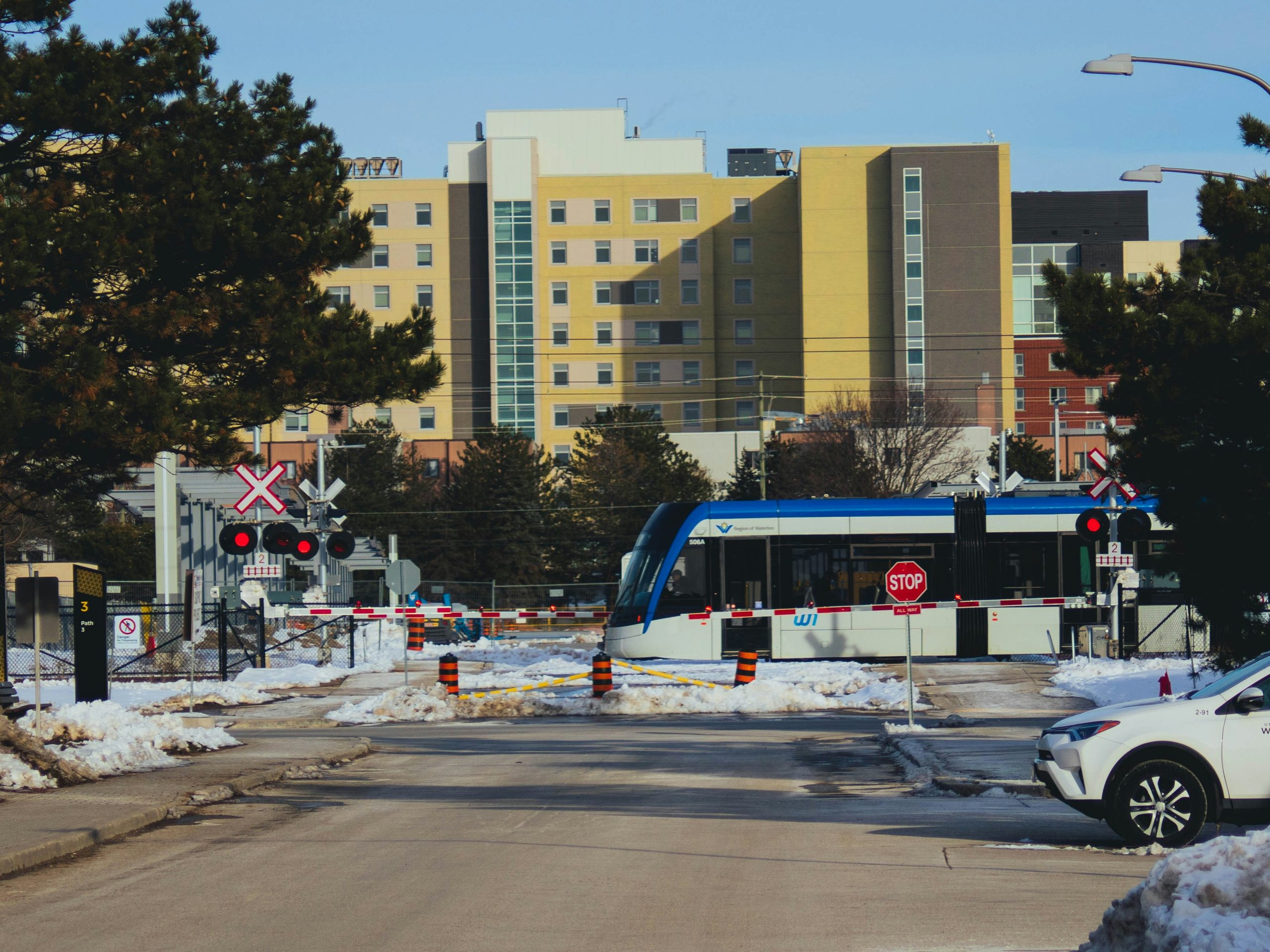
Cover photo by Crawford Passy on Unsplash.
Thank you to our partner at the Canadian Alliance for Transit Connected Housing for co-hosting this event.
Despite its promise to improve access and sustainability, traditional transit-oriented development often makes housing affordability worse in cities across Canada. When major transit projects are announced, nearby property values rise, affordable units are lost to redevelopment, and low-income residents – often racialized and equity-deserving populations – are pushed out of their communities. Speculation and increased demand exacerbate the financing barriers faced by non-market housing providers, while transit infrastructure policies and existing zoning reinforce the challenges.
The panel unpacks why transit-oriented development is a problem and explore the new approach being created by the Canadian Alliance for Transit Connected Housing, including:
- How the economics of transit-oriented development create barriers to the preservation and development of affordable housing
- The challenges faced by the nonprofit housing sector to access flexible, affordable capital
- Tew financing models that are emerging to help
- How new approaches can help prevent displacement
5 Key Takeaways
1. Transit projects are driving displacement without safeguards
The panel stressed that conventional transit-oriented development often accelerates speculation, quickly drives up land values, and leads to the loss of “naturally affordable” units near new lines. As private developers assemble land around future stations, existing tenants—disproportionately low-income, racialized, and equity-deserving residents—are displaced and pushed farther from jobs, services, and transit. Without policies that link transit planning and land-use planning, public investments end up worsening housing affordability and undermining equity goals along transit corridors.
2. CATCH’s Hamilton pilot shows how blended capital can work
Dina Graser outlined how CATCH emerged from a Hamilton lab that brought the city, CMHC, nonprofits, and philanthropy together to respond to a new 14 km LRT running through some of the city’s lowest-income neighbourhoods. The partners co-designed an $18.7 million blended capital fund—combining public, philanthropic, and private dollars—to offer flexible, low-cost acquisition, pre-development, and construction financing to non-profit and community housing providers within 800 metres of the line, coordinated with the city’s grant processes. The aim is a revolving, scalable model that preserves existing stock, enables new non-market units near transit, and can be adapted and replicated in other cities across Canada.
3. Policy and regulatory change are as important as money
CATCH’s work in Hamilton shows that local regulatory tools—such as upzoning, rental protection, and anti-renoviction bylaws—are crucial to making non-market transit-oriented housing feasible and faster to deliver. For example, when Hamilton upzoned to allow fourplexes as-of-right near the LRT, a nonprofit with a portfolio of single-family homes could pivot to densify its sites instead of selling, shifting from incremental change to meaningful scale on the same land base. The panel also highlighted the “gap” at senior government levels, noting that federal transit funding can require affordable housing plans without resourcing municipalities to do them, and national housing programs still do not systematically prioritize proximity to transit.
4. Nonprofit housers need scale, unlocked equity, and fair rules
Lisa Ker and Ray Sullivan emphasized that Canada’s community housing sector—roughly hundreds of thousands of units delivered by about 7,500 providers—must grow significantly, but cannot do so under current constraints. Many nonprofits sit on substantial, “trapped” equity in aging buildings, yet title restrictions, operating agreements that claw back surpluses, and rigid program rules prevent them from leveraging that value or borrowing against reliable cash flows to reinvest and grow. The panel argued for enabling mergers, portfolios, and mixed-income models, so community providers can scale up, use their equity, and compete in real time for land and projects in hot transit-oriented markets, rather than being structurally sidelined by the private sector.
5. Community stewardship and resident voice are central to equitable TOD
Beyond finance and regulation, the speakers underlined that equitable transit-oriented development depends on community stewardship and meaningful participation from those who rely on transit and affordable housing. Ker noted that transit users—often lower-income residents—are frequently least involved in decisions affecting their neighbourhoods, and argued that structured, early, and ongoing engagement can actually speed projects by reducing conflict and “risk,” rather than delaying them. Graser linked this to CATCH’s national vision: building a centre of excellence, convening municipalities and housers, and embedding community input so that future transit investments support long-term affordability, mixed-income communities, and resident stability instead of repeat cycles of displacement.
Full Panel
Transcript
Note to readers: This video session was transcribed using auto-transcribing software. Questions or concerns with the transcription can be directed to communications@canurb.org with “transcription” in the subject line.
Mary Rowe: I’m Mary Rowe. I’m in Ottawa today, and I want to read to you the land acknowledgement that I noticed the Canada Council uses because I think it’s so beautiful. I’m here for the research conference that CMHC and StatCAN and Infrastructure Canada, Housing and Infrastructure Communities Canada have been convening over yesterday and today. A lot of our colleagues are downstairs at that, and I came upstairs to host the CityTalk, which I’m pleased to do. And here is the Canada Council, just a few blocks from where I am, their Indigenous land acknowledgement. It’s beautiful. “The Canada Council for the Arts acknowledges that our offices located in Ottawa are on the unceded, unsurrendered territory of the Anishinaabe Algonquin Nation, whose presence here reaches back to time memorial. The Council recognizes the Algonquins as the customary keepers and defenders of the Ottawa River watershed and its tributaries. We honour their long history of welcoming many nations to this beautiful territory and uphold and uplift the voice and values of our host nation. Further, the Council respects and affirms the inherent and treaty rights of all Indigenous peoples across the land. The Council has and will continue to honour the commitments to self-determination and sovereignty we have made to Indigenous nations and peoples. And the council acknowledges the historical oppression of land’s culture and the original peoples in what we now know as Canada, and fervently believe the arts contribute to the healing and decolonizing journey we all share together.” This acknowledgement was written with members of the Algonquin community, and I just wanted to share it with people.
So thanks for tuning in to CityTalk. We have a really interesting session today where we’re going to talk about … we’re in an interesting moment in Canada where we’re going to be making enormous investments in infrastructure. And I think the Prime Minister announced some more of them today. The session that I just was involved with here in Ottawa had a participant talking about critical minerals. And these are enormous investments. And transit is another piece of enormous investment that has happened across this country and will continue to. And we’re here to talk about what is the potential for development without displacement. And a particular model that the CATCH folks have developed, and then to hear from colleagues who are part of the CATCH Alliance, as we are, CUI is, and all of you in the audience, to just throw in your two cents worth about how we can do this better, because I think everyone is conscious … we’re at a moment. The government is going to meet the moment, governments are meeting the moment. There’s going to be massive investments of some kind. We all know that we need different kinds of infrastructures, transit housing, a whole bunch of different things. But what happens to the communities in which those assets are being developed, and how do we do it in a way that doesn’t uproot people, displace people? And we know this is a challenge because we’ve had years and years of this and we need to build inclusive neighborhoods and complete communities in ways that permit people that have been there to stay and for newcomers to come. So without further ado, thanks for joining us on CityTalk. By all means put questions in the chat. We try to get to them. And then lots of people post questions in the chat and then other chatters respond. So it’s all about self-organizing, have at it, go. And I’m really pleased to have Dina Graser with us here, who’s the ED of the Catch Pro program. She’s going to give you a bit of an overview of how it’s structured and what the work is that they’re doing. And I appreciate that we’re once again trying to be both zooming in and zooming out. Last week we talked about the federal budget and this week we’re talking about very specific impacts in communities of investment like this. So Dina, if you turn your camera on, then we can get a chance … people can hear from you and then we’ll add our other two participants, Lisa and Ray, once you are done. So over to you. Welcome to City Talk and delighted to be working with CATCH on this program.
Dina Graser: Thank you. Thank you so much, Mary, for your personal support and for the partnership of CUI. We are so grateful to you and to the Canadian Housing and Renewal Association and the Canadian Community Housing Transformation Center, which are all fabulous partners of CATCH. And I’m so excited to be here today. I think what I’ll do is I’ll throw up a few slides. I’m not going to do a whole long talk because I think part of the beauty of these CityTalks is that they’re so informal. [Slide Show begins] …
I’m going to tell you a little bit about why CATCH was formed, the origin story, and what it is that we’re trying to do. And I’m going to do this pretty quickly so that we leave lots of time for conversation. Let’s start with the sort of raison d’être. Transit-oriented development is a great thing. We all know living near transit is a great thing. The benefits of living near transit for economic life, for social life, for accessibility to friends and family, those are all really undeniable. But there is a problem with transit-oriented development as it’s currently done. And I think it’s starting to dawn more and more on people across the country that as soon as you announce a transit line, the land values on either side of the line go up. And often this lays the basis for a lot of speculation. Private developers come in, they buy up a lot of the land because they know that there’s going to be density around that transit. They want to get in on it. But what happens is that a lot of affordable housing gets lost, including a lot of naturally affordable housing. And a lot of people who are living near the line in that affordable housing get displaced. So the people the very people for whom the transit is supposed to be for often end up having to move quite far away from it. This combined with some other factors, like misaligned policy and planning frameworks, makes it really tough to retain affordability in those areas, particularly for people from low income and marginalized groups. As it stands right now, transit planning and land use planning tend to go like this … an awful lot of the time. And then there’s nobody looking out for the shop. There’s nobody minding the gap, as it were. Combine this with the financing barriers that are already faced by nonprofit housing providers, and I know Lisa and Ray can talk a lot more about that. And what we see is that transit-oriented development is making our housing affordability problem worse. So back in 2023/2024, Social Innovation Canada with CMHC, the City of Hamilton, and a whole group of partners got together to talk about affordable housing in Hamilton. So as many of you will know, there’s a 14-kilometer LRT line being built in Hamilton, and it goes through some of that city’s poorest neighborhoods. And at the time of the lab, the tenant group had already counted 168 people who had been displaced. This group got together and said, “how are we going to deal with trying to maintain some affordability near the transit line?” And you can see that there was a whole group of partners who came together, not just SIA Canada and CMHC, but also the Hamilton Community Foundation, the Federation of Canadian Municipalities, Hamilton is Home, which is a collection of nonprofit housing providers. And they decided really the solution was to develop some new financing solutions and funding pathways to preserve existing, and develop new affordable housing near the transit quarter in Hamilton. But I think it’s important to say that there were actually three outcomes from that lab as I see it. The first thing that happened was that the city stepped up with some policy and regulatory pieces, right? They upzoned near the transit line. They put into place rental protection bylaws and renoviction bylaws. They did a whole series of … they used the tools at their disposal to try and mitigate the problem. That was the first thing that really came out of it. The second was that all of the partners co-designed a blended capital fund. So the notion of this fund is that you have public funding, or low or no interest funding, which then leverages private investment and you create a blended capital fund that provides financing, flexible low-cost financing, to affordable housing providers or acquisition, development, construction financing, and it’s very specific kind of funding. It’s not designed to replace what’s already out there, it’s designed to fill the gaps. Affordable housing is hard, right? And we worked very closely with the housing providers to say, like, when do you need funding? What kind of financing do you need? How much do you need? And then … so it’s blended in the sense that it’s public and private capital. But then the other piece of it is that it’s designed to work collaboratively hand in hand with the city’s housing secretariat. So when a nonprofit housing provider goes to the city to apply for a grant, if their project is within 800 kilometers of the transit line, they go into a stream for transit-oriented affordable housing to be considered for grants from the city, but it will also come to our fund to be considered for flexible, low-cost financing. And then ideally, as we’re working out the process now, but ideally those two halves come back together and make a joint kind of contribution to the project. So the city is responsible for the deal flow in the sense that the project stream comes through the city. And this becomes a revolving fund, which is scalable and perpetual. So that’s the kind of short version of the fund. We’re putting up a pilot fund in Hamilton right now. It’s an $18.7 million dollar fund, which is sort of a pimple on the nose of the problem. But we do have a scaling strategy that we hope will build it up further and I’ll talk a little bit more about that in in in a minute. The third thing that came out of this lab was the creation of the Canadian Alliance for Transit Connected Housing to try and replicate and scale the work that had been done in Hamilton across the country. And our mission really is to try and build affordability and inclusion into the development process as early as possible to try and prevent or mitigate these displacement effects. And there are three things that we’re trying to do. We’re going to create a center of excellence and a resource hub with tools and best practices around equitable, transit-oriented, affordable housing. That is a mouthful, but it really does speak to the mission of trying to build in the affordability and inclusion from the start. We hope to replicate the same structured, collaborative engagement process we used in Hamilton where you bring everybody that really has an interest in solving this problem around the table and work with the city and the transit agency to try to integrate these plans and then help finance them where it makes sense. So we will create a blended capital revolving fund in each city where it makes sense to do so. This is going to look a little different in every city because every city has different issues, of course. And then hopefully, this little pilot fund that we’re just getting up in Hamilton will scale across Ontario and ultimately across the country. I’m going to stop there because I know we have lots to talk about. There’s lots more I could talk about, but suffice to say we’ve got great partners, we’ve got great advisors, and we’ve been going across the country, meeting with people from Victoria to Halifax and there’s a lot of interest and a lot of excitement in what we do. So we’re happy to be doing it. Right now we’re concentrating on getting some knowledge mobilization out, talking about the problem to people and come 2026 we’ll be going on the road to try and do some workshops in different cities.
Mary W. Rowe So how big … you’ve got a fund now, how big is it now? Eighteen million?
Dina Graser It’s not … we’re at the point where we’re just finishing the raising of the 18.7 million dollar fund. We hope to get it closed over the next couple of months. Our timeline, which I think is realistic, hopefully, is that we’ll do the first call probably end of March and start deploying funds in the spring in Hamilton. And in the meantime, of course, be working to scale it up.
Mary W. Rowe How did you come up with 18.7? How do you know whether that’s the right number?
Dina Glaser That is because in the lab, they actually took five projects and worked really deeply with them on the proformas and figured out for those five projects what they needed. And that’s what added up to the 18.7. Now that may not be the same five projects that ends up getting funded. That’s why it’s an odd number because it’s based on real projects.
Mary W. Rowe Yeah, that’s great. Okay. Let’s have Lisa and Ray join us because I want them to kind of add their two cents worth. And you know, always the case with these projects, you know, I can imagine already people saying, “Oh yeah, yeah, it’ll work in Hamilton, but will it work somewhere else?” And I think that thing that I’m so admiring of what you’ve done, Dina, is that you’re actually trying to create a prototype and say, “well, this is actually how it works here.” And then as you suggest, you’re going to learn differently … Well, in Kamloops, it’s going to have to look like that, and in Antigonish it will look quite different. But I think the … let me just also just put a plug in, and I know people will say this in the chat. “Isn’t it great to see a solution?” Like this is the dilemma. You know, somebody said to me – “in Canada, we love to admire the problem”, but you’re actually coming up with a solution. So let me go first to Lisa and then Ray, and then just at the beginning, folks, just tell the CityTalk audience here who you are and what your perspective is. I saw that Ray, you called yourself a “longtime houser”. Lisa, would you call yourself a longtime houser?
Lisa Ker I’ve always had this joke with Ray about the term “houser” and how it reminds me of mouser – like a cat.
Mary W Rowe But it’s not, it’s not “hoozier”, I noticed it’s “houser”.
Lisa Ker See, that’s the other part of it …But no, I’ve I started working in housing specifically in 2003 at Toronto Community Housing, and then I went to the nonprofit sector, and now I’m in a pan-Canadian nonprofit, which provides funding, resources, and tools to communities and groups across the country to either preserve, maintain, or grow the community housing asset that they own.
Mary W Rowe And in in that order, what did you say? Preserve, maintain and grow …
Lisa Ker In whatever order they come up with. We believe that community housing, which includes nonprofits, cooperatives, community land trusts, that’s all community housing. We do not have a mandate for what is called public housing. So housing that is municipal or in the case of, for example, Ontario LHC, so local housing corporations, but we have everything else.
Mary W Rowe And just for people to get a sense of the scale, Lisa, the segment of housing that you’re focused on, what percentage of the total housing unit stock would that be?
Lisa Ker It’s between … right now, depending on who you ask, between four and five percent. Now in many other OECD countries that we admire and respect, it’s closer to double that, up to 20. There’s always Vienna, which everyone loves to talk about Vienna, which is, you know, more like 50/60%. But we are aiming as an organization to unite the community housing sector behind a 20% goal for the future. So an aspirational goal.
Mary W Rowe How and how many actual units would you have right now? What does the 4.5% look like?
Lisa Ker 4.5% actually does include public housing for most calculations. In terms of community housing providers across the country, approximately 7500 across the country.
Mary W Rowe 7500 units.
Lisa Ker No, 7500 providers.
Mary W Rowe Providers. And then all in, how many units do you think they provide?
Lisa Ker Hundreds of thousands.
Mary W Rowe Yeah, I was going to say … I mean, this is where these larger conversations, which are happening, you know, twenty two floors below me today … Build Canada Homes is going to build 45,000 units in five years. It’s a very small number. An important number, but a very small number. That’s what I was kind of getting at. You’ve got 7500 providers and someone can do the math, but it’s hundreds of thousands of units. So Ray, talk to us about you … You old “houser” you. And then we’re going to talk a little bit about the sort of common challenges everybody’s facing. Go ahead, Ray.
Ray Sullivan Yeah, thanks. Thanks, Mary. I am a houser and I’m a very proud houser and I’ll own that term. You know, it’s something that I first heard from an affordable housing provider in the US. And when I heard it, I was like, well, that sounds really Canadian because it kind of like is reminiscent of a hoser, but it’s about housing at the same time. And I work at the Canadian Housing and Renewal Association. This is what we do. We bring together housers from across the country. So folks who work for nonprofits, for public housing corporations and municipalities, researchers, academics, and we really rally around this idea that we need to, in the next decade, double that share of community housing and then work toward 20%, as Lisa talked about. And yeah, there’s over 700,000 units of community housing. And it has taken us about 60 years to get to that level. We need to do that and more again in the next in the next 10 years. And that’s just to, you know, barely meet the actual need that is that is out there. And this is what’s exciting about it is that getting there and doing that, in that period of time, means we can’t do it the way we did it over the past sixty years. So, you know, the form, the mix, the way that we create that housing, the way that we manage that housing is going to have to be different in the next decade. So we have to reinvent and transform ourselves as a sector. This is what’s exciting about CATCH, right? Is I see across the country community housing providers are figuring out these really creative ways of accessing private and philanthropic capital to stack on top of public dollars.
Lisa Ker I think one of the things that’s important to point out as well, in addition to what Ray said, is that we did have a bit of a glitch in the early nineties when there was a cessation of federal investment in housing. So we were on a different trajectory and that was halted quite significantly. So we certainly were on our way to a far higher percentage than we’re at now.
Ray Sullivan Like dropping off a cliff.
Lisa Ker Yeah, exactly. We dropped off a cliff.
Mary W Rowe If I had a dime for the numbers of times people cite this … I don’t know whether we have any retired civil servants or politicians on the chat, but we’re blaming you, those of you that were in positions in the nineties. And did this because it appears to have been a catastrophic strategic decision, which I’m not quite sure where we would point the blame. But I’m back to let’s not admire the problem totally. But it was … we’re now trying to, you know, move the ship in the different direction, right?
Ray Sullivan Yeah, exactly. And there’s a lot of community housing organizations across the country that are that are doing exactly that. And it’s quite interesting. And, you know, some of them are part of that Hamilton group that Dina mentioned as well.
Mary W Rowe Again, you know, the chat can blow up on this and inform me, chatters, where I’m wrong, but please. But I do struggle with the focus at the moment and the narrative at the moment at the federal level, which is about big projects, big investments, big nation-building projects, large, large investments. And I worry that, because I’m a worrier, that we’re missing that the fact that housing needs to be built at every scale and in every community and in every increment. And we need a thousand flowers to bloom, not just 15 big ones. And so I want to figure, you know, I always say that our challenge is how do we make money smaller? And I’m interested, CATCH … Dina, when you when you come down to it, what’s the number of units that you’re trying to ultimately create? Have you mapped that out? Do you know what you need?
Dina Graser I think yeah, I mean In Hamilton, that small fund will probably be like 140 every five years. That’s just a little … You know, at scale, if we build this out to the $2 billion level, maybe 20,000 a year, I’m not sure. I have the numbers somewhere, not right in front of me. But I think your point is well taken. You know, Build Canada Homes has talked about trying to leverage private capital and trying to build things at speed and at scale. And all of that is admirable. But one way that they can do that is by seed funding or giving low interest investment, zero or low interest investment, into funds like ours, which are dealing with the smaller providers. We can take a kind of portfolio approach and help maximize the impact of what they’re trying to do along the same principle. But you know, I don’t know this for sure, Ray, and Lisa would know a lot better than I do about the capacity of various nonprofit housing providers across the country. But I’m guessing that in some places, you know, you just don’t have nonprofit housing providers that maybe could pull off a 300 unit development, but you might have, you know, five or ten smaller guys who could each do smaller …. So it’s the aggregate that you … but at a very local level.
Mary W Rowe Is this the approach? Are we creating portfolios? I see that BCH is putting that in its call that they want to create that. Go ahead, Ray. I think you were going to jump in.
Ray Sullivan Yeah, and you know, I an old houser. I’ve been working in this space since since the very end of the 1990s. And and I’ve sometimes fallen into the trap of thinking that small is beautiful, right? And we get into this kind of sentimental view that this tiny nonprofit with just a handful of staff working so hard, fingers at the bone, is is the purest way of delivering affordable housing. Let me tell you, it sucks. It sucks for the people working in that situation. It sucks for the people governing … the tenants who are living in a situation, because it’s an organization without resiliency, without the kind of capacity. And if if you’re a small organization and you believe you’re doing a great job in your community, don’t deny the community next door that same opportunity of your good work. And this is the important thing about scaling up. And I’ve had some of the benefit in my position of traveling internationally, doing housing study tours with Chartered Institute of Housing and CHRA. You know, Lisa’s also met … it was a conference we were at, the Housing Services Corporation Regeneration Forum, and Babu was there from Poplar Harka in in the east end of London. And a large, like 15/20,000 units in in their portfolio. [Just over 10.] Over 10, sorry, I exaggerated a little bit, but intensely community focused, intensely tenant and resident focused. Incredible diversity, incredible lived experience as part of their management team, you can do that at a bigger scale, which means you can do a lot more. So, you know, let’s not … small might be beautiful, but let’s take what’s beautiful and scale it up to something that has bigger impact.
Lisa Ker I think the other point that we want to also make sure that we never lose in this is the unlocked and trapped equity that lives in hundreds and even I would say thousands of providers across this country who built equity because they have been running small, medium, or hoping to be larger. They’ve been running for decades. And they have built up equity in the buildings, which remains dormant and untouched and can be easily leveraged with regulatory frameworks and policies to allow that to happen.
Mary W Rowe Do we have obstacles? Do we we have obstacles to do that? We don’t have the tools.
Lisa Ker We have the more obstacles than we frankly ever could hope for. So we need to dismantle many of those obstacles. And so when we talk about the capacity of the nonprofit sector, absolutely there is learning and there is growth to be done in terms of financial literacy, development literacy, and other things. We talk about pooling organizations together, but we also need to talk about the ability of organizations to unlock what is theirs, that they’ve managed, that they’ve paid mortgages off on, that they’ve taken care of and stewarded, and use that to attract other capital into the mix to grow at scale. That’s ahuge oversight.
Mary W Rowe Okay, so just let me dumb here. Like just fill me in, Lisa. So are we saying that you’ve got a co-op or you’ve got a 300 unit something, something that’s been around for 45 years that some church group developed or whatever, and and and they’ve done it and people live there happily and productively, and they’re sitting on that asset. And we don’t make it easy for them to leverage that assets to get more resources to be able to develop.
Lisa Ker No, quite the contrary, actually. And this is not … this conversation is not about sitting around pointing fingers and blaming people.
Mary W Rowe No no no no no I understand
Lisa Ker … and I didn’t mean to … and I wasn’t intimating that you were doing that. But I just want to be clear that we know what needs to happen. Now let’s do it. So to your point about examining the problem, enough. Move on.
Mary W Rowe Lisa, do we lack the capacity? I mean, we at CUI wrote a report on faith-based property, faith … the properties that came out of faith communities and may still be actually stewarded by them, but they may not be. And what we discovered there, there’s thousands of them, and they’re … you know, they need a new model, new business model. But we found there’s reluctance in that sector. That’ll make the chat blow up, but there is, there’s a reluctance in that in that sector to take on the housing. Is there the same reluctance in the not for profit housing community to take on more? Or not?
Lisa Ker I want to contextualize it this way. Okay. If, to Ray’s point earlier, you have managed and succeeded for decades with cyclical funding that is never guaranteed. You’re constantly having to prove yourself to everyone. You are, despite never having missed a mortgage payment, never having committed any fraud or anything untoward, you are constantly left in the shadow of doubt around – are you really able to do this? Those messages eventually sink into a sector, into its culture. And the messages we’ll tell you when to think and we’ll tell you when to act. So we need to release that element. Ray, do you want to jump in?
Ray Sullivan Absolutely. Yeah, you’re absolutely right, Lisa. But also look structurally at some of the impediments that are there. And you know, real estate management, real estate development is hard. I’ve used this line a couple of times before. My wife likes to watch old movies. People remember Fred Astaire and Ginger Rogers, fantastic couple from old classic Hollywood things. And and a journalist once asked Ginger Rogers, you know, what’s it like dancing with the great Fred Astaire? And she said, Well, I do every step that he does, except backwards and wearing heels, right? So every step that the private sector does, we are also doing. And most of us are wearing heels in the in the nonprofit sector. But we have these added added constraints, right? So sometimes it’s like self-imposed restraints. We put restraints on our cash flow by by having rents more affordable, or governments put that restraint on there for us. But you know, how do you leverage property? So you can borrow against the asset itself, but wait, not if there’s a government that has a restriction on title that prevents you from doing that. And that is a very, very, very common thing. Or you can borrow against the cash flow that that property generates. Unless, and this is a very common thing across the country too, governments have operating agreements that claw back every dollar of surplus that you generate. So there is no excess cash flow after you paid the mortgage. So these are structural impediments that have to be removed to unleash the the the creativity and change this this way of thinking that Lisa was describing.
Lisa Ker Well then back to Dina’s project, which is brilliant and exciting. Lifting those restrictions will create a parallel system. Everyone agrees that the market does what the market does because that’s what the market’s supposed to do. We want fairness injected into this, and we want to have processes that allow publicly funded nonprofits to compete at the same speed for the same turf, if you will, whether it’s acquisitions, whether it’s building, whether you’re adding to a neighborhood, or you’re simply in perpetuity keeping something affordable, we have to be allowed access at the same time because we’ve all acknowledged that transit-oriented development, one of the biggest challenges, is the speed at which suddenly everything gets real expensive.
Dina Graser And I also, if I could just interrupt, Mary, say, you know, it’s remarkable that you have the Canada Public Transit Fund, which has been putting in billions of dollars into transit, and they actually have, for municipalities, a requirement for a regional plan to, you know, to access certain amounts of that money which also includes a requirement for, you know, affordable housing. They want to see how affordable housing fits into the plan. But there’s no funding for the municipalities to actually do that. Similarly, of course, we have yet to see how Build Canada Homes will really evolve here, so I don’t want to make too many grandiose statements out of it. But so far, we haven’t seen anything out of Build Canada Homes that actually places proximity to transit as any sort of criteria or even consideration for funding. So you’ve got this gap at the federal level where they’ve got all this money going to transit and they want affordable housing near it. And you’ve got BCH, which wants to do all this affordable housing, but hasn’t connected. So we’re trying to fill the gap. We’re trying to say like there’s no policy or program or lever that’s putting these things together, and there really should be.
Mary W. Rowe But presumably the provinces, the “P” word, presumably the provinces are in there, ideally, and we have people on this call from all of the provinces, and we have some Americans – always delighted to have people from the US on these calls. Dina, when you look at the, you know, I made notes here about … there’s the policy regulatory piece, the rules that need to be pulled, and then there’s the money, the blended capital. And then it sounds to me like there’s something around attitudes and, you know, kind of getting the kind of collaboration that you need. But if you … when you’ve been doing the CATCH program, where did you start? Did you decide, “oh, this is the place to start, let’s get the rules changed?” Or did you say “let’s get the money in hand?”
Dina Graser Well we started in … I mean physically where did we start? Or where did we start conceptually?
Mary W. Rowe Either.
Dina Graser Yeah, I mean we … I should say Social Innovation Canada had been working on housing for about five years by the time it got to Hamilton. It had done the lab on the financialization of housing. Then it had done a bunch of work on a big fund, right? And then discovered doing its work on trying to create a big fund for affordable housing, that there was a real disconnect between the needs of big institutional investors and the providers on the ground. It was difficult to make that connection work. So then by the time they started to work in Hamilton, I think, you know, Andrea Nemtin, who’s the CEO of Social Innovation Canada, would tell you that they had a pretty good understanding of the financial realities being faced by nonprofit housing providers. And when they got everybody around the table in Hamilton, you know, and said to the nonprofit housing providers, like, what is it that you need? Understandably, they said, we need money, we need funding.
Mary W. Rowe But they need money when and where in the process?
Dina Graser And so then it was a process of charting that out, of saying, “okay, let’s isolate all the different stages.” And then, you know, I didn’t put this in the slide deck, but I have slides on it. You know, let’s isolate all the different places in the process where you need actually cash and figure out when and what kinds of cash and how it needs to work to help make these projects move. Because what happens is they, you know, they’re all applying for grants. You apply for a grant, you wait, you wait, you wait, something gets stuck. We all know time is money, right? So a lot of it is trying to keep things rolling, I think was the … was part of the impetus. So that, you know, the notion of a social finance fund that would leverage low interest investment and bring in philanthropic and private capital was really a way to try and say, “okay, how do we build a tool here that can scale?” That can
Mary W. Rowe Is some of your dough coming from the social finance fund?
Dina Graser Not at this point, but we are still talking.
Mary W. Rowe So from your lips to God’s ears.
Dina Graser From your lips to God’s ears. We have … we’re meeting with them. We’re meeting with them. But I mean the term social finance funds more generally.
Mary W. Rowe Yeah, yeah, yeah. I understand.
Dina Graser Putting in two million dollars worth of seed funding for the Hamilton funds, I should say.
Mary W. Rowe Again, thanks to everybody on the chat. There’s several of you, many of you are named Mark, and I know most of you, but thank you for just having a good conversation back and forth about “what about this and how about that …” So those of you that are, you know, that have never been on the chat, you’re sitting there and you don’t pay attention to the screen and you’re doing something else and listening to us, that’s great. But you’re missing something if you don’t actually come into the chat and read because people put all sorts of interesting things there. And we publish the chat, which means it lives on in perpetuity. Ray, when you look at the scale of the challenge across the country, which I know is your writ, your mandate. Where do you think we should be starting? Where do you think … I mean it’s a kind of a … it’s a question I get asked all the time. Like, should we be starting in the big markets? Or and I know you’re going to probably say, well, “we have to start everywhere”, but do you know what I’m getting at? You know, how do we help the government, I guess, prioritize? And then how do we help capital, because we know the bulk of the money has to come from private capital, institutional capital, how do we help the money go to where it should go first?
Ray Sullivan Yeah, so first I think it’s important for us to start thinking in terms of portfolios, not building by building. So we’re not going to solve this problem one building at a time. We need to be thinking of multi-year, multi building development portfolios so that you get on a pace, you know.
Mary W. Rowe But within that … within those portfolios, just to keep Mark Guslits, who’s channeling Jane Jacobs on the chat here, to keep the people happy that want to see granular and small scale, those kinds of projects can sit in a portfolio.
Ray Sullivan Exactly. You know, and CCOC where I used to work here in Ottawa has got a pipeline of developments. Some of them are nine units, you know, like because that’s what fits into that neighborhood. But if you were thinking about it one at a time, you’re never going to get there at that scale. So you bundle them into groups of development projects and move forward. I think we need to be thinking a lot more in terms of mixed income housing. And you know, one of one of my favorite stories I like to tell … one of our board members, Louis Philippe Myre from Interloge in Montreal, came in … nonprofit that it existed for about 30 years, doing a good job at, you know, at a smaller scale. And the board said to him, “Yes, we’re all on board. We want you to grow the corporation. We want you to build a hundred units of deeply affordable housing over the next 10 years. He said, ‘Yes, I will build a thousand units of housing and a hundred of them will be deeply affordable.” “No, no, no, no, no, no. You didn’t hear me. We said a hundred units of deeply affordable housing.” He said, “I will build a thousand units, a hundred will be deeply affordable, and the other nine hundred will help us pay for the hundred units that you asked for.” So really embracing this broader mixed income kind of place. It’s tricky, you know, it introduces risks around the market if you’re getting close to that market territory, but it also adds a lot of resiliency and flexibility and it helps to pay for capital. And so the cost of capital competes directly with the affordability of a project. You know, and if you have less rent income, you have less ability to service debt. So you can’t pay market rate loans, for example. And this is where you use government grants to buy down how much loan you need to have, or you seek financing directly from the government. But it doesn’t always work very well, right? And this is where some of this private capital and social impact finance comes in. You know, if it takes you three, four hundred thousand dollars just to get to the point where you can put in an application for CMHC financing, where does that money come from in a nonprofit that doesn’t have access to equity in the same way? You know, if it takes many, many, many months for that loan application to be processed, well you’re already past the point of no return once you’ve once you’ve applied. You’ve got shovels in the ground. You’ve got your building permits lined up. You’ve got to have a cash flow to get that. So this is where some of these interesting forms of capital start to come in to fill those gaps. And others that are also using it as something that behaves more like equity than a loan and then can be repaid, you know, 10 years down the road if the loan is refinanced. So there’s a lot of room to build on that base of direct government financing that allows us to think in terms of larger scales.
Mary W. Rowe Okay, thorny issue coming. And I don’t know what the answer is to this, but you know, in CUI I convene all sorts of conversations on all sorts of topics and if I had a dime for … it doesn’t matter what topic we’re talking about, people want things faster. It’s just the constant mantra. Things take too long. So I’m just interested, Dina, the CATCH program. Is it going to get at that? Can we make decisions faster? Can we get approvals faster? Do we have to break glass? Like I’m trying to get a sense of how we could move more nimbly. Is CATCH looking at that?
Dina Graser I think that’s part of it, certainly at the municipal level. And that’s one of the reasons why it’s so critical to have the municipality at the table. So let me give you an example. In Hamilton, East Kiwanis had four hundred single family homes, affordable housing, within eight hundred meters of the transit line. They were going to sell some of them and, you know, try and build some others. And In the course of the lab, the city moved to upzone, I think it was to fourplex as of right. And so suddenly Brian Sibli at Kiwanis realized they could actually densify. They could create fourplexes out of all of those sites. And so that changed their strategy about how they were going to do that. So I’m hopeful that if you are around the table with the right people and the municipality is willing to, you know, work with you and you know, from your lips to God’s ears, we get provincial and federal, you know, folks around that table. You know, when people sit … as you know, Mary, when you have a group of people around a table trying to solve a common problem, and everybody’s got their head in it and trying to figure out a way to remove those barriers, often you can make those breakthroughs. You can start to make those things happen that will hopefully expedite the process.
Mary W. Rowe Well and sometimes, you know … I just love on the chat, we’re having a great “small is beautiful/No, it isn’t” fight on the chat. Robert Moses, Jane Jacobs lives on. But … and Mark, she’s only been dead for twenty years, just correcting you there. You were right the first time. But Dina, the if we talk about taking risks, government taking risks, it’s easier to get them to consider to take a risk in a smaller unit, in a smaller footprint. And so that’s why these projects are so interesting. You’re doing it in a fairly small footprint. So the risk to the city of Hamilton … it’s not that they’re upzoning the whole city or something.
Dina Graser And there’s a big concentration now around transit station areas too. Lots of governments looking at transit station areas and what they can do around that too. So yeah, I mean geographically the footprint may be limited, but that doesn’t mean … I mean I think to Ray’s point, a lot of … rather than getting all polarized about big versus small, I think it’s “yes/and” … We need everything.
Mary W. Rowe Yeah, yeah, I hear you.. Well we’re in a housing … it would appear we’re in a housing crisis period, without even the qualifier. But Lisa, with your 7500 members, I’m assuming you’ve got big, big operators and then small operators in there.
Lisa Ker Yeah, we don’t have members per se, just to clarify. I think one of the constituents that we’ve left out of the conversation thus far, which the center has also provided funding for, is community. So people who actually live in communities, where there is transit-oriented development or not, we fund both … We’ve funded several projects across the country in multiple jurisdictions, and I think that’s one of the benefits of being able to work, all of us from a pan-Canadian lens, is that when we say, well, this is a small footprint, yes, but it’s been replicated 18 times. Therefore, we have … so I think one of the things we also need to remember is that you have organizations, you have governments that have agency, and then you have people who live in those neighborhoods who also require structure, whether it’s participatory planning or participatory, you know, policy making, you need to provide structure for individuals and people who reside in communities to also have their say and their input into what it is we’re talking. And everyone I understand is, “oh, that’s just going to delay things ….” As a matter of fact, when you start creating a culture where that is inherently built into any of these processes, it makes things faster. Once you have a clear way of doing things and you replicate that, as opposed to the afterthought, which occurs for many of us, which is … I wonder what people think. Oh, wait, they’re out doing a demo. Oh, yeah. They’re not happy, right? So instead of waiting till the demo, having … and we’ve funded projects of people who are on the chat right now where they organized community to have their say and to move things along and to be more creative. And I think that is essential.
Dina Graser I mean, when I worked at Metrolinx, Lisa, and I was trying to convince this is many, many years ago. I was trying to convince the organization, which was still then kind of new it had been, you know, Go and Metrolinx and everybody had sort of been glomed together. I was trying to convince them of the value of community engagement. I was the newly hired director of community and stakeholder engagement. And I finally understood that the only way I could explain to the engineering side of the shop, why this was important, was the language of risk mitigation. I said to them, you know, a very small group of people, even just one person can stop a very large project in its tracks. And in fact, that had happened to Metrolinx.
Mary W. Rowe Literally in its tracks
Dina Graser Get out in front of it, figure out where the fires are, figure out where people’s concerns are, and address them before you go out and spend a million dollars on a design.
Lisa Ker Well then, make a statement about the role of citizens and the public and individuals as a collective in envisioning their community that they’re going to live in with transit. I speak as someone who’s never owned a car. I depend on transit and my bicycle. But transit for me is actually the way that I get around. There are many people like me. Now, some people have cars, maybe one car in their family, but transit is something that affects a number of people. And when we look at the actual construct of our society, people who generally take transit are the ones who are likely to be least involved in the decisions around it. So we need to flip that completely around and create, as many people are referencing in the chat, in this city in Europe and this place that I’ve been to, yes, because there is that collective sense of ownership around the project.
Mary W. Rowe So I … you know, just at the risk of going – I’ll come right to you, Ray, but just let me add one little piece that I’m asking. At the risk of trying to again continue to turn the ship around, it’s interesting to me that housing has become the galvanizing conversation we can all have. But I’m wondering whether or not the “T” in CATCH … can transit also be transformed in how it’s being … somebody has asked in the chat, what about micro-transit? Or are we looking at how that could be re-localized? So, Ray, I’ll come to you first and then we’ll have other people throw in.
Ray Sullivan Yeah, and I don’t know if I have an answer to that, but I wanted to talk about transit- oriented development a little bit and the point that Lisa was making about, you know, where the transit users are. And the likely thing is if people are paying top dollar for those homes in those new transit oriented development communities, they’ve probably got a car and they’re probably going to use it, right? But what also is happening, and I think Dina talked a little bit about deplacement, but there’s this general huge phenomenon of the loss of existing affordable housing in the marketplace right now.
Mary W Rowe Let’s talk about that.
Ray Sullivan I credit Steve Pomeroy for regularly doing a lot of this research. You know, the average income of renters is about $60,000. Forty percent of renters would require a rent of $1,000 or less to be able to afford their homes. When you look at the loss of those units renting for less than $1,000, city by city … in Winnipeg, for every one home that has been built you know, with government support for affordability, we’re losing 35 in private market. You know, in Hamilton, it’s 31 to one. In Vancouver, it’s 10 to one because they don’t have a lot of homes under $1,000 to lose. You know, they’ve already lost them.
Mary W Rowe It’s a staggering number.
Ray Sullivan It’s a huge number.
Mary W Rowe Why is this happening? I know Carolyn Whitzman often talks about this that we’re losing … Why? Why are we losing these?
Ray Sullivan So TOD is one of the phenomena, right? It automatically drives up the housing costs within, you know, whatever radius of those transit stations. And then this has this … this fuels this cycle of displacement because landlords, especially if there’s vacancy decontrol, have a motivation to, you know, grandma who’s lived there for 25 years and is paying $800 for a one-bedroom apartment. That landlord is motivated to get rid of grandma so they can charge $1200 … $1500.
Mary W Rowe And where we experience that at CUI is all our work on Main Streets that, you know, you have tons of affordable stock above the store. And when that main street redevelops, it gets replaced with a five or six story intensification – fine, but it’s higher end units for sure. And it’s been … it’s not been family housing particularly. And I don’t know how we ever get those spaces back. Dina, what were you going to say behind this?
Dina Glaser I was just going to say that a few years ago, when I did some work with ULI, I was stunned to realize that the City of Toronto wasn’t actually tracking how many small affordable units were being lost. They were being lost out of the private market and they didn’t keep tabs on that necessarily. I was gob-smacked about that. I don’t know if that’s changed.
Mary W Rowe Lisa, doesyour constituency report that? Do they tell you what they’re losing?
Lisa Ker Not per se, but we work very closely with people like Steve and like Carolyn, obviously, as we’re part of this system and this industry. I think that to make a link back to a point that Ray made earlier around just the fact that, for example, community land trusts and affordability and how that’s preservation of affordability, but also the … see … and my thought is gone. I love how that happens live.
Mary W Rowe No, don’t worry. Don’t worry, I’ll buy you some time just by saying that the chat is blowing up and I’m having trouble even with my own version of ADHD to keep track of everything people are raising here.
Lisa Ker They’re talking about how housing is everything. And in fact, for those of us who work in housing, some days it does feel like that. But the loss of affordable units (here I’m I’m back on track) … So I think we have also some semantic issues within our sector and outside our sector around what constitutes affordable housing and who actually lives in affordable housing. We have this sort of mythology we’ve started to create in our vernacular about how nonprofit and community housing is for vulnerable people who need lots of help. When in fact, what we’re talking about is affordability in where people live and the impact that, for example, transit-oriented development has on the average person living in a community who is trying to pay their rent, pay their mortgage. Live comfortably and not beyond their means, which is actually where they end up going because of the pressures of the market. I think we need to restore our perspective not only on affordability, but also on how we view those organizations who have mission and have a drive for perpetual affordability or for a service that might be appended to it. Back to the mixed income, you can still provide services to people that other people have qualified as vulnerable. And ensure that you have a revenue stream that will consider affordability as part of the business model for a variety of people, not just people that others have labeled vulnerable for some reason or another.
Mary W Rowe Yeah, yeah. So a shout out there for the mixed, the heterogeneous mandate that we all appreciate is important. We only have a few minutes left, so I, you know, I’m hesitant to bring in a new topic, but why not? What do you folks say to the yin-yang critique of … do we need housing costs to come down or do we need people’s incomes to come up?
Lisa Ker I don’t think it’s an and/or … maybe an and/and
Mary W Rowe Well, I don’t know. That’s the dilemma. But you know what I’m getting at?
Ray Sullivan So we need to be talking in about housing costs in relation to people’s incomes, right? And someone posted in the chat, you know, the accepted definition of affordability, 30% of income. But the answer is who’s income, right? Everything’s affordable to someone. So we need to be talking about affordability in those terms – in relation to income. And if we’re talking about it in that ratio. Then, you know, one goes up, one goes down, doesn’t matter, it’s the ratio of affordability that’s important.
Mary W Rowe I mean, you know, we’re seeing costs, prices in the major markets of housing ownership and of rentals coming down at the moment. It’s coming down in the GTA, in the GTHA and some of the key markets in Southern Ontario, it’s certainly coming down in the lower mainland. It’s having all sorts of other ripple effects though. And so I think that’s the … it’s such a complicated system.
Ray Sullivan Yeah. And in my view, it really exposes the untruth of this supply supply supply argument that we’ve heard for the past couple of years. You know, if we just pull out the brakes and the barriers, the private sector will develop all kinds of housing and that’ll lead to affordability. CMHC’s put out two reports now saying, you know, if we double the pace of housing starts, it’s going to lead to affordability. Only in theory, in an economics 101 class. The real world doesn’t actually work that way. And we’re seeing it in real time right now. When housing costs level off, when rents go down, private sector can’t balance their project anymore. So they slow down because they can’t oversupply the market. No producer wants to oversupply the market and drive costs down.
Mary W Rowe Well and dilemma we’ve got is the supply we’ve got isn’t what people want to buy at the moment or even rent at the moment. That’s the dilemma.
Ray Sullivan Exactly. There’s an oversupply of the wrong kind of housing and under supply …
Mary W Rowe Yeah, exactly. Listen, for another CityTalk and for all you chatters who are just having a wave of a time over there, I think we need to talk a little bit about what’s going to happen to all those stranded units. Just saying. Because it’s a lot of inventory and I’m curious how it’s going to get magically sucked up. In the time that’s left, four minutes is all we’ve got. Dina, last set of comments to each of you. Why don’t you go first in terms of what your aspiration is for the next set of steps for CATCH and how … you said in 2026 you’re going on the road … the road’s ready to welcome you. They’re on this chat.
Dina Graser Hello, Road. Actually, there’s lots of people I know from across the country on this chat. And thank you guys so much for joining us. We are going on the road. We’re going to go and do workshops, we hope, in municipalities across the country to start to socialize the problem and to start to socialize the fact that there’s an approach and a solution. Somebody in the chat said, “well, don’t you have to do this before the transit is even planned?” And sure, ideally, you do it as far upstream of the project as you possibly can so that you have more of a chance to create that integrated planning before the land values shoot up. But the reality is that even without displacement, first of all, we’re in an affordable housing crisis, so we need more affordable housing. And second of all, with respect to the low income and marginalized people who do tend to get pushed out, we know there’s enormous benefits for that population to live near transit. It’s incredibly important for them to be socially and economically connected to their communities. So it may be that there’s all kinds of places and ways that CATCH can support communities across the country. And one of the reasons for us to go across the country is also to listen and understand what’s happening on the ground in all of those places and figure out where we can be of help.
Mary W Rowe Many models, many solutions, not necessarily always the same. Ray, thoughts from you as we close and then to you, Lisa, to close out.
Ray Sullivan Someone put it in the chat early on. “Housers get shit done.” I don’t know if we’re allowed to swear on CityTalk or not. But you know, I want to offer my admiration and appreciation to the housers across the country who are building non-market housing in creative ways, figuring out how to get that stuff done and often dancing backwards and wearing heels. So hats off to you all.
Mary W Rowe I just would like to say that I don’t think we’ve ever had Ginger Rogers cited on a CityTalk. So thank you for doing that … about the dancing backwards with heels. Lisa, last comment to you.
Lisa I think a mature economy has a balance of speculation and market and stewardship. And I think stewardship is essential to affordability. And when community providers have a chance to bring their ownership, their long-term vision of affordability, social purpose, all those things, those things deserve a balance sheet as well. And that element of competition and being able to compete fairly in an open market, because there’s very little chance that will change anytime soon. What we’re asking for is recognition, acceptance, and fairness to this process so that we can bring our vision for stewardship and affordability at the same rate as the market does.
Mary W Rowe I love the notion of stewardship. I often feel that that’s what we all are. We’re not just city builders or community builders, we’re community stewards. And thank you for just bringing that in … Ginger and stewards in the same conversation, really. It doesn’t get better than this. You know, can I just encourage the chatters to put their last comments in and also just to plug the summit. So CUI does an annual summit, a number of people both on this chat and in the audience and on this platform are coming to Ottawa December 3rd and 4th. And if you haven’t bought your ticket yet, come on, come down. We’ve got several good sessions. We started with a single day summit. It was just plenary, and then we kind of got pushed into – you need to offer a second day because people want to have a chance to do deeper dives. And we appreciate all our partners, many of whom are on this session, who are offering sessions, walking tours, but also Shorefast is doing a whole series of three things on community economies. We’ve got other people doing discussions on arts and culture and … because it’s such a complex set of things that are involved in stewardship of places and people in places. So December 3/4 in Ottawa, please … we’re not going to go live, we’re not going to live stream this year. We really want you to come. So it’s important that we get an opportunity to be physically in the same space. I’m sure my colleagues will put the registration link into the chat and we will tape the sessions and broadcast them afterwards. But we’d like to have this, we’d like a really crowded room and we want Ottawa to understand that communities are built from the ground up in all the various efforts that all of you are engaged in, including CATCH. Dina, thanks for joining us and telling us about this exciting program. You can see people love to hear and they want to see videos and they want to hear more from you. So we’re going to check in with you again as the project progresses. Ray, always great to have you and Lisa, you two old “housers.” Thank you for coming on CityTalk. And we’ll see you all again. Thanks everyone. See you next week.
Full Audience
Chatroom Transcript
Note to reader: Chat comments have been edited for ease of readability. The text has not been edited for spelling or grammar. For questions or concerns, please contact communications@canurb.org with “Chat Comments” in the subject line.
11:56:13 From Canadian Urban Institute to Host and panelists:
We’re at 433 registrants!
11:58:06 From Ray Sullivan (CHRA) to Host and panelists:
if it gets out of hand, i’ll go down the hall and raid Lisa’s frame
11:59:08 From Canadian Urban Institute to Everyone:
👋 Welcome to today’s CityTalk!
✅ Say hi in the chat & let us know where you’re joining from!
💬 Set chat to “Everyone” so we can all see your comments.
🎥 This session is being recorded and will be posted at citytalkcanada.ca next week.
📝 Captions are available — use the CC button below to toggle on/off.
💡 Share your thoughts, links & questions in the chat!
🙋♀️ We can’t respond to raised hands, but we’ll do our best to answer questions shared in the chat.
📬 Subscribe to the CUI newsletter: https://canurb.org/subscribe/
📱 Follow us on LinkedIn & Instagram @canadianurbaninstitute
🌐 Watch every CityTalk Live & Podcast episode: citytalkcanada.ca
11:59:33 From Canadian Urban Institute to Everyone:
What you’re listening to:
1. Lie Down by Saya Gray
2. La Terre by Bibi Club
11:59:58 From Canadian Urban Institute to Everyone:
👋 Welcome new joiners! Tell us where you’re tuning in from.
12:00:03 From Jana Hargarten to Everyone:
Jana from the City of Champions–Edmonton.
12:00:13 From Marienka Bishop-Kovac to Everyone:
Hello from Kjipuktuk/ Halifax!
12:00:24 From Paromita Nakshi to Everyone:
Hello from Toronto
12:00:25 From William Garrett to Everyone:
Hi rainy California
12:00:29 From Aubrey I to Everyone:
Aubrey Iwaniw here. A transportation planning professional in Toronto. 👋
12:00:33 From Dan Clements to Everyone:
Cambridge, ON
12:01:03 From Beate Bowron to Everyone:
Hi from downtown Toronto
12:01:07 From james bourque to Everyone:
Hello from Prince George, British Columbia
12:01:20 From Vinit Yadav to Everyone:
vinit Yadav from Brampton ontario
12:01:20 From Canadian Urban Institute to Everyone:
👋 Welcome new joiners! Tell us where you’re tuning in from.
💡 Don’t forget to share your questions and comments in the chat — we’ll get to as many as we can.
🎥 Today’s session is being recorded — catch the replay soon at citytalkcanada.ca
📬 Stay in the loop: canurb.org/subscribe
📱 Follow us @canadianurbaninstitute on LinkedIn & Instagram
12:01:21 From Ray Sullivan (CHRA) to Everyone:
Hello, bonjour, kwe kwe from Ottawa, on Algonquin Anishinabeg territory
12:01:46 From Don Young to Everyone:
Don Young, Federation of South Toronto Residents Association
12:01:48 From Marlee Robinson to Everyone:
hello from Chatham-Kent and the Architectural Conservancy Ontario
12:01:52 From Addie Burkam to Everyone:
Hello from Halifax Nova Scotia!
12:01:55 From David Hunter to Everyone:
Hello, Bonjour from this dual national in Philadelphia, PA. David Hunter
12:01:56 From Jason Hammond to Everyone:
Hello from Kitchener!
12:02:12 From Yasmine Koufahi to Everyone:
Hello from Edmonton!
12:02:14 From Fireflies.ai Notetaker TTG to Everyone:
TTG invited Fireflies.ai here to record & take notes. View Security & Privacy info: https://fireflies.ai/policy
Type:
‘/ff leave’ – Remove Fireflies
View Realtime notes here: https://app.fireflies.ai/live/01K9TEMD2CPGMSHH9CAE56DWY3?ref=live_chat
12:02:20 From Mark Locki to Everyone:
Hello! I’m a Planning Grad Student in Calgary and Chihuahua, Mexico
12:02:20 From Judith L Norris to Everyone:
Hello from Tkaronto.
12:02:23 From Abigail Slater to Everyone:
Hello from Toronto-Sunny:not sunny
12:03:02 From Warren Waters to Everyone:
Warren from lowertown, ottawa
12:03:13 From Marzuq Shamsi to Everyone:
Hello from Toronto, Provincial Ministry of Infrastucture, Transit Oriented Communities
12:03:14 From Zvi Leve to Everyone:
Hello from snowy/slushy Montréal. I worked for many years in transportation modeling (how to decide among big investment decisions), but my passion is integrated land-use/mobility planning.
12:03:19 From Yurij Pelech to Everyone:
Greetings from Bessant Pelech Associates Inc (BPAinc) Land Development + Project Management Consultants Mississauga ON
12:03:23 From Neiland Brissenden to Everyone:
Hello from Mount Dennis in Toronto!
12:03:31 From Carolyn Whitzman to Everyone:
Hi from the Kichi Sibi, unceded territory of Algonquin Anishnawbe nation (Ottawa)
12:03:35 From Johannes Bendle to Everyone:
Hello from Victoria
12:03:45 From Amy Siciliano to Everyone:
Hello from Halifax.
12:03:54 From Jason Hammond to Everyone:
Neiland, hope you enjoy your shiny new station!
12:04:09 From Carolina Uribe to Everyone:
Hello from Ottawa
12:04:55 From Rick Ciccarelli to Everyone:
Hello all from Rick Ciccarelli, Mount Dennis Community Association.
12:05:17 From Morgan MacDonald to Everyone:
Hello from Liverpool, Nova Scotia
12:05:36 From Jane Roberts to Everyone:
Hello from Toronot
12:05:50 From Gary Muller to Everyone:
Hello from Durham Region
12:06:36 From Emily Green to Everyone:
Hello from Fredericton, NB!
12:06:48 From Canadian Urban Institute to Everyone:
Dina Graser
Director, Canadian Alliance for Transit-Connected Housing
Toronto, ON
Dina Graser is the Director of the Canadian Alliance of Transit-Connected Housing (CATCH), an initiative to sustain and develop affordable housing near transit lines. Dina has long focused on urban projects that build and engage communities, from infrastructure and housing to transportation, the arts, and public engagement. Dina has worked in the private, public and nonprofit sectors and in recent years has focused primarily on community benefits, placemaking and housing. She takes a strategic, creative and pragmatic approach to connecting people and communities to build consensus and make progress on complex problems.
12:06:59 From Canadian Urban Institute to Everyone:
Canadian Alliance for Transit-Connected Housing
CATCH is a national initiative to protect and expand affordable housing near transit. We work with cities, communities, and investors to ensure infrastructure benefits those who need it most—through new solutions, local action, and smart investment.
https://catch-rehac.ca/
12:08:01 From Victor Willis to Everyone:
Hi everyone, Victor Willis, Lead for the Toronto (Mental Health & Addictions) Supportive Housing Network.
12:09:32 From Rhys Phillips to Everyone:
I would like to know why Helsinki, a city very much like Ottawa, is building LRT lines that cost 1/4 to 1/3 per kilometer and are finished under time and under budget even when comparing similar requirements (tunnels, bridges, etc.)?
12:10:35 From Canadian Urban Institute to Everyone:
Social Innovation Canada: https://sicanada.org/
12:10:54 From Allister Andrews to Everyone:
With the Finch West LRT opening soon, will property values eventually increase along that corridor?
12:11:47 From Dave Nabi to Everyone:
Displacement is solved by (as in the Vancouver Broadway plan) by commiting residents to units in the new development. Cost differential to be split across each other new unit.
12:12:14 From Amy Siciliano to Everyone:
Hello from K’jipuktuk/Halifax, NS, with HRM’s Community Safety Dept.
12:13:45 From Rhys Phillips to Everyone:
We need substantive value-uplift capture – like much of the other countries in the world – so city affordable housing at transit is financed by the unearned value created by public transit investment.
12:16:03 From Marina Jozipovic to Host and panelists:
Apologies, I joined late – how is the CATCH Fund funded?
12:16:31 From Amy Siciliano to Everyone:
I have a question about how the revolving fund works. If it supports non-market housing, where does the profit/ income come from to keep the fund going?
12:16:42 From michelle she/her to Everyone:
Diana can you share your contact information
12:16:57 From Mark Guslits to Host and panelists:
Dina, nice to see you out there leading an important initiative.
12:17:12 From Canadian Urban Institute to Dina Graser(direct message):
Can I share your email to Michelle in the chat? I’ll provide it 1:1
12:17:17 From michelle she/her to Everyone:
sorry Dina can you share contact information
12:17:36 From Canadian Urban Institute to Everyone:
Lisa Ker
Executive Director, Community Housing Transformation Centre
Hull, QC
Executive Director of the Community Housing Transformation Centre, Lisa leads national efforts to scale and strengthen Canada’s non-market housing sector through bold, equity-focused approaches. With more than 35 years of experience across government and community organizations, she has held roles with the Province of Ontario, Toronto Community Housing, and served as Executive Director of Ottawa’s largest provider of supportive housing. A respected voice in sector transformation, Lisa is known for her mix of pragmatism and boldness, challenging inertia, inspiring collaboration, and pushing systems to work better for people and communities.
12:17:42 From Rick Ciccarelli to Everyone:
Fab news Dina!
12:18:07 From Dina Graser to Host and panelists:
check us out at catch-rehac.ca
12:18:15 From Dina Graser to Host and panelists:
I’m at dina@catch-rehac.ca
12:18:50 From Canadian Urban Institute to michelle she/her, host and panelists:
To connect with Dina at CATCH, you can find her at dina@catch-rehac.ca
12:18:54 From Zvi Leve to Everyone:
@rhys, I assume that you are already familiar with this relatively recent Canadian study on using Land Value Capture to pay for Transit-Oriented Communities? https://cdn.cib-bic.ca/files/documents/Corporate/Land-Value-Capture-Study-April-2023.pdf
12:18:56 From Adam Bentley to Everyone:
This is an interesting concept. How do we ensure that the private investment doesn’t completely replace public funding? I have found several examples in the US where “mixed” funds ended up depending on private investment. But when the next recession hit, the private funding ended, there was no public funding, and affordable housing stopped being built.
12:19:43 From Abigail Slater to Everyone:
Ironic this talk is coming on the heels of a massive reallocation away from housing direct support in the US.
12:19:45 From Dina Graser to Canadian Urban Institute(direct message):
Not sure what email you are referring to.
12:20:23 From Canadian Urban Institute to Everyone:
Ray Sullivan
Executive Director, Canadian Housing & Renewal Association
Ottawa, Ontario
Ray Sullivan is long-time houser. He started his career working for his non-profit landlord, Centretown Citizens Ottawa Corporation, in 1999 and eventually spent 12 years as its Executive Director. Ray is co-founder of the Ottawa Community Land Trust, and has served on numerous boards supporting non-market community housing at the local, provincial and federal level. In his current position at the Canadian Housing & Renewal Association he gets the privilege of working with housers from across the country (and internationally), and making progress on the goal of first doubling the share of non-market housing, then aiming for 20%.
12:20:29 From Warren Waters to Everyone:
why doesn’t this fund compete unfairly with private financing, at the expense of taxpayers?
12:21:03 From Victor Willis to Everyone:
“Housers get shit done” = best CHRA tag line
12:21:43 From Ray Sullivan (CHRA) to Everyone:
https://chra-achru.ca/
12:22:49 From John Richmond to Everyone:
well said thanks
12:22:55 From Amy Siciliano to Everyone:
Warren: I’m not sure in this case, but in general, revolving housing funds generate net positive income for government. They don’t compete unfairly with other funders because they fund projects that private funders would not be interested on their own. They usually partner with other funders, giving them enough confidence to participate.
12:22:56 From Carolyn Whitzman to Everyone:
Let’s blame Mulroney and Chretien – it was a political decision, aided and abetted by provinces that then did nothing.
12:22:58 From Donna Mayer to Everyone:
It was a political decision.
12:22:59 From Rhys Phillips to Everyone:
Odenak in Ottawa is using “free” federal land and low interest loans (at which the government can, along with only 20%, grants to create 40% affordable housing units right next to a major LRT station.
12:23:49 From Addie Burkam to Everyone:
I agree! Local housing initiatives are a major part of the solution.
12:24:09 From Adam Bentley to Everyone:
In addition, the experience with mixed funds in the US is that the affordability terms are too short (10 to 15 years) as they would like ROI as soon as possible, whereas providers would like certainty (i.e as long as possible). What is the plan to address these perspectives?
12:24:18 From Peter Martin TAEH (they>he) to Everyone:
If needed, we can bundle a number of projects within a portfolio to reach the BCH threshold of 300+ units.
12:24:27 From Keri Poupore to Everyone:
Build Canada Homes is a big project, but it will be compiled of a lot of different funding streams – both big and small.
12:25:13 From Mark Richardson to Host and panelists:
“Build Canada Homes is going to BUILD 45,000 homes…” is NOT a target that is actually funded in the recent Federal Budget.
That TARGET would mean 9,000 new apartments per year in BCH portfolio… there is no model that scales to that size without the government spending a MILITARY level of budget allocations ($81.8-BILLION over 5-years).
12:26:01 From Carolyn Whitzman to Everyone:
Small isn’t beautiful when it comes to the need for housing – thank you, Ray!
12:26:09 From John Richmond to Everyone:
yes!
12:26:23 From Mary Huang to Everyone:
Mary Huang from Ottawa.
12:26:47 From Rhys Phillips to Everyone:
Must ensure BCH takes full control as the CLC just can’t seem to get its head around the fed strategy… still sees itself as profit centred real estate developer for the govt.
12:27:23 From Mary Huang to Everyone:
consolidation in nonprofit housing sector may br needed
12:27:59 From Mary Huang to Everyone:
how can small organizations pay an ED salary with less than 100 units
12:29:17 From Canadian Urban Institute to Everyone:
Sacred Spaces, Civic Value: Making the Case for the Future of Faith-Built Assets
https://canurb.org/publications/sacred-spaces-civic-value/
12:29:27 From Kae Elgie to Everyone:
who makes it hard to leverage the equityu
12:29:50 From Mark Guslits to Everyone:
Jane Jacob’s would hate this conversation. A staunch defender of small scale neighborhood based housing. She & I argued about this constantly. She never wavered.
12:30:07 From John Richmond to Everyone:
the churches I have spoken with want to house their own members but not others.
12:30:39 From Patrick Caraher to Everyone:
Small housing society EDs tend to be overworked and underpaid, precisely because of their scale
12:30:42 From Rhys Phillips to Everyone:
We have to consider the huge difference between provinces…i.e. BC is fully in while Ont. lags way behind. We need to see affordable housing as mainly “investment” and not debt. We can build with only 20-30% grants, that is non-repayable (directly) debt… the rest is investment.
12:30:53 From Mohammadjavad Nouri to Everyone:
How did you evaluate the project in the Hamilton? any report on that? what is the framework for evaluating this type of projects? if you want to scaling up this approach, we need to have a good assessment framework to see what are the outcomes. what are the KPIs for these project?
12:31:09 From John Richmond to Everyone:
right now I’m working with food co-ops and credit unions to redevelop for housing co-ops
12:31:36 From Rhys Phillips to Everyone:
Ray is dead on!
12:31:45 From Mary Huang to Everyone:
,@rhys odenak land was not free but it was discounts by 27
12:32:50 From John Richmond to Everyone:
yes. In BC I Chair a housing Foundation – lots of restrictions on use of funds we raise for publicly funded housing – which I understand but needs to change
12:32:54 From Mark Richardson to Host and panelists:
There is a “Reluctance” to take on the capital RISK of the costs of new affordable housing development in Canada’s urban centres.
Most worthwhile project concepts in 2025 have a STARTING price of $30-100 MILLION for their project cost.
Few NFP’s or Faith-Based groups have that kind of financial risk appetite.
12:33:01 From Mary Huang to Everyone:
@rhys odenak land was not free but heavily discounted by 27.5M
12:33:02 From Amy Siciliano to Everyone:
Is there a way to reduce the risk that an affordable housing provider would lose their affordable housing assets if they couldn’t pay their loans? I assume this is why they’re not currently allowed to borrow against their assets?
12:34:43 From Mary Huang to Everyone:
@rhys it also got 49.5M forgivable loan I think from CmHC and 15M from Ottawa.
12:34:46 From Canadian Urban Institute to Everyone:
Financialization and Housing from SIC: https://sicanada.org/program/financialization-and-housing/
12:35:01 From Donna Mayer to Everyone:
Yes, Amy – use actual default data to inform decision-making.
12:35:05 From Mary Huang to Everyone:
rcfi for odenak was 233M
12:35:43 From Erica Ali to Everyone:
Thank you for this <3 Wondering how micro-transit is currently being considered in the affordable housing-transit oriented development nexus? thanks!
12:36:25 From Victor Willis to Everyone:
It almost seems like our governments don’t want NFP housing and developers to have all the tools to build social housing. Is this an issue of not understanding the societal value of nfp housers?
12:37:05 From Linda Williams to Host and panelists:
We need to build within the urban limit lines where there is transit for people and not create more expense for our taxes building outside the urban limit lines where. Remove and build in houses that are boarded up.
12:38:09 From Keri Poupore to Everyone:
I suspect it’s also a matter of political will – lots of NIMBYism when it comes to NFP housing.
12:38:25 From Mark Guslits to Everyone:
problem is the housing development process is complex, with many slowdowns and bolting aheads. We need a combination of patient money and immediate money.
12:38:38 From Dina Graser to Everyone:
Exactly Mark.
12:39:08 From Jane Roberts to Everyone:
Yes, Ray! Mixed income and multi-generational.
12:39:39 From Ahsen Bhatti to Everyone:
Is its possible to simplify the housing development process from a planning perspective?
12:39:47 From Rick Ciccarelli to Everyone:
Denmark model for integrated market and affordable supportive?
12:40:07 From Mark Richardson to Host and panelists:
Jane Jacobs passed away almost 20-years ago. Much of today’s “Housing Crisis” in Toronto is the downstream effect of many of those “small is the only acceptable solution” model that she championed in the 1970’s and 80’s…
https://youtu.be/yxbrQ_n2MTw
12:40:55 From Mary Huang to Everyone:
there should be a way where a short application can get say 50k seed funding
12:40:55 From Mark Richardson to Host and panelists:
Correction, THIRTY (30) years ago.
12:40:56 From Carolyn Whitzman to Everyone:
Most countries that have seen scaling up of non-market housing – Austria, Denmark, France, Finland – integrate mixed income, mixed size non-market housing. It doesn’t need to be market led!!
12:40:57 From Canadian Urban Institute to Mark Richardson, host and panelists:
A reminder to please change your chat settings to “Everyone” so we can all see your comments.
12:41:01 From dorian moore to Everyone:
This is such a great topic. We’ve too often disconnected housing from transit as a solution to affordability. We’ve associated TOD and TOCs with middle to higher income neighbourhoods. The combination of the two addresses two of the largest daily/yearly/monthly costs!
12:41:05 From Mark Guslits to Everyone:
private sector partners are useful for upfront work too.
12:41:06 From Linda Williams to Everyone:
Affordable should mean 30% of peoples’ income nothing g else.
12:41:45 From Carolyn Whitzman to Everyone:
Yes, Linda, but whose income? Low and moderate income households are most in need but median income households are being left out of market housing now as well.
12:41:49 From Sarah Feldman to Everyone:
What are some of the particular challenges related to lining up housing projects around mass transit infrastructure? It seems to me there is a timing challenge, with planning for mass transit projects occurring 10+ years before the construction is complete.
12:42:02 From Mark Guslits to Everyone:
and we need Municipalities to become less risk-averse.
12:42:21 From Rhys Phillips to Everyone:
One problem with the current approach re transit is cities want 20-70 storey towers around transit hubs that results in poor urban life quality. Europe seems to be able to build low to low mid-rise “villages around transit that is conducive to family and multi-generational living
12:42:29 From Mustapha Makhdoom to Host and panelists:
Instead of providing financing directly to a not-for-profit affordable housing provider, would a revolving fund that pays or cost shares the cost of infrastructure so less funds are needed in the first place also be something that aligns with the Hamilton prototype?
12:43:05 From Mark Guslits to Everyone:
the creation of housing is risky
12:43:09 From Jason Hammond to Everyone:
Does the federal government have a less complicated opportunity to directly build affordable and supportive housing by targeting communities of clear jurisdiction (veterans, first nations, those exiting federal corrections)?
12:44:00 From Ray Lister to Everyone:
I’m loving this conversation. Will a recording be available?
12:44:24 From Canadian Urban Institute to Everyone:
The recording will be shared next week at https://citytalkcanada.ca/
12:44:35 From Ray Lister to Everyone:
Thank you!
12:44:42 From Mark Guslits to Everyone:
nothing about the federal government is less complicated
12:44:54 From Adam Bentley to Everyone:
Is there a fund that exists specifically to help AFP to merge to build up scale?
12:45:00 From Rhys Phillips to Everyone:
The fed strategy will work if BCH is a “lean, mean” machine as promised by Carney AND the CLC is sidelined.
12:45:04 From Patrick Caraher to Everyone:
Vancouver is not in a housing crisis. We’re in an affordable housing crisis. I’d argue that Toronto is in the same boat. Adding more market price supply has done very little to make housing affordable over the last 35 years.
12:45:12 From Zvi Leve to Everyone:
How can we have these conversations about affordable housing without addressing land values? Improving accessibility (public transport) increases land values which drives up development costs. Why is nobody talking about removing land from the speculative property market?
12:45:38 From Abigail Slater to Host and panelists:
Replicabity is often better than scale. Allows for local solutions and recognizes differences that scale may not c
12:45:39 From Mark Guslits to Everyone:
land value is critical.
12:45:52 From Abigail Slater to Everyone:
Replicabity is often better than scale. Allows for local solutions and recognizes differences that scale may not c
12:46:21 From Adam Bentley to Everyone:
I also think it’s a testament to the limited scope of transit built vs. transit needed that a single new line can raise land values so much! Maybe we need so many more transit lines that a new line isn’t really big news?
12:46:42 From Erica Ali to Everyone:
Nice to see this great work with the pilot program in Hamilton 🙂 Dina – has CATCH integrated equity standards in their procurement process? And what does that look like? thank you.
12:46:42 From Neil Lowhar to Host and panelists:
It has happened and continue to happen. Stakeholder engagement is critical
12:46:43 From Keri Poupore to Everyone:
Yes, Dina! My favourite expression is “consultation is cheaper than a lawsuit”
12:47:20 From Mark Guslits to Everyone:
depends on the consultant.
12:47:21 From Patrick Caraher to Everyone:
Unless someone bails out developers here in Vancouver who have overpaid for land and now can’t make projects pencil out, I suspect we may actually see land deflation here. The land speculation bubble has burst, or is in the process of doing so. And the city zoning practices have arguably contributed to that speculation.
12:47:37 From John Richmond to Everyone:
yes! I depend on transit. my regional district in BC does a goid job involving us in conversations.
12:47:51 From Jane Roberts to Everyone:
“The housing theory of everything” 🙂
12:48:04 From Keri Poupore to Everyone:
Consultation – with the public and Indigenous Peoples – not consultants.
12:48:04 From Rhys Phillips to Everyone:
ZVI, again we need to impose value uplift capture instead of giving huge value up-lift to property owners through rezoning and transit. Most such regimes do not capture all uplift but a significant portion to fund further transit and affordable housing.
12:48:17 From Mark Guslits to Everyone:
ahh.
12:48:45 From Jasmine Tranter to Everyone:
Government land acquisition is a major aspect of transit development. Concurrently, governments regularly surplus their land (which means sell, lease, etc). Regarding TOC and affordable housing, government can change their surplus land policies to ensure affordable housing providers are included in surplus land strategies as one way to connect an aspect of Transit development that includes housing ontop or adjacent, in urban and suburban areas.
12:48:49 From Ushnish Sengupta to Everyone:
Yes to more community involvement in housing and transit decisions. Toronto Community benefits Network provides a positive example of community involvement. NIMBY movements provide more negative examples.
12:48:53 From Carolyn Whitzman to Everyone:
Yes, who needs access to transit most? And who is new transit-oriented housing affordable to.
12:49:11 From Mark Guslits to Everyone:
you are absolutely correct Keri.
12:49:17 From Andrew Cowan to Everyone:
A key underpinning of the NHS Solutions Lab program is that solutions are built from the bottom up by those affected by the problem for decision-makers including gov’t to consider. We have found this approach more often then not results in action faster and cheaper. Some stats from a 2021 impact survey of the program indicated that over 80% of the Labs funded had moved to implementation. https://www.cmhc-schl.gc.ca/professionals/project-funding-and-mortgage-financing/funding-programs/all-funding-programs/solution-labs
12:49:29 From John Richmond to Everyone:
How many housing operating agreements in Ontario are up for renewal in the next 5 years? what happens if these operating agreements are not renewed?
12:50:19 From Patrick Caraher to Everyone:
Expiring operating agreements are an upcoming tsunami, esp. the federal Urban Native program.
12:50:36 From Mohammadjavad Nouri to Everyone:
Maybe you find it related: MetroVancouver Housing and Transportation Cost Burden Study
2025 Update: https://metrovancouver.org/services/regional-planning/Documents/housing-and-transportation-cost-burden-study-update-2025.pdf “On average, moving ten percent closer to a SkyTrain station lowers
annual combined costs roughly by a modest $117 per household per year (2025 dollars), with the
financial benefits increasing exponentially within walking range of SkyTrain stations.”
12:50:38 From Rhys Phillips to Everyone:
Again, back to Helsinki re: dense transit. That city’s transit system includes not only LRT lines and over 300 kilometers of commuter rail, but also a dense tram system being doubled by 2035, electric buses, scooters, bikes and even ferries.
12:50:42 From Erik Hunter to Everyone:
Quick shout-out to the Multi-Unit Residential Acquisition (MURA) program team here in Toronto: https://www.toronto.ca/community-people/community-partners/housing-partners/housing-initiatives/multi-unit-residential-acquisition-program/
12:50:51 From Elizabeth Cushing to Everyone:
What factors guide the decision to prioritize adaptive reuse of existing buildings over redevelopment, particularly in cases where redevelopment risks displacing affordable housing?
12:50:52 From Carolyn Whitzman to Everyone:
Hi, Lisa!
12:50:55 From Wesley Andreas to Everyone:
A colleague used to challenge us to think about “Development oriented transit” – I think this is what Mary is asking about. What changes can we make to transit to help make housing more available and affordable? (maybe more distributed, quality transit rather than focusing on few costly mega-transit infrastructure projects?)
12:51:00 From Amy Siciliano to Everyone:
Let’s remember that TOD isn’t just a negative for affordability. Provides greater low-cost access to jobs & services. This means it’s especially important to provide affordable housing near stations. Also, people can pay somewhat more near stations and still benefit financially.
12:51:08 From Amy Siciliano to Everyone:
Glaeser’s piece on this is useful: https://www.sciencedirect.com/science/article/abs/pii/S0094119007000046
12:51:08 From Sarah Feldman to Everyone:
This is an interesting report on this topic, from the Canadian Urban Transit Association called Housing is On the Line. The report discusses this topic of “transit oriented displacement”. https://share.google/Sqaa1aTgkUIyKC5SM
12:51:28 From Mark Richardson to Host and panelists:
This is a City of Toronto “Fast-Track” affordable / workforce housing site at a Transit station (zero displacement). It took 7 years (and a large density increase) to make this project viable for viable CMHC funding programs.
https://www.thestar.com/news/gta/city-breaks-ground-on-scarborough-housing-project-seven-years-after-announcement/article_5d6c0fb8-190a-43f6-b282-c3e22e42d198.html
12:51:28 From Carolyn Whitzman to Everyone:
Housing is on the Line is an excellent report!!
12:51:32 From Peter Martin TAEH (they>he) to Everyone:
Dina: currently the City of Toronto uses the ratio of 19:1 re: loss of affordable units: new builds.
12:51:43 From Canadian Urban Institute to Everyone:
Check out this resource – Supporting Communities During Major Transit Infrastructure Projects: https://canurb.org/publications/supporting-communities-during-major-transit-infrastructure-projects/
12:52:37 From Ray Sullivan (CHRA) to Everyone:
Yes.. AND
12:52:55 From Patrick Caraher to Everyone:
Market affordable housing is also disappearing fast due to redevelopment, and isn’t really being replaced. I think we’ll see a net loss of affordable here in Vancouver under the current dynamic.
12:53:06 From Mark Guslits to Everyone:
re:Finland. often hard to compare with Canada. in cities like Helsinki, municipal govt controls much of land and “force” affordability.
12:53:27 From Mark Richardson to Host and panelists:
7 years was just from announcement of the site to the groundbreaking (705 apartments, 1/3rd affordable) — it will we 10+ years (2018 – 2028) until the reach occupancy / lease-up.
12:53:41 From M. Carol JAMIESON to Everyone:
To your last Question….neither is possible!!!!
12:54:07 From Amy Siciliano to Everyone:
Important point about income: access to jobs and transit increases average employment / income for low-income people.
12:54:08 From Jane Roberts to Everyone:
LOL. Housing has to come down! CPP, ODSP, OAS will never come up to match what housing has done.
12:54:16 From Carolyn Whitzman to Everyone:
School of Cities current report on a portfolio approach to scaling up non-market housing https://schoolofcities.utoronto.ca/bundling-assets-solutions-lab/#:~:
12:54:40 From Patrick Caraher to Everyone:
Trickle down economics doesn’t work!
12:54:41 From M. Carol JAMIESON to Everyone:
The private sector will NEVER solve the problem!!!!!!!
12:54:42 From Beate Bowron to Everyone:
Thank you, Ray, it needs to be said loudly and often
12:54:55 From Patrick Caraher to Everyone:
Exactly!
12:55:22 From Jasmine Tranter to Everyone:
There is an impact from the power of expropriation for transit and community benefits should and can include affordability without competing with the agency’s broader interests.
12:56:30 From David Hanna to Host and panelists:
Make some videos of specifics of what you did in Hamilton.
12:56:44 From Rhys Phillips to Everyone:
True, but that is why repurposing federal, provincial and municipal land is so important. We also need to put less emphasis on NIMBYism and more on NIMBBYism, not in my big box yard. Huge urban land that is grossly under utilized.
12:56:54 From Mark Guslits to Host and panelists:
Hi Lisa. Nice to see you again.
12:56:58 From Richard Gould to Everyone:
We should focus more on low rise high density development rather than high density high rise development. The latter generally generates greater life cycle energy consumption and GHG emissions to accommodate the same community density. Plus LRHD development supports greater social connectedness and support. And the street level of LRHD can support more and a greater diversity of small, independent businesses.
12:57:18 From Jane Roberts to Everyone:
🎉Thank you all.
12:57:37 From Mark Guslits to Everyone:
Great chat.
12:57:37 From Carolyn Whitzman to Everyone:
A crackling conversation as always!
12:57:38 From Jasmine Tranter to Everyone:
Repurpose by amending government surplus land policy (all governments have one) is one tool! Great chat!
12:57:52 From Zvi Leve to Everyone:
Thanks for the wonderful conversation(s)!
12:57:57 From Erik Hunter to Everyone:
Thanks all!
12:58:04 From Erica Ali to Everyone:
🙏❤️🙏
12:58:09 From Ricki Schoen to Everyone:
Such an interesting session. Thank you 👏🏼👏🏼👏🏼
12:58:23 From Canadian Urban Institute to Everyone:
Register Now
The State of Canada’s Cities Summit
This December 3-4, 2025 in Ottawa
For more conversations like this, join us at the State of Canada’s Cities Summit:
https://stateofcitiessummit.ca/
12:58:56 From Darren Cooney to Everyone:
This has been an excellent session. Thanks very much.
12:59:13 From Canadian Urban Institute to Everyone:
Canadian Alliance for Transit-Connected Housing
CATCH is a national initiative to protect and expand affordable housing near transit. We work with cities, communities, and investors to ensure infrastructure benefits those who need it most—through new solutions, local action, and smart investment.
https://catch-rehac.ca/
12:59:21 From Jason Hammond to Everyone:
Thanks for an excellent conversation!
12:59:26 From John Richmond to Everyone:
thanks!
12:59:32 From Rick Ciccarelli to Everyone:
example in Mount Dennis Developer offered 6 units that were affordable houses acquired on a residential street that became the site for a building that is 35 stories and calling for “market” rent
12:59:41 From Cassandra Harms to Everyone:
Thank you!