

We look at pre-sales as sort of the canary in the coal mine. We’re going to see housing starts really, really fall off a cliff. — Beau Jarvis
Canada’s housing crisis spans the land from coast-to-coast-to-coast, though local geography is always a factor. Across the West, where mountains, valleys and prairies create the landscape, perspective on the crisis aims both high and wide.
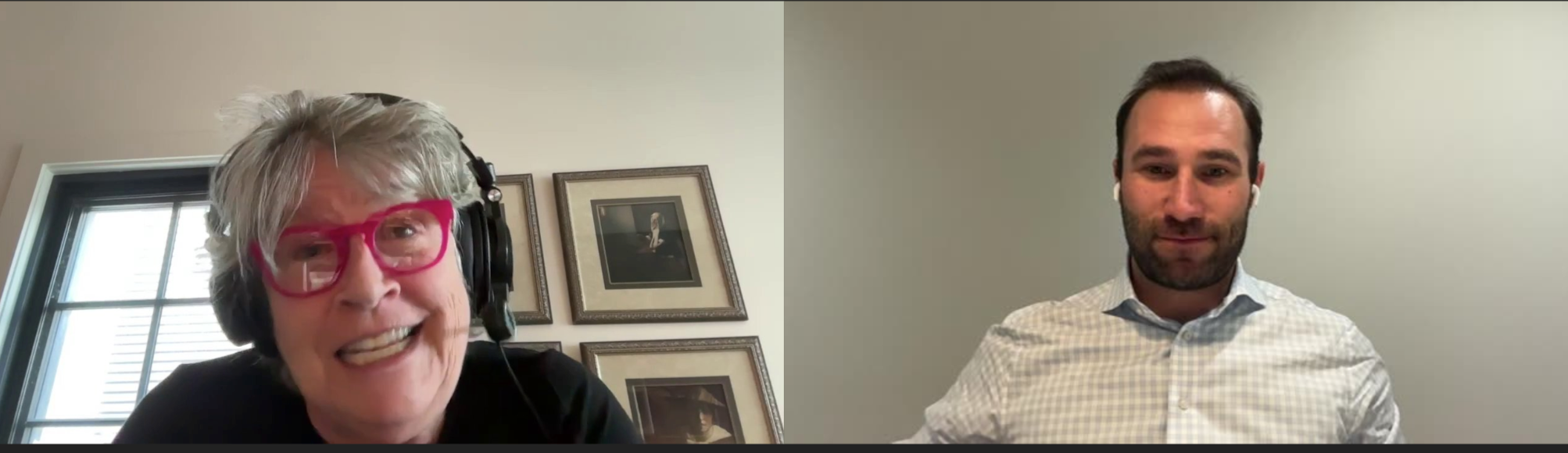
For this last episode before the State of Canada’s Cities Summit next week, host Mary Rowe welcomes Beau Jarvis, president and CEO of Vancouver-based Wesgroup Properties, followed by Curtis Way, founder of Edmonton-based RMS Group and chair of the National Apartment Council of Canada.
Full Podcast
Transcript
Note to readers: This video session was transcribed using auto-transcribing software. Questions or concerns with the transcription can be directed to [email protected] with “transcription” in the subject line.
Mary Rowe: This is City Talk the Podcast, presented by the Canadian Urban Institute, or CUI, and I’m Mary Rowe. If you’re joining us today from anywhere in Canada, I don’t need to remind you that ours is a big country. I’ve had the privilege of seeing a lot of it in this role from coast to coast to coast, marveling at the geographic diversity on the one hand and the shared Canadianness of our communities, from the local Leech and Hall to the best place for butter tarts on any main street. Of course, we also share some similar challenges, including a housing system that’s broken in many ways, or maybe it’s simply stuck, as Jamie Cooper of Dream Unlimited declared on our previous episode. Perspective, however, is always a factor in examining an issue of this magnitude. For housing developers in Western Canada, where mountains, valleys, and prairies make up their landscape, and I might suggest they are expression of urbanism. By necessity, perhaps prairie and west coast urbanism is kind of high and wide, often at the same time. Have a look next time you’re out and about. What defines East Coast urbanism, Quebec urbanism, central Canada urbanism? You’ll see what I mean. Human settlements reflect their places. My first guest has built a real estate development career on the West Coast and presents an important perspective on how things get done there. Beau, please introduce yourself to City Talk listeners.
Beau Jarvis: Sure. Beau Jarvis, president and CEO of West Group Properties. We are a Vancouver-based real estate development company, a large component of our business is home building, and we are one of the largest home builders in Western Canada and one of the largest partners of CMHC on the West Coast.
Mary Rowe: And how long have you been at it, you yourself?
Beau Jarvis: Oh over well, almost 25 years.
Mary Rowe: Yeah, yeah, yeah. So you’ve seen the bobs and the weaves. Um is this a worse weave?
Beau Jarvis: Yeah, yeah. I would say that I and certainly in my career, I haven’t seen um uh a softening to this extent um in the residential market, in particular uh for sale uh housing. Yeah, ownership, home ownership.
Mary Rowe: Yeah home ownership, so it’s the worst that you’ve seen. Can you just give them a picture of the uh volume drop that you’re seeing and just so that people understand the extent of it? You’ve talked to me about it in the past, and I always find it a bit jaw-dropping. So can you just lay that out for people to hear it?
Beau Jarvis: Sure. First of all, we measure housing starts in Canada.
Mary Rowe: Yeah.
Beau Jarvis: Uh the canary in the coal mine, um, or one of the canaries in the coal mine, perhaps, is pre-sales. Uh, home builders like ourselves, we engage in pre-selling projects such that they can be de-risked and we can take a de-risk project to the bank and get construction financing. Um, and so a pre-sale turns into a housing start, which turns into a completion, which turns into something somebody can live in. Uh, it turns into our housing stock effectively.
Mary Rowe: Right.
Beau Jarvis: Um, so we look at pre-sales as sort of the canary in the coal mine. And um a data point that we’re looking at and watching right now quite closely uh is pre-sales in Metro Vancouver. Um and so the 10-year average is approximately 11,500 pre-sales on an annual basis in Metro Vancouver, across Metro Vancouver. Um, and that equates to about 3,000 a quarter. And in Q1 2026, we had about 122. In Q2 2026, we had about 62. Now, of course, that doesn’t include purpose-built rental, uh, and purpose-built rental has been quite active in the last number of years, including much of our business. Um, we’re also seeing a softening there. We’ve seen rents declining for um almost two years straight on a monthly basis, which is good, right? It’s good news. Uh, that was sort of the mission, um, which really proves you know the sort of supply and demand um and and pricing dynamics, uh economic economics 101, right, where we increase increase the supply, um, we start to see pricing fall, and we really have increased the supply of rental. But um, as a and you know, the other side of that coin is when prices start to come down, um, you see um, you know, you start to find less viability in projects and you start to see capital pullback. I think in general, we’re gonna see housing starts really, really fall off a cliff. And the reason that we don’t really see it right now is the way housing starts are measured. Housing starts are measured um based on when a foundation is effectively formed. And so you you visually you can think about that, you know, everybody, it’s really easy for everybody to think about that within the context of a single family home. And everybody drives by a construction site in their neighborhood and they see a foundation being formed, a concrete foundation. That’s when uh CMHC, who sort of manages the housing start data, would come and say, okay, this equals the start. Now, visualize that within the context of a large multifamily building. So call it a you know, a 200 unit or 300 unit tower that is going to be built for purpose-built rental. They don’t measure the start until the foundation is formed. When is the foundation formed? When we reach the bottom of the excavation. In some cases, the bottom of it, reaching the bottom of the excavation after shoring and and and all the different things we do. And that can be, in some cases, a year and a half. And why that’s important is that demonstrates that the data is extremely lagging. We estimate that the data for 2025 housing starts in Metro Vancouver was at least 30% off. And that was about 4,500 to 5,000 units off in terms of the data for 2025 because of that lag. There were 4,500 to 5,000 fewer starts than we’re recording.
Mary Rowe: Yeah. I I think there’s so many things here I want to follow up with you on because recognizing that you live in this day in and day out, so the short forms mean something to you, but to but to a regular person, to a regular person just listening to this podcast, part of this number, you know, normally uh 3,000 a quarter down to 62. So what you’re saying there is, I think, is the condo market particularly was financeable because of people putting down down payments.
Beau Jarvis: That’s the deposit.
Mary Rowe: So they put down a deposit that gives you money to work with, you then assemble that money, you then match it with other investors and other kinds of concessions and government money, and then that makes your project doable. If there is no longer a mechanism to get, if people just aren’t putting down deposits, then it cascades through the system. There’s no money to match it, correct?
Beau Jarvis: Yeah, so uh that’s generally accurate. So what we do is we pre-sale, we launch a project, we pre-sell it. Uh people write a contract and they give us a deposit. Um, we don’t actually use the deposits. The deposits sit in um a trust fund. We can we can get uh deposit, what’s called deposit protection insurance that allows us to Yeah, that’s right. And then so we and we and then we take all of that as a package effectively to the the bank, the lender, and say, this project is largely de-risked. Here’s all of our deposits, here’s what it all looks like, and and we can obtain construction financing. Now, um, you know, 20, 25 years ago, there was no such thing necessarily as a pre-sale. And the paradigm in which we did real estate development was that it was more speculative. So, you know, a developer went and bought a piece of land and went and got permits and they built a building ultimately to sell finished product. Now, that was a far less capital efficient way of doing it. So, you know, what kind of construction loan can you get on a speculative basis? It would be much lower loan to cost ratio, which means that you’re putting more equity into the project, a lot more capital. Um, as we sort of the paradigm shifted to the pre-sale model, it became far more capital efficient because you were you were taking a de-risk project to the bank effectively. And the bank would say would say, okay, we can we can up the loan so that you don’t have to put as much equity into the project because it’s again de-risked. And so um it actually became quite a capital efficient way of building new homes and new housing. Um, but right now we’re seeing this this sort of paradigm reset. And a lot of our questions are around, you know, what does the future look like in terms of uh multifamily home building? And are we going back to the old model that is more speculative and capital intensive, uh, or is it some sort of hybrid?
Mary Rowe: Can we go back?
Beau Jarvis: Yeah, absolutely. I mean, anybody today can go and and buy a piece of land and and and go get their permits and build uh a building or a home or or you know a some form of multifamily development. The banks definitely have their sort of risk alert on. And and so what type of uh speculative loan could one get, I think is a question mark. I think it also depends on your balance sheet and your covenant. So you’re gonna see you would see larger developers probably be able to obtain some level of speculative loans if they wanted to do that. The issue is, I think, we don’t know if any of those projects would absorb today, right? Because there’s a there’s a buyer sentiment issue. There’s sort of the psychological sentiment that the buyers are on the sidelines, um, hesitant to make those types of big decisions or capital outlays. I all that to say that we I don’t know that we would engage in speculative real estate development at this juncture.
Mary Rowe: I I guess that would be one of the things that critics might say sitting back. They might say, well, look, uh developers, you had it good when consumers were putting their skin in the game ahead of time. Now that that’s no longer the case, I can see how some folks would say, well, then the developers can go back in and use their own balance sheets and do it. I guess one of the questions I would have for people like you though is how robust is the development sector? I mean, how many, what percentage of the development community would have that kind of those kinds of deep pockets to be able to do that? Because there’s lots that aren’t that big.
Beau Jarvis: That’s a great question. And so it would be a smaller um subset of call it the developer, uh development industry that have the ability to, I think, you know, operate in that type of paradigm. Um, and it’s developers, larger development companies, household names, um, and you know, whether they have an income-producing asset portfolio that has um, you know, generating income on an annual basis that helps to, and and you can take that to the bank and sort of offset uh the risk. Um, and so I think you’re sure we can we can have that conversation where it says, you know, developers, you had it good for a long time, and we and we can debate that.
Mary Rowe: Um, because I think some of you, some of you had it good for a long time. I think that’s part of the dilemma is you know, maybe the established ones, you guys can weather this, but there were lots of folks that got into the business. And maybe, maybe some of those folks no longer in the business is not a bad thing. Maybe that’s what we’re doing.
Beau Jarvis: Well, I think I guess it depends on on you know what what’s our target uh in terms of housing production in Canada, right? I think CMHC will have these numbers and they’ve been adjusted a couple times.
Mary Rowe: That the 450,000 doesn’t work for you?
Beau Jarvis: Well, I don’t know anymore. I honestly I I think you know, CMHC does some really great analysis, and I and I do have a level of trust in what they’re up to. But um, you know, is that the number? Um, or is it is it more, is it less? Even if it’s you know 250,000 uh homes a year, which has sort of been, I guess, in and around our average production on an annual basis in Canada, um, I think that we ultimately need to try and figure out a way to have a system that is stabilizing housing production in our country. And it’s based on forecasted household formation, um, which ultimately you know creates some level of demand. Um, and so I think, and then and then we arrive at that number, and this is the question you’re asking is are we gonna, you know, who’s gonna be around to build the housing? There will be fewer uh developers around for sure. And this there’s a lot of uh smaller and boutique and uh development companies that have been wiped out uh in the last in particular year, year and a half, and there will be fewer companies uh delivering housing overall in the country.
Mary Rowe: What and it’s not just developers, it’s also the trades and construction firms and uh this, I think there’s a kind of I was gonna say right sizing, but I’m not sure that’s the right descriptor. There is a kind of contraction that’s existing across the sector, which affects non-market housing as well. We often make that case in our work at CUI that the system of housing is built by the same people, whether it’s for marketing, whether it’s market or non-market. So it’s a sector of the economy that has tons of interconnectivity.
Beau Jarvis: Yeah, you’re 100% right. Um I like to refer to it as an ecosystem.
Mary Rowe: Yeah.
Beau Jarvis: Um, and and you know, you you have the housing continuum within the ecosystem, and the continuum spans deeply affordable to all the way to luxury market housing. Yes, yeah, um, and and the ecosystem um is very, very intertwined along that continuum um from a finance and capital flow perspective, as you say, from a trades and contractor perspective, it’s all all intertwined and sort of symbiotic. Um, and so it’s a it’s a super valid point.
Mary Rowe: I want to go to purpose-built rental if we can. Sure. How easy is it to pivot?
Beau Jarvis: Uh yeah, so that’s a really good question as well. The the pivot from an expertise uh and capability perspective is really quite easy, right? If you, you know, if you’re a developer or a home builder and and you build for sale condominiums, you have the same expertise and capabilities to transfer that to purpose-built rental.
Mary Rowe: Is it the same product? Because people have this perception, I think, that that somehow a rental product is a shoddier product. Is that just a myth?
Beau Jarvis: Um, it depends. Uh, I would say that the rental product that is being built now is very much um uh consistent with uh condominium, call it product from a finishes perspective and an amenities perspective. And so um I would disagree with a generalized statement that would say that rental is an inferior product. Um the real problem is that uh development is not or sorry, purpose-built rental development is not as capital efficient.
Mary Rowe: Wait, when you say capital efficient, you mean the money is more expensive?
Beau Jarvis: It’s just more equity is required.
Mary Rowe: So um because so it takes longer because you got to find the equity.
Beau Jarvis: Yeah, it well, also it’s just it’s more equity. And so so again, you when you’re when you’re taking that de-risk project to the bank on the on the pre-sale side, yeah, you’re getting a higher loan amount. So your equity is lower. When you’re taking a purpose-built rental project to the bank, it’s speculative. You’re saying, here’s the rent that we’re gonna get. We think yeah, and and you’re gonna stabilize the asset in four years and prove it out, but that equals more risk to a lender.
Mary Rowe: So does the lender charge you more?
Beau Jarvis: Well, they just they they they they right size the loan to the degree of the risk. So usually the loan is smaller, which means the equity is higher. And a lot of developers don’t have that equity to put in. So now they have to go find that equity and capital. So now you have a capital stack. You have mezz debt, you have you know senior debt on your construction, et cetera. Yeah. And so what all this to say is transferring from purpose-built to rental on the technical side and the entitlement side is not that hard. It’s the finance side and the capital side that makes it more challenging.
Mary Rowe: In in both of these scenarios, Beau, it sounds to me as if there’s a role for government. Uh, what role should government be playing here?
Beau Jarvis: Well, purpose-built rental, um, I think the role that government should play is the role they’re playing exactly now. And so a CMHC, if we believe that purpose-built rental, uh at market and otherwise, is an important component of the housing continuum, and it seems like we believe that. Um, I think that the programs that CMHC um has had, in particular what was formerly the RCFI program and now ACLP, which stands for the yeah. Yeah, so RCFI was the rental construction financing initiative. Yeah. And that turned into ACLP, which is the apartment construction loan program. Yeah. Both very similar. They renamed it at some point in time. I don’t quite know why. Uh, but that those programs have been extremely successful in delivering what I would say is the largest amount of purpose-built rental supply across the country uh since World War II. And that’s why we’re seeing rents come down in our market. We’re seeing a pullback in immigration and this huge amount of supply come on due to largely due to those programs. And so to answer your question, I think that on the purpose-built rental front, the the government should do the same as it’s doing right now. The really interesting component and unique aspect of those programs is they are on balance sheet loans for the federal government. Right. So rather than the CMHC offering you an insurance certificate that you’re going to take to a Schedule A bank like RBC or BMO or CIBC, the government is actually lending the money. It’s a 10-year term and it starts from the moment you break ground and it turns into it turns into term debt when your asset is stabilized. You don’t have to go and refinance it or anything. And so it’s a very, very efficient program. Um, and you know, there’s been some criticism about the program by some housing advocates. They’re often characterized as grants in terms of this program, and they’re not.
Mary Rowe: Yeah.
Beau Jarvis: They’re loans that developers have to put up their covenants and guarantee, and they have to pay them back with interest. So if you think about it from an investment perspective, um, from taxpayer money, they are lending, and it’s more attractive financing, but they’re lending money and getting it back. And what that’s doing is it’s stimulating this significant amount of housing supply coming on the market. And also it’s stimulating jobs and economic activity. And so on the purpose-built rental front, those though that that has been a very, very huge policy win. On the for-sale home ownership front, what’s the government’s role? You know, I think there’s certainly some conversations that are taking place right now at the federal level, because I think the federal government has come to understand that there is still a desire to be a homeowner, you know, amongst the majority of constituents in Canada, young and old, um, so all demographics. And so there’s definitely dialogue taking place right now about how can the federal government help stimulate ownership. And, you know, they’re looking at CMHC programs and different things like that. I honestly think with home ownership, the best thing the government can do at all levels is get out of the way. Um, we’ve we’ve enacted layers upon layers of policy that have really added so much cost to the delivery of housing. And this is the same with rental, by the way. I think it’s widely acknowledged and even accepted at this point in time that up to 30% of the cost of new housing across the country is fees, levies, and taxes by all levels of government. Up to 30% of the cost. Another 10 to 15%. And Altus and UDI here in the Pacific region just issued a really great report on this. I think it’s publicly released. So they they went and looked at all of the different building code changes that have occurred over the last decade and and and how much has that added to the cost of the delivery of new housing. And we estimate that it’s another 10 to 15 percent. So now you have up to 45% of the cost of new housing that is purely government taxation and policy changes. And let’s be clear the building code has is is supposed to be for life safety. That’s what the building code is for. And the building code in the last 10 years has been used for all kinds of different things beyond life safety, including, you know, right up to different sort of social call it justice issues. Uh with the case.
Mary Rowe: Well, let’s let me just stop you there and just say that I think making a house accessible is just common sense too. Like, you know, if so, I I can’t imagine that anybody’s gonna really broadly object to the fact that you, as we get older, speaking as an older Canadian, accessibility is an issue for everybody. So I don’t I think there are lots of legitimate Ways to use the building code, and you’re what you’re saying is maybe there are some that are less legitimate. But I’m interested if we were to say, you and I might say together, you know what, the cost of delivery is too high. Uh that’s why uh people can’t buy housing, is that they either income isn’t high enough or the cost is too is too high. So we’ve got to do both. We’ve got to figure out how people can have uh extra income, but we’ve also got to figure out how do we reduce the cost of delivery. You know, I think there’s this deep philosophical chasm that we have here in the country around what are people willing to reward business folks for them taking risks.
Beau Jarvis: I talk about this all the time.
Mary Rowe: I think that well, there that’s probably where I learned it uh from you. Because what I’m curious about is advocates are, as you know, uh deeply suspicious of the development sector because of the profits that they see you having, uh not just you, but you know what I mean, that the sector is largely wealthy. And they’re deeply suspicious of the development community because all you’re interested in is turning a profit. I’m just repeating what is said to me. But they are reaping those profits in return for significant risks that they took.
Beau Jarvis: I I I think what we have in Canada right now is is tall poppy syndrome, and that’s sort of this idea that um, you know, when a person or a group of people or an organization um, you know, takes risk and in and sometimes achieves some level of risk-adjusted reward, our tendency is to, you know, sort of chop them down, um, you know, not say that’s not fair, or or you know, just really like try to diminish it. Um and and I think what we’re seeing is those who are accessible, whether it’s again a person, a group of people or organizations, start to downplay results uh to avoid negative attention, right? And and and I think ultimately that um it discourages entrepreneurship, it discourages innovation and risk taking. And I think it’s a major problem. It’s very pervasive in our institutions and our government and you know, in our schools and things like that. And it’s something that I’m deeply concerned about because what we really want to be doing is we want to come to understand that um if if private capital is going to be involved in achieving an outcome, private capital will always require a risk-adjusted return. And so, what have we done with delivering housing? We have increased the risk at every step, right? Back to the building code and saying 100% of units should be accessible and whatever. And again, I don’t know what the right ratio is, but we or we should be able to do this and we should be able to do that. And everything has to be in rezoned and you add time and time and the cost of money. All you’re every step of the way, we’ve increased the risk. And so the the risk-adjusted reward has to be commensurate with the risk that you’re taking. And so we we I think the issue that people have with the private sector delivering most housing in Canada, because the private sector delivers 95% of housing in Canada, including a large component of the non-market portfolio, this sort of ideology that you know housing shouldn’t be for profit. The issue is that the government doesn’t have the ability to deliver housing. Like we’re already running massive deficits, um, and we have all these that we have a healthcare crisis, we have a climate crisis, we have all these different things that are gonna require some level of government intervention. So the government is always going to need to rely on the private sector to deliver housing. Is it the right ratio at 95%? We can debate that because I think it’s probably not. I think that the public sector should be involved in delivering a little bit more, you know, social housing, lower income housing, et cetera. But if we’re gonna rely on the private sector as the paradigm of housing delivery in our country, we’re going to have to surrender to the fact that there needs to be profit involved in taking that risk. And so I think it’s a really important conversation.
Mary Rowe: You know, the I think the dilemma though for us with housing, the private sector, as you suggested, builds the vast majority of the housing. That is a post-war decision or pattern or or reality that has developed over 70 years. And unlike in other international jurisdictions, that are often cited where they’re where the public where the public sector has been much more involved in building and owning units. Here we are, 2026. This is the ecosystem, as you suggested, that we have. Over the last few decades, though, people have started to recognize that under the social determinants of health, that housing is as important as air and water and access to food. And so when you have a critical component that is essential for families well-being, for the economy, for the societies in general, and you’re so dependent on the private sector to deliver it. So that’s the dilemma you’re in. You are in you are delivering a public good. People hold you accountable to the standards of a provider of a public good, and you’re working in a private market. So I think that’s why the regulatory uh layering has happened is to somehow say, okay, well, we we can create these guardrails. So yes, they can realize a profit, but they are delivering a public good inside these guardrails.
Beau Jarvis: Well, then de-risk it. Right. Right? Like if if if we if we want to.
Mary Rowe: Because if because if you don’t de-risk it, the private capital will go somewhere else. That’s right.
Beau Jarvis: And if and if oh, and also if it’s lower risk, it’ll be a lower return. Right. They move together, risk and return. And and there’s a role for the government to play. De-risk the delivery of housing, and you’ll see capital come with the expectation of a lower return because it’s less risk. It’s as simple as that.
Mary Rowe: Capital is kind of uh value agnostic, you know. As you say, money goes where money will go. And whether it’s going into a purpose-built rental or to a market unit or a non-market unit, the money goes where the risk is adjusted and where the return is predictable. And I think that’s the kind of environment and the kind of ecosystem that you and I are hoping we can support to come into this new the new normal that we’re facing. 100%. Yeah. Beau, it’s great to talk to you. I appreciate you just giving us all this sort of market 101. Uh, and it’s not, as we say, this is not without complexity. Uh, but I feel quite strongly it’s important that inside the ecosystem we have these kinds of frank conversations with for-profit, nonprofit, non-market, market, all the different players as you suggest, because it is, it’s it’s I always say it’s like the inside of a softball, you know, all those elastics tightly wound.
Beau Jarvis: Yes.
Mary Rowe: That’s we’re in the ballgame of housing. Yeah, yeah.
Beau Jarvis: Well, thank you for having me.
Mary Rowe: Delighted. This is City Talk from CUI, the Canadian Urban Institute. And we’re looking at housing across the entire continuum, and how it serves or doesn’t, everyone looking for a place to hang to get ready for it, their parka. As Beau Jarvis confirmed, rental apartments, the kind built on purpose as rentals, rather than units that are built to be purchased and the buyer decides to rent them, are one of the most dynamic sectors right now, and not only in Western Canada. One of the other interesting things about the apartment market is that the builders and owners come from all walks of life and are often family enterprises. Or, as was declared at the National Apartment Council meeting I attended a few weeks ago, we’re F-150 people. Like Neil Milton, for example, an enterprising lawyer who just recently took it upon himself to build some units in Deep River, Ontario, who we featured on a previous episode of this podcast. Not quite sure if Neil drives an F-150, though. At the same meeting of the National Apartment Council where I met Neil, I also met our next guest, Curtis Way, an Edmonton developer who has just become the chair of that council. Curtis, welcome to City Talk. And please tell everyone more about who you are and what you do.
Curtis Way: All right. Thank you, Mary, for having me on the show. Appreciate it. It’s uh very pleasure to be here. Um, well, it’s quite a career I’ve had. I’ve spent 30 odd years doing real estate development. Um, RMS Developments is a uh fully integrated real estate company. We take raw land and hire architects, engineers, and we build buildings and rent out apartments. So we’re exclusively an apartment developer in Western Canada, and uh we own and manage uh several thousands of units and and have our own construction company. So we build our own apartments. Uh um a lot of a lot of our projects uh are in major cities. Um, and we’re we’re Western Canadian, so I think I mentioned that already. So it’s a different perspective. Being the chairman of the National Apartment Council, which is the role I just recently took on, um, is it’s been helpful that uh I get to see people across the country. And you know what, Mary, fundamentally the issues are almost always the same. It’s cost, you know, it’s affordability. Uh we you know, we think we are a big country and everybody’s got different regions and different regions. I mean, some regions are uh under a boom and other ones are more depressed, but then you then the role changes around. Um, but fundamentally the issues are always the same. And as mentioned, we’re uh National Apartment Council represents apartment developers, that’s our organization. We’re not representing uh pension funds and REITs. You know, we are we’re basically a family type of an organization. We’re spending a lot of time, a lot of our time right now with uh CMHC and the federal government and canvassing for change. So I’m sure we can talk about that in a minute. But you know, that’s who uh National Apartment Council is, and RMS Developments is a company that I founded 30 odd years ago. And here I am taking on more of a volunteer type position rather than uh uh running the business.
Mary Rowe: Well, that’s good. As you should, Curtis, uh take a tour of duty to uh help the rest of the country. Um, just when you say you got into the business, was your family a construction business family?
Curtis Way: My background is construction. I came out of business school and uh spent a bit of time in construction and actually ended up transitioning after six or seven years into real estate development. I actually started my career doing um, well, in construction, I built a lot of high-rise condominiums in Edmonton and in Western. Yeah, yeah. So the condo’s where I started, but I morphed into apartments because my dad was a you know a landlord of duplexes and fourplexes and that kind of thing. So I I kind of morphed over into that. But I spent about 10 years, believe it or not, doing big box retail, chapters, winners, did a lot of that kind of stuff. Uh and a lot of industrial in the north, uh, you know, northern BC, northern Alberta. So I’ve got a pretty varied career.
Mary Rowe: And you said that your dad had some duplexes.
Curtis Way: Yes, yeah, yeah.
Mary Rowe: I mean, I think there’s a a perception, which I know that you’re making every effort to debunk that that apartments are only owned by large uh institutional investors. Uh, but in fact, what you’re saying is wait a sec, most of the apartment stock in the country is owned by smaller businesses that may still be family owned, right?
Curtis Way: Actually, the when I say that is developed, created. The apartments are created by families like mine. We then maybe sell to you know pension funds and REITs, but on the holistic stage, the private developers like myself are the ones that create 90% of the rental stock in Canada. That’s a CMHC number. That’s not my number. CMHC will tell you that private developers build 90% of the rental stock in Canada. And yet, so it’s, you know, I hate to say it, it’s unfortunate for us, but we’re we’re perceived as a bunch of big bad guys, you know, and it’s it’s unfortunate. And, you know, one of the things that like being on a program like this, you know, it helps. I hope it helps anyhow, and saying, you know, we don’t control all the things that uh tenants seem to control. One of the things that I’ll give you an example. This is my daughter, my daughter runs the company now. I’m sort of uh on the outside, so to speak, or more at a different level. But she’s we had a meeting the other day with CMHC, and we told them 54% of our operating costs are three things that we have no control of property taxes, utilities, and insurance. 54% of our costs are three items that we don’t control.
Mary Rowe: Well, what’s it property taxes, utilities, and insurance? Yes, and and you’re saying operating costs costs meaning once the building is built and people are living in it. And you do, and you’re saying you do hang on to your units. Sometimes the developer will will sell them to someone, but you’re saying, and has that been the business practice for the whole time, Curtis? You always said we’re gonna build and hold.
Curtis Way: Yes. Um, and that’s kind of a family thing. I think my father was always of that mentality. We do sell, I mean, we have to sell to recapitalize. So, as an example, I always say we sell one out of four.
Mary Rowe: That’s how you keep the money flowing in the system, so you’ve got money to build the next one.
Curtis Way: Yeah, recapitalize, because otherwise you run out of money. I mean, it’s similar to leave the piggy bank’s empty eventually, right? So you sell one. I mean, one of the things that uh we’re canvassing the federal government for right now, as one of our major programs or canvasses, is about capital gains tax. If we build a building and sell a building, the federal government charges us a capital gains tax on the profit in that building. So that money automatically, that call it 40%. I’ll pick a number, just say it’s 30, 40% goes to the federal government or goes to the different levels of government. Right. If we could take that 30 or 40 percent and roll it over, I’m not talking about not, it’s not a tax gift. It’s just roll it over, let us take a hundred cents on the dollar, and we could build one and a half buildings. Maybe we could build two buildings.
Mary Rowe: So I think what your point here is is instead of being dinged with the capital gains, take the capital gain off and let me continue to pump it through into the building, the next building.
Curtis Way: Correct. And and we’ve been canvassing the government, and believe it or not, we’re getting some traction. I think that the federal government understands that this is not a novel thing. This concept existed back in the 60s and it was terminated in early 70s, I believe, by Pierre Trudeau. But the concept’s not new, it’s been out there before, and the Americans do this. Lots of European countries do this. So it isn’t it isn’t a unique or novel idea, other than we’d like to see the Canadian government do that and let us build more rental accommodations. One of the things that is happening in Canada is that apartments are becoming a lifestyle. The the you know, they used to call it the American dream, build a house and have a car and the kids and blah, blah, blah. That that Canadian, the Canadian version of that is very quickly changing to rental, where people can’t afford to have a house anymore.
Mary Rowe: But why can’t we move to a place where that doesn’t feel like uh, you know, the consolation prize? Like why why can’t we create apartments that are beautiful and well, you know, well appointed and really does in desirable parts of communities so that it doesn’t feel like, oh, well, I’m settling for an apartment. No, no, I’m choosing to live in an apartment. You know, other other, I mean, this is my little, you know, my soapbox around the world. Lots of people live in beautiful apartments.
Curtis Way: I would love you to come to the Western Canada and I would tour you some of our buildings. Yeah, grand granite countertops. This isn’t the old days where condos were better than apartments. Today’s apartments are the standard. I mean, I could I’d love you to come and see, you know, triple glaze windows.
Mary Rowe: Yeah, consider the offer taken. I will for sure. And other listeners will too, Curtis. Look, be careful what you ask for. But we’re happy to see that. And I know what you’re suggesting. There was a period of time when people thought, oh, you know, the finishes aren’t as good. Or I mean, I appreciate that at different income points, different price points, excuse me, different price points, amenities change. But I think the idea that we have to uh debunk this idea that the only way that you can actually have some kind of achievement in your life is to live in a ground-facing house versus a multi-unit building that gives you a place to raise your children in a community.
Curtis Way: Okay, so let me share something with you. So most Canadian apartment builders like me, you get CMHC financing. And that’s a whole nother discussion. But so part of our CMHC, the MLI Select Program, it’s a specific program, but most developers in Canada use that program. Yeah, we’re required to have 20% of our apartment units have to be at or below what they call a medium income level. There’s a firm in a formula. Okay. So there’s 200 units. That means that 40 units are essentially subsidized rents. Okay. So that’s a requirement from CMHC under that program. All of our new buildings have not just the gyms, not just treadmills and all that. We have those rooms, but we have lifestyle rooms now. And we have one of the one we just finished has got this monster kitchen area. It’s got um stoves, it’s got for it’s a lifestyle. So we we say to people, you guys, we have a we have a full-time person that helps coordinate this, but through a volunteerism, they’re doing cooking lessons, they’re doing trips, they’re doing these. It’s like a it’s a community thing. We have uh one of the buildings we have, we put in an uh get this, we put in an arcade. Busiest what’s what do you mean an arcade? You mean pinballs, pool tables? I’m not kidding. Busiest, busiest room in all of our buildings is the video arcade.
Mary Rowe: Yeah, yeah. Okay, listen, tell me in these buildings, uh, how high, generally, how many floors?
Curtis Way: Uh, generally six stories. In in western Canada, Western Canada, we cannot make economic sense of high rises. The numbers just don’t flush out. The rents are uh on a on a relative basis, and this is really broad brush, Mary, but on a relative basis, a two-bedroom in Western Canada is $2,000 a month, uh except except for lower lower mainland. Um in Toronto is $3,000 a month. So that gives you the difference. So we can’t in Toronto they can do high-rise concrete uh apartments in the West, they have to be six-story wood frame.
Mary Rowe: And you’re saying it’s because of the cost, you can’t get the rents. And so you don’t and so you can’t, so you can’t make it pencil out. Isn’t that interesting though, Curtis? That what is creating missing middle housing and sort of uh what a lot of people feel is gentler dentist uh density, I was gonna say dentistry, gentler density is six stories. And you’re saying, well, what creates it actually is if you don’t have high rents. If you can’t you can’t get high rents, then you have to stick to six stories. Right.
Curtis Way: And because it’s wood frame.
Mary Rowe: Because so and right, so you don’t have to go with the energy-intensive concrete. Uh so it so it can be a greener building, and for a lot of people, it it fits into neighborhoods better at six stories than some.
Curtis Way: It fits in the suburbs much better for sure. Absolutely.
Mary Rowe: Well, what it like, I mean, I know this is one of the questions I was gonna ask you about suburbs versus inner city. So can we build apartments in existing neighborhoods? Can we build them as what is called infill? Uh, because we know that we have lots in urban environments, downtown environments, uh, neighborhood environments, where there always is there already is the infrastructure. There’s often amenities, there may be some transit. Can we build your kind of apartment building in that kind of a context?
Curtis Way: Absolutely. The one the last one we just finished in M10 was infill for sure. We it was a senior center that had two acres of surplus land, they weren’t going to build on it. We bought the two acres and we put 218 units on a light rail transit line. Infill works for sure. I think that where the Canadian population or Canadian property owners have is not in my backyard. You’ve heard the NIMBY state, but it’s an unfortunate situation where that’s not reality anymore. We have to densify, we have to put these buildings in these inner cities. I mean, I don’t, I don’t agree that you should be building an eightplex in every single family residential lot. Like Edmonton’s got this bylaw that’s it’s creating all kinds of uh publicity recently in the in the Yeah, we heard we heard a bit about it.
Mary Rowe: We had Don Iveson a few weeks ago. He he let us know what his views were. Yeah.
Curtis Way: It’s it’s a terrible, it’s a terrible idea. And so it’s back, you know, there’s backlash now. Thank God the premier the premier of Alberta stepped in and you know basically said to the council, you can’t do this anymore. There’s people protesting in the streets on this.
Mary Rowe: I know, but let’s have that conversation because of course Don felt the other way. Don felt that this was the right thing to be doing and that municipal councils have the authority to be able to decide these things. So tell me from your side, Curtis, what was wrong with it? Yeah.
Curtis Way: Okay, so let me give you some practical examples. Okay. So a friend of mine’s son has a house in Millwoods area. The eight-plex now extends from the front yard almost to the rear lane. The building is three feet from each property line on each side. So the developer goes in and he digs the basement. This the neighbor’s fence caves in. So now the trees in the backyard are caving in. And so that’s just it, and they can tell you all kinds of practices.
Mary Rowe: So the massing, the massing is a problem. The somehow the way this, the, the way these lot sizes were being determined and what the permitting was allowing was just too close to the edge, and obviously causing, first of all, visual. I mean, we’ve seen photographs, people sending photos of visual disruption, but you’re saying actually mechanical disruption.
Curtis Way: Oh, yeah, there’s oh yeah, and I can tell you many stories. But here’s the other issue. So eight families or eight people, where are they gonna park?
Mary Rowe: Oh, listen, Curtis, if I had a dime for the numbers of times people tell me the biggest issue in urban life is parking. I hear you. But I thought we were, I thought we were at a point where we were recognizing that lots of young people aren’t that don’t want to have a car.
Curtis Way: Not just in Canada. No, it doesn’t exist. Everyone in Western Canada, pickup trucks, it’s worse than cars. They all have they have SUVs in pickup trucks. I mean, that the this council that was in the city of Edmonton has lost it. They’ve they’ve got to this utopia concept that doesn’t work.
Mary Rowe: Listen, I want to go back to your your 54% operating costs, because this is sort of the the nub of it, isn’t it? We’re saying uh rent’s too damn high, uh utilities are too darn high, uh taxes are too darn high. Everybody everybody is saying everything is too darn high. When you when you say that fifty four percent of your operating costs are being consumed by utilities, property taxes, and what was the other thing? Insurance. So where do you see the wiggle room there? What can change? Because if we put it all on property tax, you and I know that municipal services are our only resource through the property tax. So where the heck else did we get the question?
Curtis Way: Let me let me give you another example. Okay. Just recently, uh actually at the NAC um AGM recently, we had a deputy mayor from the city of Toronto uh attend, and uh he was gracious enough to have a good conversation with me. And we got talking about development costs. I’m gonna come out of two different directions. An organization called NAIOP, which you may know, uh did a study about 18 months ago and they compared major Canadian cities, Vancouver, Calgary, Edmonton, uh Toronto, Montreal, and I think one other. The highest off-site levies or development charges in the country were Toronto, $100,000 per door. So before you even put a shovel in the ground, the cost for that building is $100,000 a door. So when I asked the gentleman about, I said, This is crazy. Like you can’t expect to have affordable housing when you’re having a $100,000 charge coming out of the ground. And his answer was, well, $40,000 of that is transit. And I’m like, I don’t care what it’s for. The point is it’s $100,000 a door.
Mary Rowe: But that is the dilemma that we face in Canada. Just for people’s benefit, NAIOP got renamed. I think it’s now the Commercial Real Estate Development Association, Creeta, I think. But it’s a it’s the commercial real estate gang, and they write all sorts of interesting reports and do various analyses, obviously on behalf of their members, but they put forward is exactly what Curtis is suggesting. They try to run the numbers and say, look, and I think the dilemma that you’re hearing there is we’re the only country, you know, I think that uh uh has such a burden on uh uh fares, transit to run transit systems, we take a lot off the fare box. Whereas in other parts of the world, denser parts of the world, the national government pays more of transit. So that you can see for the city of Toronto, they’re in a bind. They they know they need to have transit, you know they need to have transit, and what other mechanisms do they have to pay for it? And I think the argument for development charges to favor transit would have been you’re building those houses and you want to have transit access for the people that go to live in them. So I’m hearing what you’re saying. You’re saying, well, wait, you can’t put that all on the on the back of the first buyer. So just go back to the mandate of the National Apartment Council. You guys and gals, there’s a few of you, but not all men, um, are advancing uh, I think, uh a kind of uh broad approach to finding different kinds of investment vehicles from the public sector, from government, from institutional investors, and from purchasers and other investors to create, to round out the mix of housing. So is this an is this a moment to get into the apartment development business for young people listening to us? Is this a business they should consider?
Curtis Way: I think one of the things that people don’t realize in apartment development or any development is there’s risk. The members of National Apartment Council are used to risk. We’re all we’re not asking for handouts, okay? We’re not, I mean, in our program, but go back to CMHC, 20% of 20% of the units we build under that program have to be subsidized to a to a government standard, to the CMHC standard. Yeah, let us build um you know more units, we’ll give more subsidized units. When you do, when you do the not-for-profit organizations, great, they can do their thing, but I guarantee you their costs are higher. I did the first private-public partnership in Canada. It was in Edmonton. We did a partnership, we did subsidized units. The CEO at the time came to because he was building his own stuff, and and we wanted to try this. It was this is fish over 15 years ago. And he came to me and at halfway through our negotiations and he said, you know, my cost to build the exact same units are $100,000 a door more than you can build them for. And so the obvious question is why why? Well, it’s very simple. I don’t have the process and the bureaucracy to go through. I can I can design it. I don’t have to ask permission from 50 million people as to whether the design is okay. I know what the design’s okay because I build apartments. I’ve I built over 3,000, 4,000 apartment units. I mean, I’ve built lots. I know what works, I know what doesn’t work. I’m not going to build something that people don’t want to live in because then I can’t rent it.
Mary Rowe: So you know what’s you know what’s interesting about this, Curtis, as we just come around the the home stretch here. Uh what’s interesting about this is across the system, we have entities that are better at certain things, right? So we know that the banks are the ones that provide certain kinds of financing, and then CMHC is providing certain kinds of financing, and then maybe there’s other kinds of, I think it’s called mezzanine capital. There are things that de-risk the system. And same for the nonprofits. They they have areas where they can service special communities, special interests. They they can have a higher uh ambition for um affordability, for uh accessibility, all those things. So everybody has kind of the lane that they have the best uh value to bring. And I just am interested in your suggestion there that if you partner, then you can all kind of somehow be in the lane where you have you’re in your highest and best use.
Curtis Way: And and you’re 100% right. The the not-for-profit organizations have got to stop thinking about guys like me as big, bad developers. It’s it comes with an attitude. It comes with, you know what, we’re all trying to create housing in Canada. I mean, it’s not a bad thing to have a mix, some some deep, some deep subsidy rentals, some mid-subsidy rentals, some market type stuff. We need all of that. And developers and not-for-profit can actually work together. So I think we just have to get everybody to to change their thinking.
Mary Rowe: On that optimistic note, thank you for joining us on City Talk. It’s been great to see to have you on this broadcast. It’s going to be even better to see you in person in Ottawa. Thanks for joining us.
Curtis Way: Thank you. Bye-bye.
Mary Rowe: We’re a mere seven days, count them, seven days away from CUI State of Canada City Summit in Ottawa. And for all you last-minute procrastinators, and you know who you are, the time to register is nigh. So head to canurb.org and register today. A reminder that we always welcome your perspective on anything we talk about here. Drop us a line at [email protected] or use the Talk to Us from Your City link under the podcast description to send us an instant text or video message and forward this to a friend. I’m Mary Rowe. Thanks for listening.