

This increasingly longer and larger ‘moment’ of economic and geopolitical upheaval impacts communities across Canada, though the extent is often had to gauge at ground level. That’s one reason the world gave us economists.
Veteran economist and columnist Armine Yalnizyan gives Mary Rowe her wide horizontal view of fresh policies being added by the Carney government and their effects on the ground…here and elsewhere.
Full Podcast
Transcript
Note to readers: This video session was transcribed using auto-transcribing software. Questions or concerns with the transcription can be directed to [email protected] with “transcription” in the subject line.
Mary Rowe:
This is City Talk the Podcast, brought to you by the Canadian Urban Institute or CUI. I’m Mary Rowe. That moment of economic and geopolitical challenge we’re all in just keeps getting longer and larger, especially when you consider the growing number of folks on the ground across Canada feeling its effects. That’s also where most of CUI’s programs are. They live on main streets, downtowns, neighborhoods, communities from coast to coast to coast. However, being at the ground level can sometimes limit your perspective, which is why the world gave us economists. One of our best lives just down the road in Ottawa. Armine Yalnizyan is, among many other things, the 2023 recipient of the Galbraith Prize in Economics, a former senior economic policy advisor to the Federal Deputy Minister of Employment and Social Development, columnist on business for the Toronto Star, and a longtime driving force at the Canadian Center for Policy Alternatives, and currently a fellow with the Atkinson Foundation. Like many of us, she keeps an ear to the ground and her gaze on the horizon. Armine, welcome to City Talk.
Armine Yalnizyan:
It’s a pleasure to be with you, Mary. Thank you very much for inviting me.
Mary Rowe:
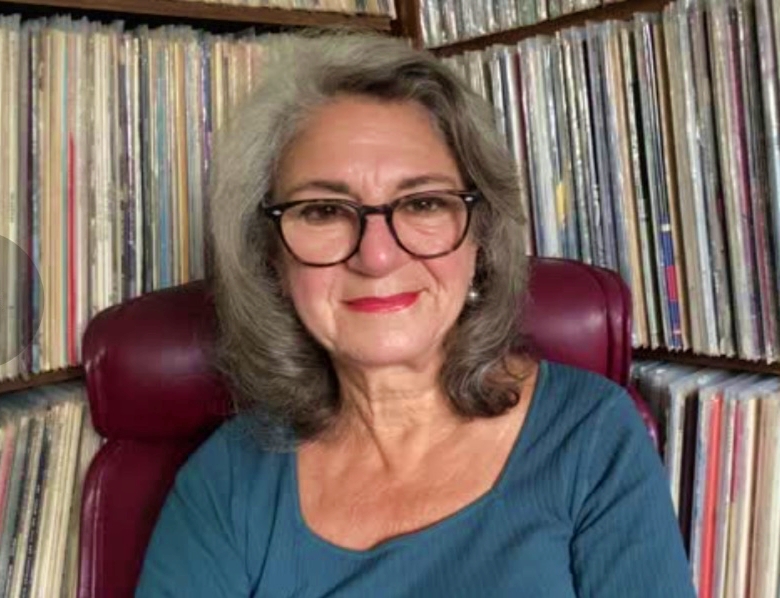
Oh, not at all. And I love, you know, I’m used to, of course, this is only audio. We don’t have a video version of this, so nobody knows that you’re sitting in front of your LP collection, which I see when I watch The National, I see you with all these. Are they all record albums behind you? Yeah. They they give you a sense of companionship. Right?
Armine Yalnizyan:
Yeah, well, that’s true, I think, of any collection, that some things you return to repeatedly, and every time you return to them, you get something different out of them. And some of them, like you’ve listened to once or twice, and you don’t want to give them away, but you’re really not gonna probably listen to them that often in the course of the channel.
Mary Rowe:
But you can’t bear to give it away. You can’t bear to give it away.
Armine Yalnizyan:
Well, this isn’t just my collection, so you know, I just I don’t have a say in like the lion’s share of what’s here.
Mary Rowe:
Yeah, there is a sharing component to that. Well, we are in a moment, huh?
Armine Yalnizyan:
Are we ever?
Mary Rowe:
And the focus for us at the Urban Institute is how do these momentous events land in places? How does it and when you know I always say that the Urban Institute, we’re in the empathy business because people that live urban, and we describe urban really broadly at CY. You know, we we’re basically saying that anybody that lives in a community of 5,000 or or more is urban, which is probably almost 90% of the population. But my my definition is even looser than that. My definition is if you go out your back door and scream, will someone hear you? And you know, years ago I lived in Grey County in an old school, and it was a severed one-acre lot on a farm. And I’m quite sure that if I’d screamed out the back door, the farmer, you know, a field over would have heard me. So it’s more just that we live in a state of interdependence, which is based in place. And so when we watch the news and we hear all these conversations of which you are central, about an economy that is being reshaped in front of our very eyes, what is the implication for places? That’s part of what I wanted to talk with you about. Is from your macro perspective and all the folks that you talk to who are dealing with large data sets and looking at large sectors, how do you think these changes are affecting us in places, in urban communities, in rural communities, suburban communities? Have you thought at all about that?
Armine Yalnizyan:
I haven’t lately, but when I used to work at the Social Planning Council of Metropolitan Toronto, as it was then named.
Mary Rowe:
As it was then called, yeah.
Armine Yalnizyan:
I very quickly as an economist learned that every story, every economic story has a face, a place, and a race in a place like um Toronto. But that is just as true in Nunavut as it is in, you know, Fort McMurray, as it is in Sydney, um in Cape Breton. So I think the macro story, which I generally focus on rather than the micro story, most economists look at microeconomic decision making. How do certain decisions affect the way the system works? I love looking at the system. Yeah, I love looking at the macroeconomics, and I uh I guess I’ve never thought of it before like this, but it’s kind of like the moment we are in is an El Niño moment in a weather system, and the weather system is going to affect different people in different ways in different places. But the people that will be affected will have very distinctive characteristics uh male and female, different races, small communities, big communities. It isn’t just, you know, a question of interdependence, but what kind of interdependence? And who’s actually conscious of that?
Mary Rowe:
Yeah.
Armine Yalnizyan:
Interdependence and trying to um navigate through a moment that is very much about winner-take all.
Mary Rowe:
And even before, even before Trump, even before the geopolitical dynamic that we’re dealing with, if you think of the way in which I know that you’ve done lots of writing about this, the way in which the economy has organized over decades, more financialization, more capital accumulating away from communities, uh, more extraction, I suppose, in that way, uh, we have people have do start to feel like they have absolutely no agency or control. Can they invest differently? Can they build jobs differently? I’m assuming that that is what motivates you because you’re looking at the big systems, but you’re thinking about the impact on the people on the ground.
Armine Yalnizyan:
Yeah, I think about it again from a macro lens. You’re talking from a micro lens, what can I do? And I think about it from my entire career has been, I think about it from the what can we do. And we really only have two democratic ways of taking season control. And that would be our governments at all levels, the people we elect to represent our interests, and our unions. And we’re not very unionized, but that’s a democratic institution that should be reflecting the wishes of their membership. So anything that’s got a membership base that is vote-driven, one person, one vote, has got that structure in place. The only other thing that came close to it, but we’re now talking about over a hundred years ago where it played this function, is the faith communities that uh drove so much of the immigrant settlement services, that grow drove so much of the way communities developed economic, like a kind of moral economy in the way it used to. So all you’re left with is voting. All you’re left with is voting for somebody to represent your interests properly.
Mary Rowe:
Just on the faith piece, you know, back to CUI’s orientation to the built environment. Uh, we’ve looked at, we we over the last several years have looked increasingly at streets, that streets are the materiality of community. And uh that’s where, you know, they’re owned publicly. They they are where we go to experience life, celebrate life, protest life, purchase life, uh, uh get services, all the things that happen on streets and downtowns as well. And what’s interesting about faith communities is that if, and this is true of communities across the country in all sizes, is that you could have a uh four corners in a very small community where three of the four corners would be a faith, would be a church. And none of them, not none of them, very few of them can financially sustain themselves. I think there are 27,000 faith buildings in the country, and a third of them are gonna are gonna close before the end of this uh decade by 2030. So all the social, civic functions that those physical places in it, not and it not counting what you’re talking about, which is well, what happened, what what is replacing the framing of our values if it’s no longer being incubated?
Armine Yalnizyan:
Oh, there’s there’s nothing that is driving that reflection. Uh, and we are firmly in a moment of me first politics and have been for well over a decade. Yeah. I mean, after the global financial crisis of 2008.
Mary Rowe:
Is that where you market? That’s when things switched?
Armine Yalnizyan:
No, I think it just it was an inflection point. I think it switched earlier. I think the whole me first thing starts around the time when the iPhone and the I Everything becomes pervasive. It saturates market consciousness as everything should be designed around what I want. And that’s the late 1990s. But you get to a decade into it and you get a global financial crisis that makes it clear that the I everything isn’t functioning for everybody. And it can’t be everybody that is first. It can’t be me first for everybody. That means that it really did kind of crystallize the whole winner-take-all ethos of trickle-down economics, which had been with us since the 1980s. So that’s 40 years, right? So it just keeps developing and evolving. But after the global financial crisis, you see protest without solution. Yeah. And that also happened with in the wake of the global financial crisis with the Occupy movement, which was a leaderless, agenda-less no to trickle down. And money recognized how it could be marshaled. Deep pockets recognized how to take that agenda and make it so that they could protect themselves with this apparently grassroots movement. There was an element of grassroots movement in it, but it became Astroturf because the money fueled rage. Yeah. And that’s all it meant to do was just to rage and conquer and divide. So that is what has been fueling everything for decades now. So we are really in a brave new world disorder that we have not witnessed before. And there’s nothing that kind of creates the glue. There’s lots of things that break us up and pit us against one another, and very little that binds us together at this moment. I I think that’ll change, but I don’t know how long it’ll take, and I don’t know what madness we’ll descend into before that happens.
Mary Rowe:
Yeah. As things fall apart, you know. I often describe CUI as being in the empathy business because congregate living or interdependent living, which is by definition urban. It’s not like the rural isn’t interdependent, of course they are, but in urban life, you are constantly negotiating with the other, with someone who may not be like you and may not have the same background as you or the same income as you or anything, that it’s part of the deal is that when you throw your lot in together in some kind of shared space, you have to make room for each other. There’s and and as you suggested, when the values piece starts to disintegrate, people their empathy quotient diminishes. They start to get impatient. And even what you just said about if people are confronted regularly with situations over which they feel powerless, they have no control. And that could be rising rents, rising costs, but it also could be uh that you’re repeatedly seeing someone on the street who needs support that you cannot provide them with. It these things just erode our sense that the system is working. And if you believe it isn’t, you start to believe it isn’t working, and then you get the disintegration of democracy because people think, well, the system is broken, it’s not working. And that’s what I find why our work I think is so important. Because when you say what’s the unifying piece, I do think the unifying piece is people fundamentally care about the place in which they live and where they work or where their kids are working. There is there is some tangibility to it.
Armine Yalnizyan:
I’m just gonna say I come at it slightly differently because it isn’t the place. I I know that when I’ve been in Newfoundland and Labrador, the smaller the scale of things, the more manageable it is, and also the less you can run away from it. Everybody literally does know everybody. Yes. So it’s not so much the place as the scale or the ability to connect with one another that I think makes the difference. That’s why a place like Toronto, at least when I was growing up there, was like a neighborhood of neighborhoods. It’s like I don’t know what’s going on in this part of town, but I sure know what’s going on in my neck of the world. Yeah, you know, yeah, yeah. It depends on how a city is structured. But I do want to, like, I mean, we’ve been kind of um, you know, crying in our beer here, but um, Mamdani has opened up a sight line to place-based politics that are about not the place per se. Right. Though improving the space is part of it. Yep. It’s about making sure people have what they need. Right. Of course, that’s going to be place-based, but that is a different way to come at binding us together so that we can have systems that are a bit more functional. And he has not waited for consensus. He has just identified the things that people need. Like they need a place to pee when they’re outdoors. So he opens up 17 uh lavatories that are out there. Like, who can’t relate to I have to go pee right now? And there’s no place to go.
Mary Rowe:
But I’m back to the But to me, that’s about empathy. You know, you have a system that says it has to be responsive to the fact that everybody at some point needs to be able to pee. During the pandemic, we knew that. People were saying we’ve got to get a part of potties into those parks. How do we do it? And nobody spent 10 seconds wondering whose jurisdiction that was. It was literally, have you got a truck? Do you know where they are? Let’s move them in. You know, you know, yeah, people will rally around and create those kinds of solutions and until somebody else with money decides, oh, this is a good thing to disrupt.
Armine Yalnizyan:
Because once we disrupt it, you you lose the momentum. But we don’t even celebrate our wins. And that’s one of the things that I love about the Mamdani campaign is he introduces uh free babysitting for date night once a month.
Mary Rowe:
Yeah, it’s pretty cool.
Armine Yalnizyan:
You know, for young families. Like, how often is that? And then he tells us he did it.
Mary Rowe:
He actually celebrates that they’re yeah, yeah, but also reinforces you can do some certain certain things. Well, but let me just go back to Mamdani, though. Uh what I would say is that one of the reasons he can do this is because he’s working in a specific population. He’s, you know, he’s not trying to do it across vast. I mean, it’s our hard enough to be the mayor of New York. But let’s go to some of the specifics of what you’re just describing, scale. I think you’re talking about scale. See, I think Toronto still talks about itself as a neighborhood of neighborhoods, uh a city of neighborhoods. I yesterday went to the Polish festival, uh, which I’ve not been to, and uh, it’s on Roncusvales, and I, you know, took me an hour and 15 minutes to get across on transit from where I live to where that is, and I walked the route, and it was fabulous. Like it was exactly what you want those things to be. It was the Legion, and then it was, you know, uh people it, you know, who are making pierogies, and then there was the Asian folks who have a uh uh you know have a sushi, so but they’re they’re putting out their sushi in the Polish festival. So we know we can do it. Like even with the huge forces of globalization, we still have hundreds and hundreds and hundreds and hundreds and hundreds of unique neighborhoods in communities of all scales across this country. Yet one of the challenges I think we have is we haven’t been able to figure out how to get capital, investment capital into those businesses in those communities at an increment that is manageable. And over the last few weeks, we’ve listened to Prime Minister Kearney and his colleagues bringing in huge investors whose denominations are in the billions. And you and I know that we’ve got a gazillion businesses across this country that don’t need a don’t even need a million. They just need maybe 30,000 bucks. I I strongly guess you have an opinion on this. Just saying. So how do we get how do we make money smaller? That’s my that’s my colloquial version. How do I how do we make money smaller? Because we know we have businesses on our own.
Armine Yalnizyan:
We’re not going to. All the big money is playing for corporate consolidation. They’re all going for control. We’re still in the moment of winner takes all. He announced this 66-page prospectus with 167 projects worth almost half a trillion dollars. All of these projects are partly underway. Right. This was an invitation, come build with us. Put your money in the game of building a new future for Canada. But he stepped on his own story on the very same day he was crafting this brand new story about Build Canada, which, by the way, takes huge amounts of moxie at a time when we are staring down the barrel of a disinvestment gun. So it was an insurance policy on the one hand. On the other hand, it was like stretting his stuff. Uh along with the premiers to say, we’re the best bet we’ve got. We’ve got we’re reliable, we’re trustworthy, and we’re growing and we’re creating something new. Come join us. It was invitational. Um, and then that same day he says, Oh, no, we’re not talking about building Canada, we’re talking about buying Canada. What? That whole idea of privatization, too. It isn’t privatization, Mary. It’s for profitization. We privatized the airports in the 1990s under Christian. They’re talking about using the sale money to invest in, you know, Arctic airports or airports, you know, in the in the north. They’re not talking about regional airports that you and I would use. They’re talking about facilitating the airport, the air transport structure for cargo transport, which is especially important when you talk about critical minerals or even just developing the north and bringing, you know, materials in and out. So, like we are talking about a man that whose oratory cannot be eclipsed by anybody I have heard in my life. He’s the best orator I have ever heard. He speaks in storing terms. And then in practice, he is delivering consistently things to his investment banker buddies. And I look, I feel like saying, you know, Eminem had that song, Will the real Slim Shady Please Stand Up? It’s like, will the real Mark Carney please stand up? Which one of these Mark Carneys, the guy that wrote the book Values, or the guy that worked at Goldman Sachs and Brookfield, which one is at the head of this country? And is he outstanding? Is he standing on guard for me? I don’t feel like he’s standing on guard for me.
Mary Rowe:
Take, take the it’s almost impossible to do this, but if we’re gonna take the personality out of it, it’s hard, isn’t it? Because so much of this dynamic is is being driven by the personality of the incumbent in the White House, and then we have an incumbent in in uh uh I was gonna say Sussex Drive, but you know what I mean. Like we have an incumbent prime minister, and these personalities, it’s hard to take it out of that. That’s where I’m back, though, to the basic principles that you and I are part of the economy, and we are participating in the economy every day. We breathe.
Armine Yalnizyan:
We are not only participating, the economy is nothing without us.
Mary Rowe:
Like the economy is nothing without you and us.
Armine Yalnizyan:
You actually saw it during the pandemic. People were buying, people weren’t working. You can have all the capital in the world you want. If you can’t deploy the capital, or you can’t sell what you’re making, you don’t got an economy. Right. The economy is people. We are being told that the economy is some kind of reified object above who we are. We create it.
Mary Rowe:
Can we talk a bit about the care economy? Because that’s not something that you’ve done a lot of thinking on.
Armine Yalnizyan:
What I mean by the care economy is health, health, education, and social services. And when I talk about social services, I mean everything from child care and long-term care to shelter services and food banks.
Mary Rowe:
So all publicly funded, pretty much, the care economy.
Armine Yalnizyan:
Deeply publicly funded, but not exclusively publicly funded and increasingly privately funded. So economies are slowing because more people are living on retirement incomes and spending less. But what they’re spending on is care. And you can see that in the share of GDP that the care economy is, is now bigger than any other sector. 13.5% of GDP is generated by services in care, which is health, education, and social services. It’s the most publicly subsidized sector of the economy, but that isn’t all that drives it. And it’s the biggest source of jobs, 21, over 21% of all jobs in the economy are in the care economy. That’s been growing like wildfire. On both sides of the border, by the way, the only consistent source of job growth in the United States and in Canada has been in health care and social services. So it is the fastest growing source of earned income for Canadians, and it is one of the fastest growing sources of GDP growth. Now that might change because of all the things that Mr. Kearney is doing, but my point here is it is a source of organic demand growth. There isn’t a lot of organic demand growth in any nation that is aging, and it’s happening there. And because so many of the mom and pop providers that you identify are aging out. They want to sell their business, they want to get out, they don’t have succession plans, it is very ripe for consolidation, which makes me very, very nervous about the fact that we have no ring fences around our investment policies. That we have absolutely nothing stopping private equity from coming into Canada and doing what it has done in the United States, in the United Kingdom, in Australia, where sometimes it delivers efficiencies, but it delivers those efficiencies and transforms. Into dividends for shareholders. That money doesn’t get plowed back into providing broader access, better access, faster access in the public system. It turns out to be shareholder dividends. So we’re using publicly funded services to pay investors to take our money out of the country. Why would we do that? And yet we’re doing nothing to stop it from happening. And the very people that came in to this investment summit are some of the people that are investing most seriously in long-term care and health care services, because that’s where the money is now. Less so in terms of child care, but that could change. Canadian private equity investors have invested around the world to create these chains of rapidly growing costs, maybe not degrading services, but jacking up prices over and over again, upselling for field trips or better food or for this or for that. That’s the pattern for profitizing what is was not originally a sector that was designed to generate profits. It is a deeply human production function where it’s relational. There will be things you can automate and you can use technology to improve. But at the end of the day, it becomes a relational human task. And we we really risk doing something that the Norwegians have identified as the tapeworm economy. Once you let this parasitic for-profit motive move into a sector to be able to extract more profits, uh, then what you’ve got is a system that gobbles up public resources, degrades the services that are there because it erodes both the quantity and the quality of jobs. Why would you open yourself up to it? We’ve got so much evidence from other countries, but we’re doing nothing about it.
Mary Rowe:
The for profitizing and the tapeworm economy, two important concepts that to take away that are a bit depressing, but uh but reality uh checking. You know, the guardrails thing is is the great question, as you suggest. And you know, in our work, there is a phrase which is that private equity ate my main street. Mainstays of main streets, pharmacies, vet clinics, right? If we homogenize and genericize every kind of business so that suddenly main streets just are a bunch of chains, or or even at least with chains, you you know that the chain might have a franchise or might be a local owner. I’m not suggesting chains are all bad. They often aren’t. You know, they often employ local people and they’re owned by local families. But are there things we can do to push back? 100%.
Armine Yalnizyan:
I mean, you think about where private equity has been most rapacious, has actually bankrupted services in care, whether that’s child care, long-term care, or health care. And that ground zero was the United States. And that is literally the location of the most uh legislative response, and the most response by people trying to get rid of them in a community. I’ve been doing research for two and a half years on what’s the response to these guys. How big are they in Canada? And what’s the response to what has happened elsewhere? And that book should be coming out in the spring. The most creative responses come from ground zero of this, which is where they’ve been burnt the worst, they’ve come back the hardest. And it’s a fascinating scene. But why would we wait to get burnt to do something? We actually have a playbook that we can turn to. And my concern was uh, by the way, on the same day as the investment summit, not only did they announce the for-profitization of the four largest airports in Canada, but they also said we’re gonna give you a super duper extra big mega tax cut, a productivity tax cut.
Mary Rowe:
Um, as we wrap up here, I mean, what would you say to the localists among us, you know, folks that are engaged in building their local community, building local economies? Because we, you know, we want to engage obviously with the investment community. We want to engage with the political leadership that has, you know, any remarkable degree of public support. People feel that this, the kind of muscularity, or what uh one of our colleagues has called the uh celebrity of seriousness, people are appreciative of the way in which these things are being talked about. But on the ground, let’s think about what we can all be doing to support, invest in, start. Any last thoughts from you?
Armine Yalnizyan:
Well, I I mean it would be a bad paraphrase of Margaret Mead. Yeah. Never underestimate what a small group of people can accomplish. Indeed, that’s the only way change has ever occurred. That was a bad paraphrase, but you know what I’m talking about. I got the gist of it. Yeah, yeah. Yeah, just uh get yourself together for a you know, a coffee club or drinks after work and just talk about what’s happening and what you can do. Lean into your power. You’ve got a lot of power. And we do seem to be at some kind of inflection point from stupid to less stupid, right? Let’s not make things worse. Let us let us get to the place where we can discuss things that work, that we know work, and let’s get her done.
Mary Rowe:
On that note, Armin, thank you for joining us on City Talk. I knew that we would have an interesting macro-micro conversation. I’m thankful that there are people like you looking at the systems, looking at the larger issues, looking at all the levers up there that are pullable that I don’t even know they exist, but someone like you does, and you’re holding everybody to account about what are the guardrails and how are we how are we enforcing them or how are we introducing them and then enforcing them. So thanks for joining Sig Talk. Great to have you here.
Armine Yalnizyan:
Thank you very much for inviting me. It’s always fun.
Mary Rowe:
I wasn’t really expecting to find much comfort in our means insights on our shift in the economy, but that tape room analogy is particularly creepy. And I don’t think guardrails can stop tape rooms. I think this moment demands some new analogs as well as innovative solutions. But I have a tip on a place and time where you’re likely to hear innovative ideas and solutions, and likely some additional colorful metaphors. CUI’s fourth annual State of Canada City Summit, which we’re producing with many partners, happening at the Rogers Center in Ottawa, November 12th and 13th. And it is a happening, as the kids in the 60s used to say. So go to canerb.org and you can register to make sure you’ve got a seat. Now, before you join us in Ottawa, please join us again next Thursday when the next episode of City Talk drops at your favorite podcast outlet. I’ll be speaking to two of this country’s most thoughtful localists. That’s all I’m gonna say. Tune in. You’ll hear who they are. And we’d appreciate any comments you may have on what you’ve heard in this episode or anything else you think the CUI podcast team should know about. Drop us a line at Citytalk at Canurb.org. That’s City Talk, all one word at C A N U R B.org, or click the Talk to Us From Your City link under the episode description to send us an instant video or a text message. I’m Mary Rowe. Thanks for listening.