

Summary
Last summer, Beth Sanders was getting ready to lead a new planning department for Jasper, Alberta when the municipality was evacuated due to wildfires. The fires ended up destroying around a third of the town.
Beth joins Mary to talk about the challenges and opportunities of rebuilding, and lessons for other municipalities facing increasing threats from climate change.
Beth is the Director of Urban Design and Standards for the Municipality of Jasper and the author of Nest City.
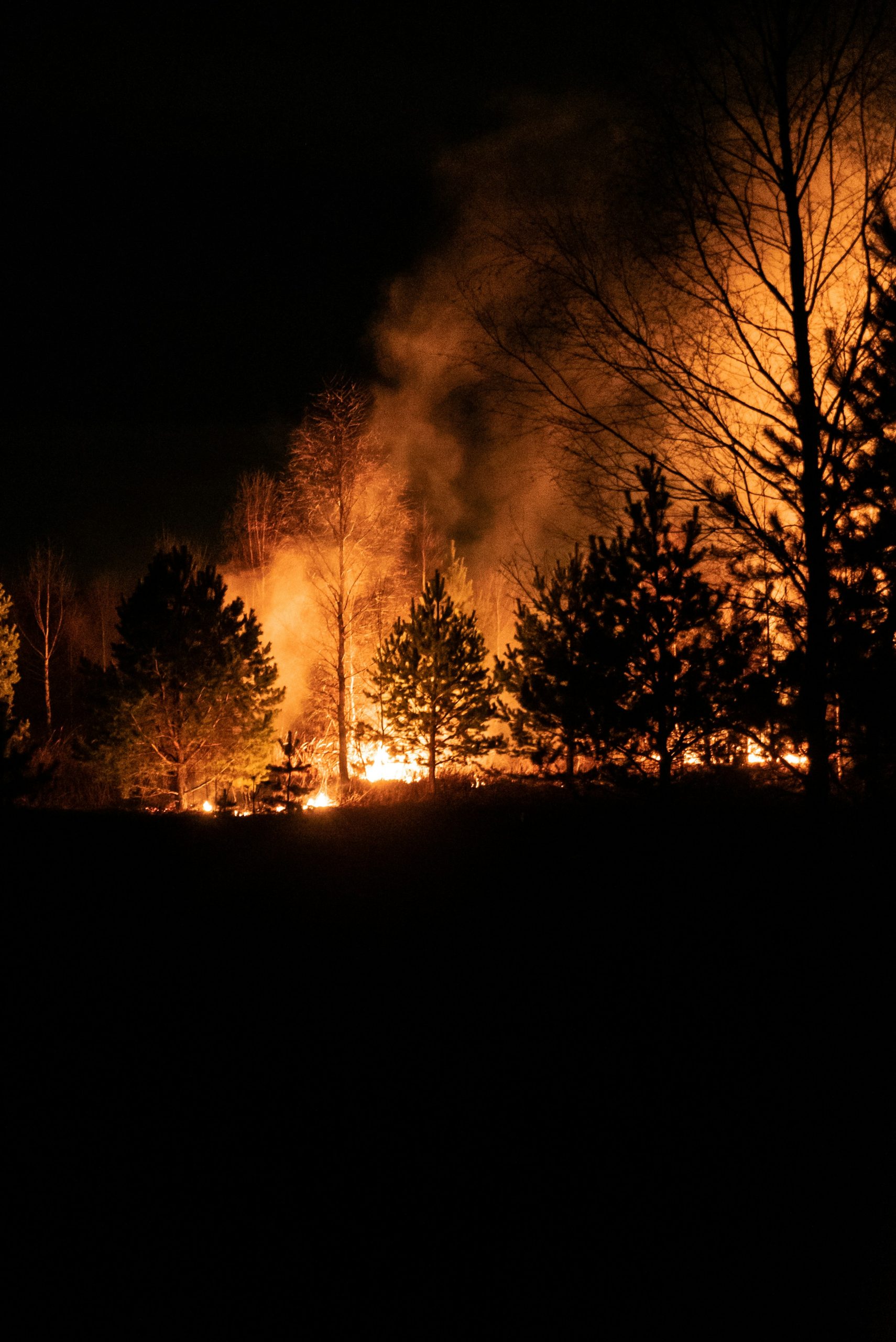
Photo by Egor Vikhrev on Unsplash



Full Podcast
Transcript
Note to readers: This video session was transcribed using auto-transcribing software. Questions or concerns with the transcription can be directed to [email protected] with “transcription” in the subject line.
Mary Rowe: [00:00:02] Welcome to City Talk, the show about what’s working, what’s not, and what’s next for the places we live. I’m Mary Rowe and I lead the Canadian Urban Institute. [00:00:10]
Beth Sanders: [00:00:13] I may know things about where we could push some levers to increase density or fire resistance, but if the community isn’t ready, it doesn’t actually matter what I think. [00:00:22]
Mary Rowe: [00:00:26] It’s the summer of 2025, whoo-hoo. And you know, we used to make jokes that summer was actually the season of construction. But in fact, what it’s increasingly becoming is the season of wildfires, evacuations, smoke inundation. This year, believe it or not, 2025 is the second worst year on record for wildfires, only second to two years ago, 2023. And thousands of people have been forced to leave their homes in Manitoba and Saskatchewan already this summer, and as we know, over the last few weeks, even rural Newfoundland. Musgrave Harbor is having fires where a thousand people have been relocated recently. And the cascading effects of this aren’t just the communities that are relocated, but as we know, the smoke blows, it affects air quality, it has all sorts of implications. And we know also that the impact of these intrusions have enormous potential for devastation of communities. If you look at Lytton, BC or Fort McMurray, Alberta, and as the summer gets warmer everywhere, it’s something that more and more communities are having to deal with. So how does a community rebuild after a wildfire? Are there lessons that we need to learn to help us prepare if it ever happens to the community near us? And how can we take steps to actually prevent these kinds of things? So joining us today is somebody right at ground zero in Jasper, Beth Sanders. She’s the Director of Urban Design and Standards for the municipality there in Jaspor, Alberta. Last July, 25,000 people were evacuated from Jaspor. Two days later, the fire swept through Embers. Ended up igniting all sorts of buildings. They’re destroying about a third of the town, including entire neighborhoods. Beth is a planner and expert in these things. She’s also an author of Nest City. So she is well acquainted with the challenges of mobilizing people to come together and solve these kinds of challenges. And we’re really pleased to have her join us here on City Talk. Beth, thanks for joining us. [00:02:22]
Beth Sanders: [00:02:23] You bet, Mary, happy to be here. [00:02:24]
Mary Rowe: [00:02:25] Just take me back a year to last summer when the fires broke out. Tell me what you remember. [00:02:30]
Beth Sanders: [00:02:31] The funny thing about what I remember is I was negotiating a new position with the municipality of Jasper to start their brand new planning and development department because the town is in a national park so the planning and Development Authority actually rests with the national park and the municipality and the town had been negotiating let’s start a planning and development department and on Monday July 22nd I’ve got the written offer we’re just negotiating a couple things. I’m waiting for the call. I’m waiting for the call. I’m waiting for the call and like something’s up. And then of course I hear on the news that the town is evacuating. And then two days later the town was on fire. And what’s interesting from a climate resilience perspective is that the fire, which was significant and huge, did not burn the town, but embers that flew in in excess of two kilometers flew into the town and then wherever they land, if it was… Ignitable, it ignited and then Jasper lost 358 structures. So what ended up happening is a really quick decision. Yep, Beth’s starting. Beth is going to start quicker than she was going to. And then we joined forces myself, the team I started to assemble to be the department within the municipality, because we know how to think town. Planner type people know how to think town. Parks Canada knows how to think parks and given my my planner friends at Parks Canada a lot of credit they just didn’t have what they needed to think infrastructure to think a lot of things but it’s been this beautiful partnership around like they’re assembling people to get permits through, etc. We’re working together to revisit, like, what are the policies we have in place that guide how we physically build? It’s on nobody’s agenda to have to reimagine their homes. And it’s fricking complicated because there’s insurance questions. There’s what do I do questions? What stage of life am I in? So the emotional toll for residents is also really high. And then of course, Jasper, like the economic recovery for Jasper as a place is all about tourism. So there’s a lot of people out there who think, oh, you know, I shouldn’t go, when actually the most important thing to do right now, to visit Jasper is the thing to do. There’s lots to do still. And the economic recovery is important because if that doesn’t happen, then the businesses aren’t there, the livelihoods aren’t, people aren’t there. And it’s a multifaceted, messy situation. That’s kind of the recap I’d give you, Mary. [00:05:07]
Mary Rowe: [00:05:08] Okay, so you’re thrust into this situation, this role. Obviously, for the first several months, it’s relief, it’s supporting families and businesses that have had extraordinary challenge. How far into the process do you start to be able to have bandwidth to talk about recovery and what it is you will rebuild? How far in to the process does that have to be? [00:05:28]
Beth Sanders: [00:05:29] Well, my position was kind of unique in that my hands on work was not relief to people. So when reentry happened in September or August, a whole bunch of colleagues were looking after like human beings. I’ve got a whole slew of colleagues that were thinking about, okay, well, where do we put interim housing? What do we do for some transitional short term housing? My team and I help think through the locations. Or how do we prioritize housing people? The locations in Jasper where we have now interim housing, we’re like, it’s more important to house people than it is to house their cars. Their cars can go on the street. We want to have homes for people. So we’re running this experiment. Let’s see how it works. Let’s get as many people housed as possible. That was our imperative. But while my colleagues are doing all of this, especially in the early days, like, I literally would show up, I’m in the incident command center and I’m watching everything and I know everybody’s kind of like wonder what she’s doing. And then, so the fire was end of July, and by the end of October, we had what we produced, my parks colleagues and my team, a rebuilding guide, which involved, we identified policy things that needed to change to enable rebuild. So imagining someone’s lost their home or their business, the building is gone. We know that the first thing they need to do is talk to their insurer and figure out what kind of coverage they have. When they know that, they’re going to start thinking about designing a new building. And when they start thinking about designing a new building, we want the rules to be the best rules that they can be to enable a better future for Jasper. So really quickly, what we did is we went through the land use policy. So not a land use by-law, because it’s Parks Canada, it’s a land-use policy. And we’re identifying, okay, well, what kinds of levers can we pull to make the town more fire resilient? Okay, no more cedar shingles. Those are out of the rules. It used to be an encouraged thing. Not so much anymore. What kinds of materials do we want buildings to be clad in? How fire resistant do we it to be? And then we also lightened up some of the rules. Jasper has been in a a housing crisis for decades where the vacancy rate has been at or near zero for decades. So how do we adjust the rules to allow for some very modest density increases? So we made some of those changes and so that people when they’re applying for their permits could start to rethink how their rebuild could contribute to the well-being of the community, with no expectation that everybody must do it. But if somebody wants a secondary suite or a garage suite, they could do it, or if they wanted to do it. [00:08:17]
Mary Rowe: [00:08:17] As of right if they wanted to. [00:08:18]
Beth Sanders: [00:08:19] Yep. So, or if they want to, okay, I have a single detached dwelling, I’d like to have a duplex with secondary suites and a garage suite. Awesome. So we wanted to set people up that if they could do that, then they could. And also, if they didn’t want to no harm, no foul. Because we also recognize that, you know, some people insurance coverage is different, financial resourcing is different for different households. Don’t want a rule anybody out of not being able rebuild because that’s not compassionate either. But how do we how do we adjust the rules so that some more housing? [00:08:51]
Mary Rowe: [00:08:53] I’m assuming there was resistance to some of this. I mean, there’s a reason why it’s hard to imagine what NIMBY looks like in a devastated community, where there’s obviously a level of heightened urgency that we need something to happen. But was there some NIMBY there? Were there people that just wanted it to go back to exactly what it was before? [00:09:09]
Beth Sanders: [00:09:09] Of course. You know? For folks that lost their homes, say, like they didn’t ask for that. [00:09:14]
Mary Rowe: [00:09:15] No. [00:09:15]
Beth Sanders: [00:09:15] They’ve never had a desire to build a new building from scratch and organize all of that or negotiate with insurance companies. Hot tip for everybody, please review your insurance policy. Like just do it. You heard it here first. Yeah, it’s tedious, but do it because there’s all and actually have a conversation with the human being run for some scenarios. Like if this happened, am I covered? If this happened. Am I covered? Is it just the value of what it was or guaranteed replacement? Like just learn the lingo and make sure you’ve got the right thing. It’s a game changer when you experience loss. So what we have to be full of care of as planners, though, is every person who walks in the door, imagining like trying to figure out how the rules work, like, what can I build? What can’t I build, can I built exactly what I add? Like any town, there’s neighborhoods that were built in different eras. Land use bylaws can get really complicated and tricky, but it’s a useful exercise we’re finding to imagine you’re in an emergency situation and you want to adjust the rules to simplify how redevelopment can take place. Imagining that somebody wants to build their home and it’s, you know, 10 centimeters too close to the property line. And that’s a make or break thing for someone’s emotional state. Does it really matter? [00:10:35]
Mary Rowe: [00:10:36] Does it really matter. Yeah. [00:10:37]
Beth Sanders: [00:10:38] Like what really matters, right? What really matters is people get their homes rebuilt. [00:10:41]
Mary Rowe: [00:10:43] Do you think that that crisis, the whole year you’ve put in under these extraordinary circumstances, do you think, that’s given you license, as you suggest, to do things more quickly, to, as, you suggest not be so inflexible in terms of how we apply rules? Has it given people the appetite to say, okay, let’s be more forward thinking, let’s adapt more quickly. Has it given you that? [00:11:06]
Beth Sanders: [00:11:07] Well, humans are humans. So some humans are like, Yeah, yeah, yeah. Yeah, let’s go. Let’s go and then others are and fair enough, you know, they’ve taken a beating. You know what, I just want things to be stable. I don’t want anything to change. [00:11:20]
Mary Rowe: [00:11:20] So how do you juggle that? You’re a planner. You obviously want to build a more resilient community. You want it to be better than it was before. How have you decided where you would push to get the better happen? [00:11:30]
Beth Sanders: [00:11:31] Well, like I remember when I started in planning school, it was like a new idea that planning was a political exercise, right? Because it used to be, you know, this is a scientific thing and you do your thing. Planning is so political. So A, remember, it’s a political exercise. B, for me, remember it’s the community I’m serving. It’s not my agenda. I made no things about where we could push some levers to increase density or resistance. But if the community isn’t ready, it doesn’t actually matter what I think. So if I’m serving the community well, I’m Serving them where they are, offering them something just enough ahead that they can reach for it. And it’s not so far ahead that it’s like, hey, that makes no sense. [00:12:15]
Mary Rowe: [00:12:15] Why are you imposing it on me? [00:12:16]
Beth Sanders: [00:12:16] Right. So what’s suitable for the communities we serve and every community is going to be different But we have to discern what suitable one day could be totally different the next day Right, because that’s also how human beings work. I know when i’m in a situation where i’m grieving like seriously grieving Minute to minute moment to moment. I can have Like moments of coherence and moments of crumbling. Yeah, so there’s a great deal of compassion that’s required. I would say the biggest lesson for government is look at how quickly we can move when we need to. And some of that is because of, you know, it’s a disaster. We need to move quick and we feel that imperative. [00:12:58]
Mary Rowe: [00:12:59] Mmhmm. [00:12:59]
Beth Sanders: [00:12:59] But when we slide out of disaster, so when I think of myself a year later and I’m thinking, well, what’s this work gonna be like for the next year? It’s gonna be reminding ourselves that, you know what? We don’t need to overthink this. We don’t need to take months to make this decision. We can make this in a day or a week. And it’s gonna to remind ourselves that oh, you know, what? We didn’t do that. We made good decisions in a week before. Why can’t we still make good decisions in a week. [00:13:28]
Mary Rowe: [00:13:30] I used to say this after COVID that we had to make very fast decisions during COVID. And so I used push and say, well, what’s the COVID dividend? Can we make decisions quickly when we need to? As we had during a pandemic, as you’ve had to now during a fire disaster. In terms of going forward, you know, in terms of what you’re trying to build forward, are there specific kinds of things that you want to see embedded in the community that would make it more resilient to whatever the next stress is. Maybe it’s a fire, maybe it’s the flood, who knows. Can you do that too? [00:14:04]
Beth Sanders: [00:14:04] Well, we just finished our Climate Adaptation Action Plan. So we’ve identified the top five hazards for Jasper. Surprise, surprise, wildfires is still one of them. What else is in there other than wildfires? What else in there is wildfire smoke. Smoke. Yep, glacial recession. Yep. So the impact of that is less water supply, but also for a tourism economy, if there’s less water. Yep, the tourists stop coming. Yeah, the things that people would come and see are not necessarily there. And hail is an Alberta thing. I think hail was in there. [00:14:37]
Mary Rowe: [00:14:37] Frogs and pestilence, not in there yet. [00:14:39]
Beth Sanders: [00:14:40] Not in there [00:14:40]
Mary Rowe: [00:14:40] Not yet. But this is the piece is that we don’t actually know what’s around the corner. So, really, you know, that’s the thing that’s so challenging about resilience planning, I think, is to figure this out. Can I ask you a question about jurisdictional? You talked about planning being political. I didn’t know whether you meant capital P or small p, but- All sizes of P. All that. How have you navigated the jurisdictional overlaps here? Like, I’m interested, who’s paying for all the work that you’re leading? Which government is paying for it? [00:15:08]
Beth Sanders: [00:15:08] So my team is a combination of the municipality and the disaster relief program that’s federally funded and then money flows through the government of Alberta. Okay. And then a lot of my colleagues in the Jasper Recovery Coordination Center, that’s all disaster relief programs funded by and large. Federally. Federally funded, but it flows through a government of Albert, right? So our direct contact is with the government. [00:15:33]
Mary Rowe: [00:15:33] Of Alberta. How’s that been to sort of navigate that? Because they all have different interests, I know. [00:15:38]
Beth Sanders: [00:15:39] Yeah, it’s not straightforward. My colleagues that are doing most of that work, like it’s, it’s delicate, for sure. But it is, again, another example of municipalities are creations of provincial government. [00:15:52]
Mary Rowe: [00:15:53] Mmhmm. [00:15:53]
Beth Sanders: [00:15:54] And it’s hard work being a municipality in a disaster situation when communities know what they need and they may or may not get it. Yeah. And I’m not throwing shade anywhere other than to say things that everybody knows that it’s tricky business being a municipalities disaster or not when funds come from other orders of government and you need to keep those relationships in good shape but it takes energy and attention to make sure that those Relations are good So that the funds do flow, otherwise Jasper or any municipality, any town that is experiencing disaster is like, it’s hard, it takes funds. But we throw those funds at the emergencies when they happen, the bigger existential question is, do we have it in us to throw money at improvements that can be made before disaster strikes. [00:16:49]
Mary Rowe: [00:16:51] If you had words for your colleagues, certainly after Katrina, I used to say, everybody became a planner. Like everybody has to be a planner, when you’re in an emergency, everybody has think like a planner and so to all the planners and the would be planners and that you better think like a planner people out there, what from your extraordinary experience, which I appreciate you’re still in the thick of, but what would you be saying to communities now, particularly ones that are looking at their sister communities saying, look what risk they’re in, when are we next? What would you be saying to community folks now? [00:17:21]
Beth Sanders: [00:17:22] Take advantage of any and all support you can get for emergency preparedness. There’s lots of support out there. Do the work. For planners in particular, run a little scenario where you imagine, for example, a third of your town is gone. And there’s gonna be a process that’s gonna unfold on how do you clean up efficiently. And some planners will be working on the cleanup and engineers will be on the clean up, but there’s permitting involved there. Making sure when we rebuild, it’s not contaminated. There’s lots to think through there. Unfortunately or fortunately, there’s more and more people out there who can do this kind of work and it will serve other communities well. I can imagine that there are planner type people that are going to move from emergency to emergency, disaster to disaster, providing these services, avail them of it. The other piece is to imagine, run a little exercise, if you had to move a ton of permits through fast, how would you change the rules to do that? And think it through and do it now. Because in a normal municipal situation, if want to change your land use bylaw, you have to do a public hearing for second, third reading. We didn’t have to that because we’re in a national park and the authority rests with superintendent. And the superintendent of Jasper National Park was comfortable making some tweaks to the rule, any tweaks in any other situation, that would not be the case. So one of the things I would love to offer to planner colleagues is some time and space outside of the workday where you sit down and you run through a scenario and you imagine, okay, this has happened. Two weeks later, you’re starting to think ahead, okay people are going to be coming back in town, they’re going to thinking about applying for permits. [00:19:11]
Mary Rowe: [00:19:12] Uh-huh. [00:19:12]
Beth Sanders: [00:19:12] What are the rules you want to be in place then? And do that work now. [00:19:17]
Mary Rowe: [00:19:19] Do you have a go-bag? Do you know what a go bag is? I sure do. Yeah, I think all Canadians need to have a go- bag. But we also, I think what you’re suggesting is professionals need a go bag. So that whatever function you play in government or in running a business or running a nonprofit or wherever your interaction is with other people, neighbors, that you have thought through what the steps are, what are you going to need, so that if you do get put into a situation, you can and implement it quickly. [00:19:48]
Beth Sanders: [00:19:48] I think that it’s almost the right metaphor or analogy. [00:19:52]
Mary Rowe: [00:19:53] Give me a better one. [00:19:53]
Beth Sanders: [00:19:53] So the go-bag is what I’m going to do when it happens. And being prepared, having a bag ready, I’m gonna need XYZ. The medic prescriptions are refilled. I think there’s something to do long before then, long before. And it’s imagining, even when we were looking at the climate adaptation action plan, the mayor says, this is all nice to have, a climate adaptation plan. And it’s useful to think about what are the impacts when something happens. And he says, but we already know. We know what the impact is. Like we’re living climate change right now. So way ahead of having the go bag is what really truly are all of the things we need to be doing both in terms of mitigation when climate events happen, but also again, way ahead to that. What are the choices we’re making in our day-to-day lives that are ensuring we will experience disaster? [00:20:55]
Mary Rowe: [00:20:57] You mean, the risks we’re putting ourselves under, but then the reverse of that would be, what are we doing to prepare us and protect us from disaster? [00:21:07]
Beth Sanders: [00:21:08] It’s basic prevention, right? And I know humans are most likely to react to the thing while it’s happening rather than prevent it. But honestly, I think that’s the learning edge for human beings right now is to notice that gee whiz, you know, it’s so uncomfortable to have to think through if this might happen or what are the consequences of my actions? Damn the torpedoes. I’m just to do it anyway. But the truth is that’s so short term thinking, it does lead Explicitly to disaster and our demise is communities one by one Right like there are people who have been displaced from Jasper who don’t imagine they’ll ever come back There are people, who imagine it’s gonna take years to rebuild there’s some that will are starting to rebuild this summer It’s the full gamut, but the truth of the matter is is a gem of a community is Never gonna be the same again like the social part of it The physical part for sure, no worries. But the social part of it, the social fabric is ruptured because people like went to the wind and that same assembly of people is never gonna be Jasper again, which is heartbreaking, right? [00:22:22]
Mary Rowe: [00:22:23] But a new Jasper will emerge. You just relayed for me your vacation that you’ve just come back from. Just describe that because that’s a community that has had to adjust. Just describe where you’ve been with your kids. [00:22:34]
Beth Sanders: [00:22:35] My kids and I went and did the Berg Lake hike, so 23 kilometers behind Mount Robson, so in the Rocky Mountains. It’s the highest mountain in the Canadian Rockies. It’s beautiful. Interestingly enough, that trail is just reopened because it had been destroyed a handful of years ago by the atmospheric river. So excessive rainfall and flooding took out a good amount of the trail and they’re rebuilding it. Some of it’s rerouted, rebuilt in ways that are more climate resilient. So there we are again, another situation where, you know, in this case, instead of fire, water rushes through, destroys the infrastructure for, for hikers to move in and out of the terrain, but they’re rethinking how they build it. So in the event of another water event like that, the infrastructure won’t be destroyed and then us human beings can, can keep enjoying the back country scenery there. We didn’t build that way to begin with. When something happens that is a step back, we always have a choice to make. Do we rebuild and recreate what we had, which could, all right, let’s just keep having climate change happen. Let’s just keep building in ways that ensure we have inadequate housing for community members, or we make a choice and places always come with discomfort. Do we make the choice to live with some discomfort or a lot so that everyone can be housed, so that we stop contributing to climate change? Because that’s what precedes the go-bag. You still need the go bag in case something happens, but how do we minimize the impacts of climate change by not ensuring that climate change happens and contributing to it every day? [00:24:19]
Mary Rowe: [00:24:20] So let’s get a go bag but never have to use it. Beth, thank you for joining us. These are such important lessons for the rest of the country to pay attention to, and it’s a work in progress as you know, resilience, we build it every day. So thank you, for all that you’re doing for the people of Jasper, but also for the broader community across the country that are coming to terms with what these challenges may or may not look like for their communities. So thanks for joining. And I look forward to keeping track of the developments as you continue to do it one step at a time, one street at a time, one house at a time, one building at a time. Thank you for joining City Talk. [00:24:52]
Beth Sanders: [00:24:52] Thank you. [00:24:53]
Mary Rowe: [00:24:56] City Talk is a podcast from the Canadian Urban Institute produced by Antica Productions. Our producer is Kevin Sexton and our executive producers are Laura Regehr and Stuart Cox. If you’re enjoying this show, please give us a rating and review it in your podcast app. You can also follow CUI, the Urban Institute on YouTube, and find a video version of this show and other content like it. I’m Mary Rowe. I happen to be the CEO of CUI. We’ll be back in two weeks for another episode of City Talk. What’s working, what’s not, and what needs to be next for the places we live in. [00:24:56]
5 Key
Takeaways
1. Wildfires Are Transforming Summer in Canada and Reshaping Communities
The summer of 2025 marked Canada’s second worst wildfire season on record, displacing thousands and devastating towns like Jasper, Manitoba, and Saskatchewan. In Jasper, about a third of the town was destroyed, leading to mass evacuations and enormous disruption. The impacts stretch beyond immediate destruction, affecting air quality, tourism, and social fabric, and highlighting an urgent need for communities nationwide to prepare for increasingly frequent climate disasters.
2. Speed and Flexibility in Policy Are Vital for Recovery and Rebuilding
Beth Sanders described how Jasper’s recovery demanded quick decision-making and adaptive policy changes. The municipality and Parks Canada worked together to revise land-use policies, eliminate fire-prone materials (such as cedar shingles), and enable modest density increases—all within months. The post-disaster context allowed planners to simplify complex rules and speed up permitting, demonstrating how crises can act as catalysts for much-needed reform.
3. Compassion and Community Engagement Are Central to Effective Urban Planning
Recovery is not just a technical challenge; it’s political and deeply personal. Many residents wished to restore their homes exactly as they were and felt overwhelmed by loss and insurance complexities. Sanders emphasized meeting communities “where they are” and pushing just enough for progressive change. Planners must balance forward-thinking resilience initiatives with compassion for trauma and grief, ensuring that rules and recovery strategies remain flexible for diverse needs.
4. Disaster Relieves Revealed Gaps in Intergovernmental Collaboration and Funding
Jasper’s recovery was financed by a mix of municipal funds, Alberta’s provincial government, and federally-supported disaster relief programs. Navigating these overlapping jurisdictions proved complex, underscoring the importance of strong relationships and coordination between municipal, provincial, and federal authorities. Sanders noted that while emergency funds flow quickly during disasters, there is a greater existential challenge in securing investments for climate adaptation and resilience before crises strike.
5. Prevention, Scenario Planning, and Climate Adaptation Must Become Routine
Sanders advocated for proactive emergency preparedness and resilience planning. She urged colleagues to “run scenarios” before disaster hits, imagining how to rapidly approve permits and update rules to enable efficient rebuilding. Jasper’s new Climate Adaptation Action Plan identifies top hazards such as wildfires, smoke, glacial recession, and hail. Sanders argues that communities must shift from short-term responses to long-term planning, using every available support to implement mitigation measures and reduce risk—ultimately aiming to build not just physical structures, but lasting social resilience.