

Summary
Festivals can be a great excuse to get out and see something new. But they can also be disruptive to local residents and businesses. So when do they help a city thrive, and when are they more trouble than they’re worth? Host Mary Rowe gets the perspectives of two guests who helped shape iconic downtown areas.
Tim Tompkins was president of the Times Square Alliance in New York City from 2002 to 2020. He’s now director of the Sustaining Places Initiative at the NYU Marron Institute. Mark Garner is executive director at Calgary Downtown Association. He’s the former CEO and executive director of the Downtown Yonge Business Improvement Association.
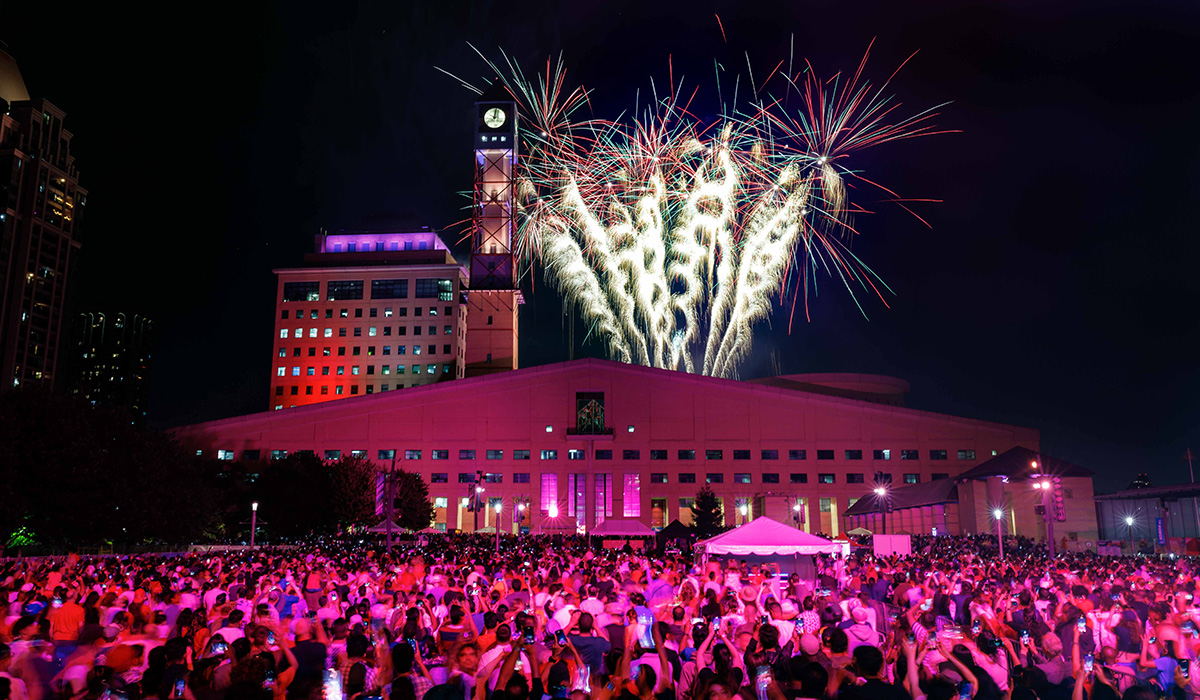
Photo Credit: City of Mississauga | Creator: Adam Pulicicchio Photography



Full Podcast
Transcript
Note to readers: This video session was transcribed using auto-transcribing software. Questions or concerns with the transcription can be directed to [email protected] with “transcription” in the subject line.
Mary Rowe: [00:00:02] Welcome to City Talk, the show about what’s working, what’s not, and what’s next for the places we live. I’m Mary Rowe and I lead the Canadian Urban Institute. [00:00:10][7.6]
Tim Tompkins: [00:00:13] Every place, even ones that are often described in terms of pathology, a struggling neighborhood, a high crime rate, always has people and characteristics which are worth celebrating and it is often through events and programming that those things are first publicly celebrated. [00:00:30][17.0]
Mary Rowe: [00:00:34] It’s festival season. Across the country, people are heading outside to see parades and concerts and try new foods. It can be a great way to have fun and experience some of the best things the city has to offer. But there’s another side to festivals too. Paying for security is expensive and the bigger an event, the more it disrupts the daily lives of the people who live in the area. So this raises some questions. Are the festivals for locals or are they for tourists? And how much do they help a city? And do the trade-offs ever get to the point where it’s just not worth it? To talk about all of this, I’m joined by two seasoned guests who’ve helped shape downtowns and hosted many, many events in major North American cities. Tim Tompkins was president of the Times Square Alliance in New York City for almost 20 years, from 2002 to 2020. And he’s now the director of the Sustaining Places Initiative at NYU’s Marin Institute. Mark Garner is the executive director of the CalGrade Downtown Association. And prior to that, he had the same role. For an iconic street downtown Yonge in Toronto. Welcome, Tim and Mark. You both come from iconic cities, homes of these kinds of immense and special attractions. If you’re a decision maker or an investor, what level of priority needs to be put on those? Tim, I’ll go to you first and then Mark, and then the two of you have a go because I know you want to finish each other’s sentences. [00:02:02][87.6]
Tim Tompkins: [00:02:02] I mean, one starting point is it’s not just creating economic activity, it’s about creating the conditions that allow for economic activity and vibrant places. What kind of events you’re doing is part of the purpose of your event to strengthen, nurture, draw attention to your distinctive local characteristics and assets or your history. It is the purpose simply to get footfall by drawing people from far away. I went to a conference once. In Sydney where they talked about why events were such a central part of their strategy in Australia, New South Wales, and elsewhere because they said, everyone says, oh, at some point I want to go to Australia, but they needed a specific reason. And so a lot of different sports and cultural events were created to draw people, to give people a more specific reason to go. And those were, you know, they were things like tennis tournaments, they weren’t necessarily things that were celebrating sort of the specific and authentic assets. [00:03:02][59.6]
Mary Rowe: [00:03:03] I like this notion of enabling conditions. You know me, I’m like, I am all about creating the conditions because what you’re suggesting is the conditions are investments that continue to give. And that’s the question, right? That’s part of the cynicism about a festival or an event is, well, it’s good for those three days. Like Pride here in Toronto, what kind of economic benefit will that have created? But as you say, are you laying track for ongoing investment and ongoing economic activity? [00:03:28][24.8]
Tim Tompkins: [00:03:29] One needs to use the term investment and return in the context of discussions about fostering economic activity. And with respect to events that draw people from out of town to town, that’s free money for a city. So I’d say that’s very important, but sometimes you’re also investing in something that is building the infrastructure of the place for long term and different forms of economic investment. When I did the parks work, one of the most important events was an idea by local artists to float a golden ball down the Bronx River. And it was really a way of engaging the community in thinking about this thing that had been inaccessible and unpleasant, downright dangerous, for a long, long time. It also, there was a side benefit, which is if you floated a ball down a river with canoes, you had to clear out all the shit that was in the river, like cars and tree branches and things like that. But that was an event. That was strengthening the infrastructure of the place and beginning to transform that place. [00:04:28][59.1]
Mary Rowe: [00:04:29] Wow, it’s very interesting. So you add that as a criteria, you know, the old story, is it going to leave a place better than how it found it? You’re saying it cleaned up the Bronx or when you say it’s free money, it’s not really though, Tim, because all the essential public services that have to be bumped up to accommodate an event, the municipality has to pay for those things. So when the circus comes to town, you’ve also got to add more cops, more cleaners, right? So it’s totally free. Mark, go ahead. What were you going to say? [00:04:52][23.4]
Mark Garner: [00:04:52] This discussion is fantastic. I think what’s becoming clearer is the interconnectivity of the economics of neighborhoods and specifically the diversity of neighborhoods. As you know, Calgary is the third most diverse city in Canada, but downtown does not resonate with people. Cause we built these 15 minute communities where, as an example, I don’t have a Diwali festival downtown. I do not have the Japanese cultural festival downtown. They’re in neighborhoods. So, you know, it’s the economics of activations and those cultural activations specifically and the economics they generate. Most cities, and at least what I’m finding in Calgary right now, is we don’t know the current economics of downtown and the interconnectivity between the sectors. I can rhyme off numbers where we have 28% of the entire hotel stays in Calgery are in our downtown core, but we generate 50% of all the hotel economics for that sector in the downtown core. So how do we get those extended stays? Calgary has got its own unique set of issues in regards to people come to Calgary and they’re going to the mountains. They may not even stay in the urban context and experience whatever thing, but also what cities are doing now is we’re all in this fast pace to build entertainment precincts and cultural centers that are basically diluting the economics of geographic neighborhoods and pulling them to new areas. So then how do you become sustainable in the new world? Because once we build this new shiny thing and hey, this is where you go for all of this, then what happens to the neighborhood that is currently a very viable and strong economic driver for the city? [00:06:36][103.2]
Mary Rowe: [00:06:37] We have tried to make downtowns neighborhoods. We’ve put more people, we’ve encouraged more people to live downtown. I hear you, Mark, about the 15-minute neighborhood is that more and more amenities are in your local community. But downtown had historically always offered something quite different. [00:06:54][16.9]
Mark Garner: [00:06:55] Yeah, I would say my time in Minneapolis or St. Paul, you see the headlights come in in the morning and you see the brake lights go some of the data just in Minneapolis alone is outside of New York, Chicago, and LA Minneapolis has more seated theater space than anywhere else in United States. And we all talk about intensification and bringing residential in and we’re all doing that, but how do you make the quality of that neighborhood? Based on what sector do you want. [00:07:26][31.3]
Mary Rowe: [00:07:27] Are these competing objectives? I mean, lower Manhattan, this is what you did, Tim. New York decided it would put more housing down into lower Manhattan after 9/11 and turn it into more of a diverse neighborhood. So in that case, you say, well, one approach is you make downtowns more of the neighborhood. An alternate approach is you have some attractions in downtown that are completely unique and can be found nowhere else. You put a stadium there, you put an arena there, you have a an entertainment facility, you have a public square. Is it either or, or is it both and? [00:08:01][34.7]
Tim Tompkins: [00:08:03] I think it’s both, and really the term that comes to mind is diversification, right. I mean, if you’ve got an investment portfolio, you want to have a diversity of things that will generate returns for you. And people used to be surprised when I was in charge of Times Square, when I would talk about the importance of tourism in other lesser-known parts of the city, because the first time people come, they’ll go and see the Statue of Liberty Times square are the main things. Thinking about the city as a whole, we want multiple visits, and you know what, those people still come back and see a show after they go to see a new park in downtown Brooklyn. And I think also, it goes back to some of the things Jane Jacobs talks about, what makes a vibrant city. I think downtowns in North America are beginning to come less like a monoculture. Yeah. And that’s really good, and I think people may view sort of the doom loop conversation post-COVID as, this is one of the best things that happened to cities, because we loosened up our zoning. We allowed for a greater diversity of activities. And again, this is about, when I talk about creating the conditions for economic activity. If you’ve got a diverse population of users, which could be both workers, not just at major office buildings, but makers and other things, and you have a diverse group of residents and a diverse groups of visitors, then guess what? The economy, Adam Smith’s hand, will come into play and you’ll get offerings for all of them. And that creates a much stronger, but also a more robust economic infrastructure. [00:09:29][85.9]
Mark Garner: [00:09:30] Yeah, and I think, Mary, on the same point, I’m seeing something a little different in Calgary in regards to we have 250 people moving to Calgary daily. And housing stock is not increased downtown. So good news is a lot of people are moving to Calgary, bad news is, a lot of people moving into Calgary. I want to look at specific programming that you can only find downtown to get those 15-minute communities into our space. We’re not going to have the night markets, we’re not gonna have a full gambit of product that we’re going to deliver on, but we’re gonna be very tactically focused on Cirque du Soleil, cultural programming. That’s our main focus to make people identify that downtown is for them. Because as they move into Calgary, they find their people and they stay with their people in communities outside of Calgary. And some of the new Calgarians, new Canadians that are coming here have never been downtown other than potential employment. But as we expand employment clusters further and further out, then downtown we’re actually competing against ourselves. So this is why specific content that you can’t find anywhere else has to stay in geographic areas. [00:10:43][73.2]
Tim Tompkins: [00:10:44] Well, and also, he’s talking about some other things that are really key, which is, what are the unique offerings, but also, what are things that downtowns often have? They have a transportation nexus. They can accommodate the larger events. Cirque du Soleil just isn’t going to go to a hyperlocal neighborhood. Those are some of the characteristics, I think, also, that are key in terms of the ability to have a lot of focus and the ability to have enough hotel rooms when an event happens. [00:11:08][24.3]
Mary Rowe: [00:11:09] Let’s go back to this enabling conditions frame. So Taylor Swift was a phenomenon. I was somewhere two days ago and I was getting off a plane and there was a young woman wearing the Airis Tour T-shirt. And I thought, wow, you know, this has had, it was a cultural phenomenon, as you recall. I mean, even the prime minister of Canada on Twitter, I think said, Taylor Swift, come to Canada. It became this enormous kind of outpouring of enthusiasm for a particular phenomenon. And it did generate all sorts of planning activity and investment in cities that welcomed her tour. Do those things pay off or not? I mean, did we see a situation where there were various investments made that would continue to benefit long after the show leaves? Or Mark, did Taylor come to Calgary? Was there a show there? [00:11:59][49.9]
Mark Garner: [00:11:59] No, part of the challenge is in our geographic area, nobody comes over the mountains. Wow. So they will be in the West coast because we don’t have an asset that you can program that is a quality asset. [00:12:12][13.1]
Mary Rowe: [00:12:13] You don’t have a big enough venue? Or a quality enough venue? [00:12:15][2.2]
Mark Garner:[00:12:16] Quality enough, big enough, capacity, infrastructure, all those things and that’s why we’re building a new arena. So again a lot of those touring groups will go to Edmonton but they won’t come to Calgary because the product is better in Edmontons. But you’re motivated enough, you must believe in it enough that you’re building one in Calgary. Yeah, again you have to have competitive product because if we’re again this gets into this siloed structure in the interconnectivity, we now have one of the largest. Conference centers with the BMO Center on stampede grounds. We don’t have the hotels to support it. We don’t have the infrastructure for large quality musical acts to support that. We just had the International Rotary Association in Calgary and we brought in 17,000 people globally. We booked all the hotels from Calgary to easily 50 kilometers away from the downtown core. It was a great economic driver, but it sustained all the sectors, right? It sustained the hotels, the culinary, theater, all those things were there. We also just had G7. G7 did nothing economically for downtown. It booked hotels because of the security teams, but it decimated retail over the length of time that it was there. [00:13:29][73.0]
Mary Rowe: [00:13:29] So there’s certain kinds of events that are better than others. I mean, you and I, Mark, had lunch on Yonge Street several months ago with a business owner who described for us that the Taylor Swift concert, which was several blocks from his venue, what I don’t know, like 10 blocks, had generated not a dime for him. Right. So that’s, I think, an interesting thing for us to think about, thoughtfully about this, is that these events, whether it’s the G7 or it’s Taylor Swift, there you go. Everything could put them in the same sentence. They have a certain targeted benefit, but they may not be creating the enabling conditions that Tim’s after Tim. New York City is constantly coping with this balancing act. Visitors coming in, locals enjoying. When I was in New York, people came to hate Times Square, locals. They hated it. How do you balance that? [00:14:19][49.6]
Tim Tompkins: [00:14:20] The devil is in the details, it’s kind of like, is it good that a city spends hundreds of millions of dollars to attract a company like Amazon when there was that big competition or not? It depends. Each event is different. And Mark’s anecdote reminded me of when the one time when the Super Bowl came to the New York City area, it was actually played in New Jersey, the organizers in the city wanted to do a huge NFL-related kind of festival in the middle of Times Square. And it was terrible for our retailers. And it was terrible for the theaters, which are the main economic driver of the area. Terrible for the restaurants. Because literally, you’d go in and the newscasters would say, I would stay away from Times Square. It’s going to be crazy with all this stuff going on. So I think the most important thing is that not just for the people who are in charge of a tourism agency, but also the mayor and the head of the council and the people that are thinking about economic development. The first thing that they do when they think about or hear about a potential event is to call someone like Mark Garner and say, how do we make this work for you? And sometimes like with the NFL, they just said, we want to do it. Times Square is a place where this NFL celebration should happen. And we’re like, okay, but this is how we’re going to make it work a little better for us. And over time, I think there’s an education process about what the investment in the return is. The other thing that we haven’t talked as much about is… The brand effect. And that’s important for any economic development strategy. And sometimes you do something that is unexpected or different because it helps your brand. When Dan Doctoroff was the deputy mayor for economic development, he had the country music awards performed in Times Square because he was trying, he was literally trying to sort of send the message to a part of America that does not think of New York as its welcoming home. And it was a smart move to do. It wasn’t necessarily good for Times Square that night, but it was good thing to do [00:16:11][110.8]
Mary Rowe: [00:16:11] So much about cities is it’s, how do you balance interests? How do you make them inclusive of a number of different perspectives, newcomers, people that have lived there for four decades? How do deal with visitors, all that kind of thing? If you were to go back to, we’re losing our third spaces, you both are currently and were stewards of public space that can be inhabited in a whole bunch of different ways. Should we be doing about this? How should we be encouraging the decision-makers, policymakers to invest in this kind of activity? Whether it’s festivals that are episodic and come to town once every five years, or whether it’s something that happens every Sunday. [00:16:58][46.4]
Mark Garner: [00:16:59] Yeah, for me, it’s all data, data, data. I don’t think we know, uh, the economics of our downtowns. Uh, we need further articulation to all the people that play a role. I say in downtown Calgary, there’s 15 people that play in the sandbox, but there’s no interconnectivity between the organizations that are all trying to do stuff and trying to increase the economics of downtown. I think my lessons on Young Street And near and dear to my heart is we need to start looking at downtowns and the surrounding the suburban areas as islands. And is that Island sustainable? And it’s, is it firing? Where is it on all the things that contribute to the economics? And the only way to do that is through data. So how strong is our hotel sector? How strong is are our retail sector? Uh, what is the role of events and festivals and, and a geographic area build that sustainability? I used to say in my time on Yonge Street, I say it in Calgary as well, is our competition I used believe was the malls. It’s not the mall’s anymore. [00:18:06][66.8]
Mary Rowe: [00:18:07] Who is it? It’s the neighbor. It’s other neighbor. [00:18:08][1.8]
Mark Garner: [00:18:09] Other neighborhoods and it’s other geographic areas that have a more sustainability and know their economics and its contribution. So yeah, it’s evolving yet again, you know, and how strong are we on residential? As you know in Calgary doing a great job with office to residential conversion, which is great. We’re trying to get post-secondary. You need to be firing on all those cylinders that makes what is a quality community now and what are the economics of each one of those, and then track it. And I don’t think we do a good job of tracking it. And that’s why with our organization, we’re taking a bit of a lead role to speak about that and, and really start to show the economics as a sustainable island economy. [00:18:50][41.3]
Mary Rowe: [00:18:51] So CUI is working with you and with others to try to figure out what this data, how can you disaggregate data and get it to the hyper local level so that you can start to measure, as you’re suggesting, Mark, what the real impacts are. And through the Measuring Main Streets platform in Main Street Canada, we are starting to develop a picture of that. And it’s back to my little rant about can we get an economic conversation to focus on place. Tim, what’s your particular perspective? You’ve had a bunch of different roles. I love the fact that you went from economic development to parks to place management and it sort of underscores that it’s all connected. The conversation is really a connected conversation. [00:19:27][36.3]
Tim Tompkins: [00:19:28] Yes, and I think overall it’s good for cities that there are many islands and that there’s lots of small islands like the neighborhoods. I think that what we’re suffering from in terms of people who are focused on downtown is that there has been so much thinking for decades about this is the ideal version of a downtown and these are the core things we need to do. And really, not a lot of thinking about place, but that’s changing and how to make these places not just livable, but livable. But I would say that across every category, place… Is the precursor. It’s in the public spaces where what is working or not working about our society, our city, capitalism itself is made manifest. And people know that and feel that instantly. You can talk about things like housing starts, office conversions, you can talk these very important major data points about whether a city is thriving and that’s, and one needs those absolutely. And you also just need to ask. How do you feel in this space? Would you want to come here? There’s this survey that’s done, only it’s been done once every seven years. It needs to be done every month, which asks people about, you know, how do you walk in at home at night? And how is your neighborhood as a place to live? Would you stay or not? Because fundamentally, this is about, if we want to talk about climate change, I love green roofs, but forget green roofs. What’s going to save the planet is diverse and dense urban areas becoming more attractive and attracting more people from segregated and environmentally inefficient suburbs. And the way you do that is that you pay attention to people’s experience in that place. And when people say, I hate Times Square, or not, they’re not talking about their experience in the Broadway theater. They’re talking about the experience in public spaces. And government is not well organized to think first and foremost about all the that add up to what makes your experience happen there. And government also, and this is true of any big institution, I’m sure, you know, the big banks in Canada are just like the ones here, one size fits all. And I’m sorry, but the Bronx River is not the same as Times Square. And everybody knows that, but government, when it’s dealing with public space issues in those places, deals with them in the same way. [00:21:44][136.0]
Mary Rowe: [00:21:45] Mark, do you want to add anything that Tim just said? [00:21:47][1.8]
Mark Garner: [00:21:47] Oh yeah, now that Tim has opened the word government, I’m on it, right? Okay. Be careful, Mark. You know, the real challenge that I think that we’re finding in the next big pivot that’s coming is we just need to do what we should be doing and get hyper, again, that hyper-local conversation. What I’ve, in conversations in Calgary and a lot of different cities is, stop trying to be everything to everybody. I know you want to be a developer. I know what you want be this. I know, you want deal with the housing, you know, it’s get in your lane and exceed the expectations of your community. And that’s been the conversation for us. We’re going back to, as we all know, Maslow’s hierarchy of what bids and BIAs do, and we’re going to control what we can control. So perception of safety issues, increased cleaning. And it really is, And I, the turn of phrase that Tim’s using is. It’s livable, but do you love it? And that’s the focus. We’re going to make people love downtown in a way that they’ve never loved it. And everybody talks about downtown was so clean back in the day. Just get back to root cause, root focus, and get to the core issues that are not making your downtowns livable and lovable. And I think that’s where in conversations with government is most people that pay their taxes want you to do the foundational things, keeps our roads maintained, keep the garbage clean it. Power wash, whatever it may be, and stop wanting to spend money on other things that don’t pertain to that person’s existence within that city or that neighborhood right now. So I think that’s part of the massive pivot that we’re getting into. And then all those other things, the economics, you’ve got to get people back. [00:23:34][106.7]
Mary Rowe: [00:23:36] I always have this sort of instinct in me, which is, you know, what side of history do you want to be on? But the dilemma is that if people have a visceral experience, back to Tim’s term, that the place is messy, that it’s dirty, that the construction is overwhelming, that the roads are too crowded. All these things crowd in and make people very irritable and intolerant of the future. Bike lanes to me is the one that always speaks to me because people are up in arms everywhere about bike lanes. And even though we all know bike lanes are the future, that’s the side of history we have to be on. But the dilemma is that there’s so much other noise in the environment that people’s tolerance for bike lanes has almost vanished. And I’m curious about that. Mark, your strategy is get back in your lane, do what you can do effectively in the area where you have agency and control. Double down on the basics. [00:24:34][57.9]
Mark Garner: [00:24:35] Well, bike lanes is another good example that you bring up, Mary, is, um, we’re installing bike lanes at the cost of another modal accessibility. Accessibility is economics. If you’re not working on increased bike lanes, improved roads, transit, uh, walkability, you have to do them all because you can’t do one at the cost of the another because then all of a sudden it’s like, well, I don’t think transit’s safe, so I’m not going to park at the new transit station, leave my car and take transit into the city. You know, new Calgarians, new Canadians that are coming to our area would, you have to go through transit, but soon as somebody can afford to get off of transit and get a car, they do. In Alberta, they will. You have options and you should be able to use all the options should you want to. And I’m a big fan of Salt Lake City. I think Salt Lake City has a great transit system to get from the airport to downtown at a very reasonable and to my boutique hotel, and experience everything. Minneapolis is the same. There’s great cities like that. And, you know, the fact that in this day and age in Canada, we’re still talking. Do you think we should install a transit line from an airport to a downtown core? And this is debated. [00:25:49][73.9]
Mary Rowe: [00:25:51] Yeah, you know, I used to be, after the sort of the intense impacts of the pandemic were abating, I started saying, let’s talk about what the COVID dividend is. You know, we’ve had other big dramatic events in history, where some cataclysmic occurrence has led to a change in a building code or led to change in how we do water supply. And then I thought, well, what will be the big dividend from COVID? And I’m now rethinking that I’m I’m now going to call it the COVID comeuppance. Do you like that? It’s got a nice range. Anyway, just only to say this, that all the things that pre-COVID needed more attention, needed more prioritization, support for people that are unhoused, mental health supports for people that are vulnerable, better transit investment, better public investment in spaces to make them livable, more mixed unit housing, all these things that we know were challenging before COVID, and now here they are all. Descending on us at the same time. So as we all navigate the noise, the complexity, the overwhelmed feeling that people have, just leave us with a sense of, how do we bring some joy back into our public spaces? [00:27:06][75.4]
Tim Tompkins: [00:27:07] So I want to riff off your idea of the COVID comeuppance. You may recall after 2008 and the financial crisis, there’s a lot of talk about like what’s, what are these financial stress tests? Well, in many ways, COVID was a financial stress test for society overall, but especially for government and local government and some of those weaknesses afterwards are still lingering. I’m also a fellow at the Brookings Institute, which is a think tank, where we’ve been writing about hyperlocal in a divided and distrustful nation, of course, the United States, but I know you have many of the same tensions in Canada. The place to start is a hyperlocale. And this also gets your question about joy. This is a place where we can make a difference. So one thing is, in a world where a lot of genuinely terrifying things are happening internationally and nationally. It’s at the hyperlocal level. That we can make a difference, we can have a sense of agency, but most especially where we can nurture what is joyful and unique and authentic about our places. Because every place, even ones that are often described in terms of pathology, a struggling neighborhood, high crime rate, always has people and characteristics which are worth celebrating and it is often through events and programming that those things are first publicly celebrated in a way that once again create some of the conditions for longer-term economic development. [00:28:39][92.3]
Mark Garner: [00:28:40] Yeah, Mary, I think not to continue talking about the pandemic, but the pandemic to your point and the repercussions of that, I think what the pandemic did is it drew attention to what we were not successful in, in cities. And all of a sudden it’s like, Hey, we thought we were good. And then, Oh, look, we’re lousy here. We’re lousey there. As you know, a lot of us in managing downtowns all did reports about the impacts. As opposed to, hey, we know this is not working when we come out of this, this is where we need to be. And I also thought that through the pandemic, it really drew attention to the value of human interaction and its importance. And as part of coming out of the pandemic that’s why events are the priority because we’ve all realized, oh boy, we need get back to one and our other. Uh, the value of mental wellness of those interactions, we started to understand it in different ways, that it’s not just staying in your family or your small nip, uh, community of friends and influencers that you hang with, but it’s bigger and it really is celebrating the diversity, the cultural diversity of our communities and the wellness of those communities and what is important to us. And I think that’s what it’s done. And again, it comes back to what I say about being a preservationist now around the assets that have been impacted based on the pandemic, arts and culture, hospitality, rest, and the importance of sitting down and having a meal again with people and interacting and understand what that all means. So that’s why, again, events is the way to bring people together that have common interests and likes. And start to develop the cultural diversity and the understanding of the cultural diversity in our communities and support one another. And as you say, it’s turning to the person next to you. I don’t think the municipalities own this. I think the communities own it. And I think that, again, is the big pivot. Communities are now understanding the value and what we want. And now we’re starting to drive into that area to deliver on our vision for healthy communities. [00:30:52][131.8]
Mary Rowe: [00:30:53] Well, I started off the broadcast by suggesting you two were seasoned and venerable. Now I’m going to say you’re inspiring and you are playful, which are both qualities that are important for cities and for the vibrancy of cities and how we actually make them more livable and lovable. Could I just take a moment to thank you, Tim and Mark on a hot summer day to join us here at City Talk. [00:31:14][20.6]
Tim Tompkins: [00:31:14] Thank you for making this fun. [00:31:15][0.9]
Mark Garner: [00:31:16] Yes, absolutely. Appreciate it, and keep up the great work. [00:31:19][2.9]
Mary Rowe: [00:31:23] City Talk is a podcast from the Canadian Urban Institute produced by Antica Productions. Our producer is Kevin Sexton and our executive producers are Laura Regehr and Stuart Cox. If you’re enjoying this show, please give us a rating and review it in your podcast app. You can also follow CUI, the Urban Institute on YouTube and find a video version of this show and other content like it. I’m Mary Rowe, I happen to be the CEO of CUI. We’ll be back in two weeks for another episode of City Talk. What’s working, what’s not, and what needs to be next for the places we live in. [00:31:23][0.0]
5 Key
Takeaways
1. Festivals Can Celebrate Local Identity and Drive Long-Term Change
Tim Tompkins emphasized that events and festivals are more than just economic stimulants; they are crucial opportunities to celebrate the unique traits of neighborhoods and foster lasting improvements. “Every place, even ones that are often described in terms of pathology, a struggling neighborhood, a high crime rate, always has people and characteristics which are worth celebrating and it is often through events and programming that those things are first publicly celebrated.” He argued that successful festivals leave a positive legacy, strengthening local infrastructure and transforming perceptions. By focusing on authentic, community-based celebrations, cities can spark engagement, attract new investment, and nurture a sense of pride and ownership—a key factor in long-term urban vibrancy and resilience1.
2. The Economics of Downtowns Depend on Diversity and Data
Mark Garner highlighted the vital interconnectivity between sectors in downtown economies. Drawing attention to Calgary’s challenge in understanding its urban core, he noted, “We don’t know the current economics of downtown and the interconnectivity between the sectors.” Business districts benefit when local events are designed for a mix of audiences, creating a diverse economic ecosystem that fuels hotels, retail, cultural attractions, and hospitality. Data-driven decision-making is crucial: tracking and analyzing which sectors thrive and how events influence their sustainability ensures downtowns adapt wisely to changing demographics and visitor patterns.
3. Downtowns Must Balance Unique Attractions with Neighborhood Vitality
Both panelists agreed that iconic central areas must offer experiences that cannot be found elsewhere if they wish to remain relevant and prosperous. Tompkins drew parallels to Times Square and lower Manhattan, advocating for diversification—of activities, users, and residents—to avoid the dangers of monoculture and economic stagnation. Garner echoed this, observing Calgary’s need for signature events and venues to draw people out of their established neighborhoods: “We’re going to be very tactically focused on Cirque du Soleil, cultural programming… to make people identify that downtown is for them.” The takeaway: downtown success depends on blending exclusive, high-profile attractions with the everyday needs and passions of current residents.
4. Event Success Requires Collaboration, Customization, and Community Input
Tim Tompkins stressed that the “devil is in the details” when hosting major events—what might be a boon for some can harm others. Citing the negative impact of events like the Super Bowl festival in Times Square, he insisted that city officials and business operators must coordinate early and tailor their approaches to maximize local benefit and minimize disruption. Proactive engagement with local stakeholders, from small business owners to cultural organizations, is critical in ensuring that festivals are assets rather than liabilities. Each event’s design must be context-specific and inclusive to foster broader economic and social gains.
5. Embracing Hyperlocal Strategies and Foundational Basics Is the New Urban Imperative
Mark Garner summarized the evolving role of main streets and BIAs: “Stop trying to be everything to everybody…get in your lane and exceed the expectations of your community.” He championed a return to foundational concerns—cleanliness, safety, maintenance, and truly local placemaking—as the core responsibilities of downtown stewards. Garner argued that only by excelling at basics, guided by robust data and deep resident engagement, can downtowns become places that people truly love, not just places they tolerate. This hyperlocal focus turns economic theory into meaningful, day-to-day experiences that empower communities and foster resilient, lovable city centers.